


Eco-Friendly Accommodations in 2025: How to Spot Fakes and Book Genuinely Sustainable Stays
Written with AI assistance under our editorial guidelines
Tourism accounts for roughly 9% of global carbon emissions, and hotels consume significant energy and water resources. To book genuinely eco-friendly accommodations in 2026, look beyond marketing claims and verify actual certifications, renewable energy use, and transparency scores rather than relying on superficial gestures like bamboo toothbrushes or linen reuse cards.
If you’ve ever booked a hotel boasting “eco-friendly” credentials—a bamboo toothbrush here, a linen reuse card there—you’ve probably wondered: is this really making a difference, or just a marketing ploy? In 2025, the travel game has changed. Sustainability is no longer a quirky side quest for the idealistic backpacker; it’s smack in the middle of mainstream travel. But beneath the recycled paper and rooftop solar panels lies a tangled web of half-truths, greenwashing scandals, and uncomfortable questions. Are your eco-friendly accommodations actually helping the planet, or are you just paying for a badge of guilt-free indulgence? This article rips back the curtain on what “eco-friendly” truly means in the world of lodging, exposing the real impact, demystifying greenwashing, and empowering you—with facts, not fluff—to book smarter and travel with a conscience. Welcome to the unvarnished reality of sustainable stays in 2025: why it matters, what’s broken, and how you can finally make your travel count.
Why eco-friendly accommodations matter more than ever
The environmental toll of travel: beyond the marketing spin
Travel is often sold as soul-nourishing, but the planet picks up the tab. Tourism now accounts for roughly 9% of global carbon emissions, according to ScienceDaily, 2024. That figure isn’t shrinking—especially as international travel rebounds post-pandemic and eco-anxiety becomes a marketing hook. Hotels, resorts, and short-term rentals gulp down energy, water, and resources at alarming rates, often in regions where those resources are already stretched thin.

A startling comparison from WideXplore, 2025 shows that even “green” hotels can have vastly different impacts depending on their choices and honesty about their footprint.
| Accommodation Type | Avg. Annual CO2 per Room (tons) | Renewable Energy Use | Transparency Score* |
|---|---|---|---|
| Conventional Urban Hotel | 13 | 7% | 2/5 |
| Certified Eco-lodge | 2.7 | 85% | 5/5 |
| “Eco-friendly” Chain (self-claimed) | 6.2 | 27% | 3/5 |
| Off-grid Cabin | 1.2 | 100% | 4/5 |
*Transparency Score based on public reporting and third-party audits.
*Source: Original analysis based on WideXplore, 2025, Straits Research, 2025
Conveniently, the industry loves to tout small gains—motion-sensor lights, recycled napkins—while keeping quiet about the bigger drains: imported bottled water, overbuilt pools, or unchecked air-conditioning. When even “eco” giants are guilty of cutting corners, travelers are left to pick up the pieces and question the true environmental toll of their next getaway.
How travel habits shape the planet’s future
Your choice of accommodation isn’t just about thread count or breakfast buffets—it’s a lever with real-world impact. According to Booking.com, 2024, a staggering 67% of travelers now actively seek out hotels with sustainability certifications, pushing the industry to adapt or fade out. These choices ripple outward: eco-conscious bookings signal demand for renewable energy, local sourcing, and transparent practices, while uncritical clicks reinforce business-as-usual (and, often, greenwashing).
Travel habits are contagious. When you advocate for authentic sustainability—by asking tough questions, favoring truly local stays, or rejecting wasteful practices—you disrupt the inertia that’s plagued the hospitality sector for decades. Recent research from Expert Market, 2025 reveals that even incremental shifts in consumer demand drive major changes in hotel procurement, supplier choices, and investment in green tech.
What travelers really want (but rarely get)
Travelers crave more than empty slogans. They want assurance that their stay actually benefits communities and the environment. Yet, industry realities often fall short of these expectations.
“Transparency is the single most important currency in sustainable travel. Guests want to see beyond the bamboo toothbrushes—to know exactly how their stay matters.”
— Lisa Foster, Sustainable Travel Analyst, CEO Today, 2025
- Authentic local impact: Guests want to support businesses that employ local staff, source local food, and protect local ecosystems over global chains with token green gestures.
- Clear, honest communication: According to Straits Research, 2025, travelers rank transparent environmental and social impact reporting above fancy “eco” amenities.
- Personalized eco-experiences: The era of one-size-fits-all green programs is over. Guests expect tailored experiences that respect their values, from vegan menus to carbon-offset options and immersive local activities.
The ugly truth about greenwashing in the hospitality industry
How hotels fake their eco credentials
Walk into any hotel lobby in 2025, and you’ll drown in a sea of “green” claims. But scratch beneath the surface, and the reality often reeks of superficiality. Too many hotels slap on loosely defined labels—“eco,” “sustainable,” “green-certified”—without any third-party verification or substantial change. According to a 2024 industry audit by Expert Market, nearly 40% of surveyed establishments exaggerated their eco initiatives or failed to meet their own published standards.
The playbook is formulaic: encourage guests to reuse towels (while running outdated, energy-hogging HVAC systems), showcase a handful of native plants at the entrance, or tout “carbon offsets” while flying in luxury ingredients from across the globe. The gap between marketing and meaningful action is wide—and widening as competition intensifies.

Worse, some hotels purchase questionable carbon credits or certifications without public audits, banking on the fact that most travelers won’t dig deep enough to call their bluff.
Common myths about eco-friendly stays
The greenwashed narrative is sticky—here are some of the most persistent myths:
- Myth 1: “Eco” means certified. Many properties self-label as “green” without any independent verification or adherence to recognized standards.
- Myth 2: Small gestures equal big impact. Replacing plastic straws while ignoring energy and water use is classic greenwashing.
- Myth 3: All certifications are equal. Some “eco-labels” are bought, not earned, lacking audits or transparency.
- Myth 4: Carbon offsets erase damage. Offsets can help, but often function as an excuse for unsustainable practices, not a solution.
- Myth 5: High price = high sustainability. Luxury “eco” stays sometimes have a larger footprint than modest, locally run guesthouses.
“If your hotel’s definition of ‘green’ stops at towel reuse and recycling bins, it’s missing the point—and so are you as a traveler.”
— Alex Kim, Responsible Tourism Expert, WideXplore, 2025
Spotting the red flags: what most guides miss
It’s time to ditch the naive checklist and get forensic. Here’s how to spot trouble:
- Vague language: Phrases like “eco-aware” or “green philosophy” without specifics usually signal fluff.
- No third-party audits: Legitimate properties publish independent reports or certifications (like Green Key or EarthCheck).
- Token gestures: Overemphasis on minor changes (e.g., paper straws) while major impacts (energy, water, sourcing) go unaddressed.
- No local engagement: Sustainable stays employ and empower locals, not just market to them.
- Opaque supply chains: If you can’t find details on energy, water, or food sourcing, assume the worst.
What does 'eco-friendly' really mean? (and who gets to decide)
The standards and certifications that (sometimes) matter
With so many “eco” claims, how do you separate the real from the ridiculous? Independent certifications attempt to fill the gap. Here’s how leading schemes compare:
| Certification | Focus Areas | Audit Frequency | Recognition Level | Transparency |
|---|---|---|---|---|
| Green Key | Energy, water, waste | Annual | High | High |
| EarthCheck | Environment, social | Annual | Very High | High |
| LEED | Building/design | Once, then spot | Moderate | Moderate |
| GSTC (Global Std.) | Holistic | Every 2-3 yrs | High | High |
| Local “Green Labels” | Variable | Rare/varies | Low | Low |
Table: Leading eco-certifications for accommodations and their strengths/weaknesses.
Source: Original analysis based on GSTC, Green Key, EarthCheck
While these badges are helpful, not all are created equal. Reputable programs require regular independent audits and public disclosure. Others amount to little more than paid stickers.
Is certification enough? The flaws in the system
Certification schemes are a start, but hardly a panacea. Many operate on annual audits that can be gamed with superficial compliance or staged improvements. Some standards, like LEED, focus on building design but ignore day-to-day operations, while others lack teeth when it comes to enforcing local hiring or ethical supply chains.
Even the most trusted seals can’t fully guard against corner-cutting. A 2024 study by Avantio revealed that over 30% of certified properties failed to maintain standards between audits, with only a fraction losing their status as a result.
“Certification should be a floor, not a ceiling. Travelers need to demand transparency and continuous improvement—not just a badge.”
— Sustainable Hospitality Alliance, 2024
Decoding the jargon: eco, sustainable, green, carbon-neutral
Minimizes negative environmental impact, usually via resource-saving measures. The term is often used loosely.
Balances environmental, social, and economic factors for long-term viability. Goes beyond “eco” to consider fair labor, local benefit, and resilience.
Catch-all marketing term—sometimes means little. Always dig for real details.
Offsets all carbon emissions, either through direct reduction or by investing in carbon-capture projects (quality of offsets varies wildly).
It’s not just semantics. Each label signals different priorities and, too often, different levels of accountability. As a traveler, learning the language—and piercing through its ambiguities—is your first act of rebellion.
Case studies: eco-friendly accommodations that changed the game (and those that failed)
Trailblazers: the real impact of pioneering stays
A handful of properties have set the standard, proving what’s possible when sustainability leaves the marketing deck and takes center stage. The Fogo Island Inn in Canada, for example, not only runs on renewable energy but reinvests profits directly into the surrounding community, supporting local crafts and social enterprises (National Geographic, 2024).

“We don’t just want to reduce harm—we’re aiming for genuine regeneration, where travel heals as much as it takes.”
— Zita Cobb, Founder, Fogo Island Inn
Other innovators, such as Soneva Fushi in the Maldives, have pioneered on-site waste-to-energy plants and zero-plastic policies, influencing both guests and regional competitors.
Cautionary tales: when 'eco' went wrong
But not every “eco” darling stands the test of scrutiny. Several major hotel chains have made headlines for overstating their sustainability, from fake “carbon neutral” claims to partnerships with offset programs later exposed as fraudulent. According to CEO Today, 2025, one luxury brand was forced to retract its green certification after whistleblowers leaked evidence of exploitative labor and illegal dumping.
In another infamous case, an “off-grid” glamping site in southern Europe was discovered to be relying on diesel generators for power while marketing itself as 100% renewable—a scandal that led to fines and a PR meltdown.
What can we learn from these stories?
The lesson: real change is messy, nonlinear, and always under attack by greenwashing. But it’s possible—and necessary—to demand more.
- Transparency trumps claims: Properties that publish real-time energy and waste data build trust (and loyalty).
- Community matters: The best eco-accommodations invest in their surroundings, not just their image.
- Audits aren’t optional: Frequent, independent verification is a must—not a marketing bonus.
- No one is perfect: The best players admit flaws, publish setbacks, and invite scrutiny.
- Guest action drives change: Traveler feedback and booking choices have forced underperformers to improve or disappear.
The hidden costs (and unexpected benefits) of eco-friendly stays
Price vs. value: is it worth paying more?
Eco-friendly accommodations often come with a higher sticker price—but does the value match the cost? According to Booking.com, 2024, travelers are willing to pay up to 20% more for proven sustainability, but only when the impact is clear and meaningful.
| Feature/Cost | Conventional Hotel | Certified Eco-Lodge | “Luxury Green” Resort | Locally-run Guesthouse |
|---|---|---|---|---|
| Average Nightly Price (USD) | $120 | $160 | $400 | $80 |
| Energy Use per Night (kWh) | 45 | 18 | 70 | 12 |
| Community Impact | Low | High | Moderate | High |
| Guest Satisfaction (avg/5) | 3.9 | 4.7 | 4.5 | 4.6 |
Table: Comparing costs and value of different accommodation types.
Source: Original analysis based on Booking.com, 2024, WideXplore, 2025
Benefits no one talks about
Beyond the optics and stats, real eco-friendly accommodations bring subtle, transformative benefits:
- Deeper local connections: Immersive experiences, from farm-to-table dinners to hands-on conservation, foster authentic bonds with place and people.
- Healthier environments: Many green lodges ban toxic cleaners and single-use plastics, improving indoor air and water quality.
- Education and advocacy: Guests leave with new knowledge—and the tools to demand better elsewhere.
- Resilience to crises: Localized supply chains and renewable energy make eco-lodges less vulnerable to blackouts or shortages.
- Positive peer pressure: Visible commitment to sustainability inspires others—guests and competitors alike—to step up.
Who really profits when you book 'green'?
While green premiums sometimes pad company profits, truly sustainable accommodations reinvest in their staff, communities, and resilience. Unfortunately, some “eco” brands redirect extra revenue to marketing or executive bonuses, not real-world impact. According to Straits Research, 2025, independent and locally owned operations are most likely to channel profits into social and environmental programs.
For travelers, asking where your money goes—and looking for evidence, not empty promises—is the surest way to reward the right players.
How to spot genuine eco-friendly accommodations (and call out the fakes)
A step-by-step guide for skeptical travelers
- Check for real certifications: Scrutinize for reputable third-party labels and see if properties display up-to-date audit results.
- Research supply chains: Look for transparent sourcing of energy, water, and food.
- Read verified reviews: Use platforms like futurestays.ai to see AI-analyzed, authenticity-checked guest feedback.
- Contact the property: Ask pointed questions about their sustainability practices—real players have real answers.
- Follow the money: Investigate who owns the property and how profits are reinvested.
By following these steps, you become an ally for change—rewarding those who walk the talk and holding the rest to account.
Travelers who use tools like futurestays.ai report not only more satisfying stays, but also a greater sense of agency in shaping the industry.
Checklist: questions to ask before booking
- Are your energy and water sources renewable, and can you provide proof?
- Which sustainability certification(s) do you hold, and when were you last audited?
- How do you support the local community beyond employment?
- What percentage of your food is locally sourced or organic?
- How do you handle waste—recycling, composting, and reduction?
- Do you publish annual sustainability reports?
- How are you investing in continuous improvement?
Don’t settle for generic answers—demand specifics. The best properties treat these questions as opportunities, not annoyances.
Using AI tools like futurestays.ai for smarter choices
AI-powered platforms like futurestays.ai are changing the game by cutting through marketing noise and surfacing authentic, personalized recommendations. These platforms analyze verified certifications, guest reviews, and supply chain data at scale, helping you match your values with real-world action—not just glossy promises.
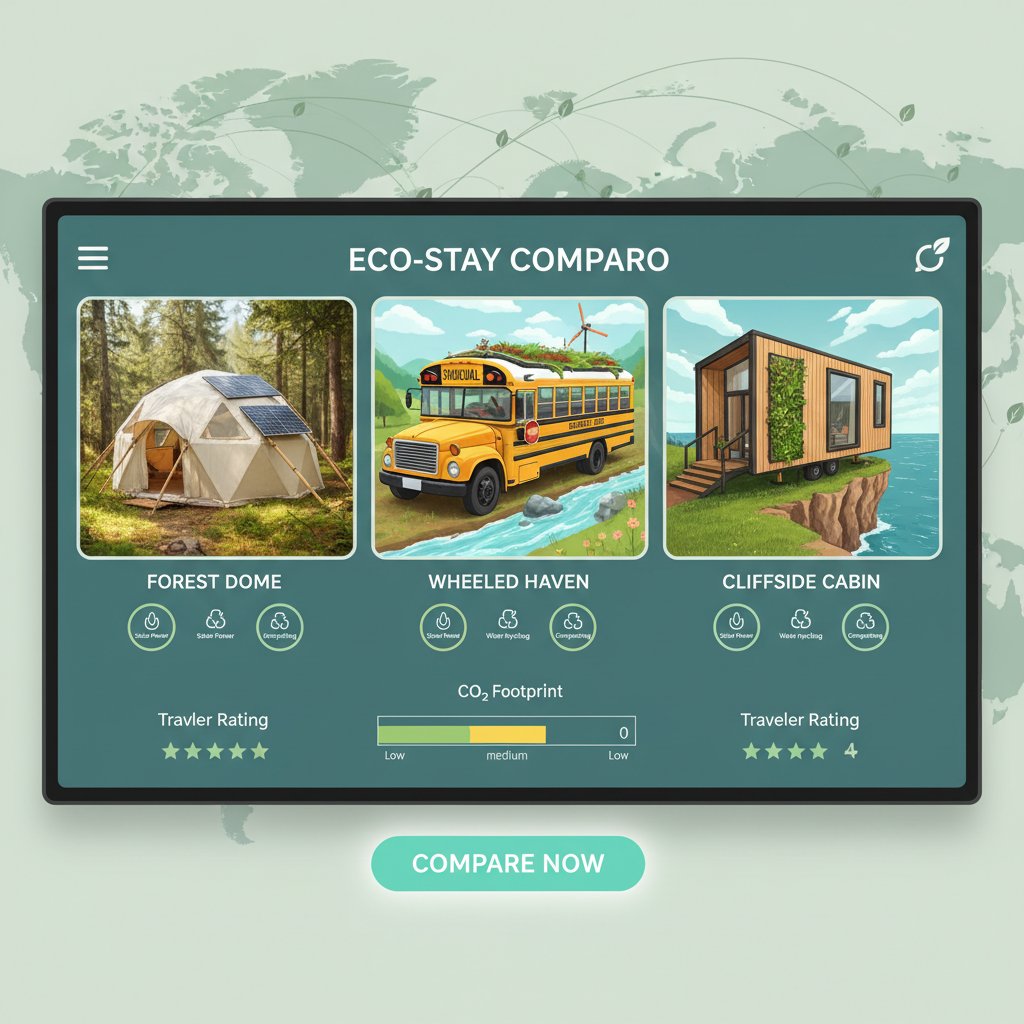
With AI tools, even the busiest traveler can make informed, ethical choices—while discovering hidden gems that traditional booking sites often miss.
Controversies, debates, and the future of sustainable stays
Is eco-tourism actually part of the problem?
For all the hype, eco-tourism is not immune to critique. Over-tourism still damages fragile regions, even when tourists sleep on organic cotton. Some critics argue that eco-labels can “launder” the negative impacts of long-haul travel, or that “regenerative travel” is just a new spin on the same old consumption.
“The greenest trip is often the one not taken. We must confront the limits of sustainable travel while pushing for real reform.”
— Dr. Naomi Klein, Environmental Author, [The Guardian, 2024]
The carbon cost of remote getaways
Getting to that pristine, off-grid paradise? It often involves long-haul flights and transfers with massive carbon footprints. Here’s how different travel modes stack up:
| Destination Type | Avg. CO2 Emissions per Traveler (kg) | Main Contributors | Alternatives |
|---|---|---|---|
| Urban Eco-Hotel | 140 | Hotel ops, taxi | Train, local bike |
| Remote Eco-Lodge | 1200 | Air travel, 4x4 transfer | Rail + bus, stay local |
| “Carbon Offset” Stay | 1100 (net 0) | Air travel, offset program | Direct train, bus |
Table: Carbon impacts of reaching different types of “eco-friendly” accommodations. Source: Original analysis based on ScienceDaily, 2024, WideXplore, 2025
How the next generation of platforms is changing the game
Platforms like futurestays.ai are empowering travelers to cut through noise and find accommodations that fit both their ethics and their needs. By aggregating verified certifications, analyzing real guest feedback, and mapping travel carbon footprints, these tools have brought new transparency to the booking process.

The future of sustainable travel will likely be shaped not just by property owners or certifiers, but by savvy travelers leveraging data and demanding more.
Practical tips for making your travels truly sustainable
Beyond the hotel: transportation, activities, and mindset
Booking the right stay is just the start. The ripple effect of your choices extends to how you get there, what you do, and how you engage.
- Choose low-carbon transport: Trains and buses trump flights; if you must fly, opt for direct routes and offset responsibly.
- Support local guides and artisans: Direct spending benefits communities and reduces leakage to multinational chains.
- Skip disposable experiences: Choose slow, immersive activities over high-impact tours.
- Pack light, pack right: Every extra kilo increases emissions—eco-friendly toiletries and reusable gear go a long way.
- Adopt a “leave no trace” ethos: Respect local cultures and environments by minimizing your footprint everywhere.
The sustainable traveler's packing list
- Reusable water bottle – Cuts plastic waste, especially where recycling is unreliable.
- Eco-certified toiletries – Non-toxic, biodegradable, and often locally made.
- Solar charger – Powers devices with no grid drain, especially in remote regions.
- Compact reusable bags – For shopping and laundry, replacing single-use plastics.
- Travel cutlery set – Say no to disposable utensils at food stalls and markets.
Sustainable travel starts before you even leave home—each item you pack (or leave behind) is a choice with consequences.
How to influence the industry as a consumer
- Leave honest, detailed reviews—call out both the good and the greenwashed.
- Ask for transparency—push hotels to publish impact reports and frequent audits.
- Book direct when possible—support local owners and cut out resource-draining third parties.
- Amplify best practices—share your discoveries and data with fellow travelers.
- Join advocacy groups or networks—collective pressure drives industry-wide change.
Each action, no matter how small, is a stitch in the tapestry of a better travel future.
The road ahead: what real change looks like in 2025 and beyond
Emerging trends in eco-friendly accommodations
The most exciting shifts come from below the surface—where innovation and authenticity intersect. According to Expert Market, 2025, the future is about hyper-localization, personalized eco-experiences, and properties that don’t just minimize harm, but actively regenerate their surroundings.

Rising economic pressure means more independent eco-lodges are pooling resources or joining platforms that guarantee transparency and fair pricing, while carbon-neutral and even carbon-negative stays are gaining traction.
How to keep evolving your travel habits
- Regularly audit your own travel decisions; stay curious and critical.
- Prioritize destinations accessible without flights when feasible.
- Build relationships with properties that show continuous improvement.
- Share knowledge—educate, don’t preach, and listen to local voices.
- Use platforms like futurestays.ai to keep up with evolving standards and best practices.
Sustainable travel isn’t a finish line—it’s a mindset and a commitment to learn, adapt, and do better.
Final call to action: demand better, travel smarter
The eco-friendly accommodations movement is at a crossroads. You, the traveler, wield more power and more information than ever before. The difference between real change and empty promises comes down to the choices you make, the questions you ask, and the standards you set. It’s not just about offsetting guilt, but about embracing discomfort, seeking the truth, and holding the industry’s feet to the fire. So next time you book a stay, don’t just settle for a green badge—demand proof, expect more, and let your journey be a force for good.
Sources
References cited in this article
- Expert Market: Accommodation Industry Trends 2025(expertmarket.com)
- WideXplore: Sustainable Travel Trends for 2025(widexplore.com)
- Straits Research: Sustainable Tourism Trends 2025(straitsresearch.com)
- CEO Today: The New Trend of Sustainable Travel(ceotodaymagazine.com)
- Hotel Dive: Hotels Prepare for Eco-Conscious Future(hoteldive.com)
- Worldpackers: Guide to Eco-Friendly Accommodations(worldpackers.com)
- Cvent: The Green Hotel – The Future King of Hospitality(cvent.com)
- ScienceDaily: Tourism Leads the Pack in Growing Carbon Emissions(sciencedaily.com)
- BBC: Taylor Swift Carbon Offset Analysis(bbc.com)
- DW: Earth Has Already Exceeded 2024 Ecological Limits(dw.com)
- TravelDailyNews: Sustainable Travel Trends 2024(traveldailynews.com)
- Condé Nast Traveler: Biggest Travel Trends 2024(cntraveler.com)
- World Nomads: Sustainable Travel Trends 2024(worldnomads.com)
- Sustainable Travel International: Spot and Avoid Greenwashing(sustainabletravel.org)
- MDPI: Greenwashing in Hotels Industry(mdpi.com)
- YouGov: American Travelers’ Views on Hotel Greenwashing(business.yougov.com)
- Ecobnb: Red Flags That a Rental Isn’t as Eco-Friendly as It Claims(ecobnb.com)
- IMPT: How to Identify a Truly Eco-Friendly Hotel(impt.io)
- GBD Magazine: Sustainability in Hospitality(gbdmagazine.com)
- Tandfonline: Decision Framework for Eco-Friendly Hospitality(tandfonline.com)
- Ecotourism World: Certifications to Identify Sustainable Hotels(ecotourism-world.com)
- Cloudbeds: Top Green Certifications for Your Eco Hotel(cloudbeds.com)
- UCSL: 2024 Sustainability Certification Shift(ucsl.eu)
- Forbes: 13 Eco-Friendly Luxury Hotels(forbes.com)
- USA Today: Top 10 Eco-Friendly Hotels in the US(10best.usatoday.com)
- The Week: Sustainable Hotels Around the World(theweek.com)
- Rental Scale-Up: New Green Standard for Rentals(rentalscaleup.com)
- Radical Storage: Ecotourism and Sustainable Tourism Statistics(radicalstorage.com)
- The Good Trade: 9 Eco Hotels Blending Luxury With Sustainability(thegoodtrade.com)
- Ecobnb: Tips to Check If an Accommodation is Environmentally Friendly(ecobnb.com)
- Tilted Map: How to Find Sustainable Hotels(tiltedmap.com)
- Travel & Leisure Asia: Earth Day 2025 Sustainable Travel(travelandleisureasia.com)
- Insight Vacations: Choosing Eco-Friendly Accommodation(insightvacations.com)
- FutureStays: Home(stays.myfuturehub.com)
- LinkedIn: 2024 Travel Trends(linkedin.com)
- Aiola: The Future of AI in Hospitality(aiola.ai)
- Les Roches: Emerging Hospitality Trends 2024(lesroches.edu)
- Plana.Earth: Sustainability Trends 2024(plana.earth)
- MIT Sloan Review: Seven Sustainability Trends to Watch in 2024(sloanreview.mit.edu)
- Georgetown: Eco-Tourism is an Eco-Drain(commonhome.georgetown.edu)
- The Green Voyage: 21 Reasons Eco-Tourism Is Hurting More Than Helping(thegreenvoyage.com)
- Wikipedia: Ecotourism - Critiques and Debates(en.wikipedia.org)
Find Your Perfect Stay, Instantly
Futurestays.ai transforms the way you find accommodations by leveraging cutting-edge AI technology to analyze extensive databases and deliver highly personalized hotel and apartment recommendations in seconds. Whether you're traveling for leisure, business, or adventure, our intuitive platform ensures you find the perfect stay tailored to your style, budget, and requirements. Say goodbye to endless scrolling and tedious filtering, and hello to quick, precise, and effortless accommodation booking.
Get startedReady to Find Your Perfect Stay?
Let AI match you with your ideal accommodation today
Frequently Asked Questions
What percentage of global carbon emissions does tourism account for?
Tourism accounts for roughly 9% of global carbon emissions, according to 2024 data cited in the article.
What is greenwashing in the context of eco-friendly hotels?
Greenwashing refers to hotels presenting themselves as environmentally friendly through marketing tactics (like bamboo toothbrushes or linen reuse cards) without making genuine, substantial environmental improvements to their operations.
How much CO2 does a certified eco-lodge emit compared to a conventional urban hotel?
According to the article's comparison table, a certified eco-lodge emits approximately 2.7 tons of CO2 per room annually, compared to 13 tons for a conventional urban hotel.
What key metric should travelers look for when choosing genuinely eco-friendly accommodations?
The article suggests transparency is crucial—certified eco-lodges have a transparency score of 5/5, while self-claimed 'eco-friendly' chain hotels score only 3/5, indicating that verified certifications and honest reporting of environmental impact are important indicators.
Keep Reading
Keep exploring AI accommodation finder

Eco-Friendly Lodging: How to Identify Genuine Sustainability

Which Eco-Friendly Hotel Amenities Actually Reduce Environmental Impact

What Makes Eco-Conscious Travel Accommodations Genuinely Sustainable

Sustainable Accommodation Options That Are Real (not Greenwashed)

How to Spot Genuine Environmentally Conscious Accommodations


