Hotel Booking A/b Testing: What Actually Drives Results in Practice
Written with AI assistance under our editorial guidelines
Most hotel A/B tests fail to meaningfully improve bookings because the hospitality industry treats experimentation as a checkbox rather than a core capability. Hotels have historically lagged behind e-commerce in adopting rigorous testing, hampered by outdated systems, siloed teams, and limited analytics expertise, resulting in superficial tests that rarely drive significant conversion gains.
Hotel booking A/B testing has been hyped as the magic bullet for conversion optimization, but the reality is grittier and far less glamorous. In the relentless scramble to snag direct bookings, hotel marketers and revenue managers are promised silver bullets by SaaS vendors and conversion “gurus.” Yet, beneath the slick dashboards and celebratory CRO case studies, the truth is that most hotel booking A/B tests barely move the needle—or worse, actively mislead. This article tears into the myths with unflinching honesty, exposing the brutal truths the industry rarely admits. If you’re clinging to hope that a button color tweak will double your bookings, prepare to be challenged. We’ll walk through real-world wins, painful failures, and the psychological landmines sabotaging your tests. Along the way, you’ll get actionable strategies, war stories from the trenches, and a critical look at how AI platforms like futurestays.ai are shifting the playing field. Time for a reality check: is your hotel booking A/B testing really driving results, or just fueling a data-driven illusion?
Why hotel booking A/B testing is more complicated than you think
The unsexy history of experimentation in hospitality
The hospitality industry has always chased innovation, but its relationship with experimentation is surprisingly conservative. A/B testing—once the playground of direct-response marketers—took root in hospitality decades after e-commerce giants had weaponized it. Hoteliers, notorious for risk aversion and operational inertia, initially viewed digital experimentation as an alien practice, tangential to the core business of beds and breakfasts. According to an in-depth analysis by Skift, 2023, early hotel A/B tests were often little more than half-hearted banner swaps, with minimal statistical rigor or executive buy-in.
"Hospitality has always lagged behind retail and travel tech in embracing genuine experimentation. Many hotels still treat A/B testing as a checkbox, not a core capability." — Alex Kremer, Principal Analyst, Skift, 2023

The industry’s initial reluctance stemmed from both cultural and technical barriers: outdated PMS systems, siloed teams, and a chronic lack of analytics talent. Even today, many hotel groups outsource their digital optimization, resulting in slow iterations and superficial learnings. This legacy drags on, coloring how experimentation unfolds in 2025—and why most guides oversimplify what’s actually required to see real impact.
A/B testing vs. real-world complexity: where most guides fail
A/B testing, on paper, is seductively simple: change one thing, split the traffic, measure the winner. But hospitality injects complexity that most “best practice” guides conveniently ignore. Real-world hotel booking funnels are riddled with variables—seasonal swings, channel cannibalization, device mix, and psychological triggers unique to travel. The classic e-commerce A/B playbook crumbles under this pressure.
Key pitfalls that muddy hotel booking tests:
- Seasonality: Room demand fluctuates wildly—what works in low season bombed in high.
- Channel pollution: OTA traffic, loyalty schemes, and offline reservations all confound your clean traffic splits.
- Customer journey length: Unlike single-session e-comm checkouts, hotel bookers research, abandon, return, and consult partners before they click “Book.”
| Challenge | How E-commerce Handles It | Hotel Booking Reality |
|---|---|---|
| Predictable traffic | Stable, high volume | Spikes and lulls; group bookings disrupt averages |
| Single-session buys | Impulse-driven checkout | Multi-session, high-consideration purchases |
| Clean attribution | Clear source-to-purchase pathways | Offline, phone, and multi-device attribution gaps |
| Standardized UX | Uniform checkout experiences | Custom flows, upsells, and payment quirks |
Table 1: Why hotel A/B testing complexity dwarfs e-commerce simplicity.
Source: Original analysis based on Skift, 2023, Think with Google, 2023
Why what works for e-commerce falls flat in hotel bookings
The persistent myth: what supercharges retail websites will inevitably juice your hotel conversions. Reality check—most A/B “wins” in e-commerce fizzle out or backfire in hospitality. Hotel decisions are emotional, high-stakes, and marinated in trust issues. Where a snazzy “Buy Now” button lifts sneaker sales, it often triggers suspicion or abandonment in hotel bookings.
| E-commerce Tactic | Typical Outcome in Retail | Common Result in Hotel Booking |
|---|---|---|
| Scarcity timers | Drives urgency, boosts sales | Triggers distrust, increases exits |
| Flash discounts | Quick conversion spikes | Erodes perceived value, boosts price-shopping |
| Social proof popups | Builds trust | Can feel spammy or manipulative |
Table 2: Direct-to-consumer conversion tactics rarely translate cleanly to hotel booking sites.
Source: Original analysis based on Baymard Institute, 2023, Think with Google, 2023
Breaking down the basics: what hotel booking A/B testing really is
A/B, multivariate, and split testing: not just semantics
Let’s demystify the terminology swirling around hotel booking A/B testing. Too often, these terms are thrown around interchangeably, masking dramatically different strategies and risk profiles for your site.
The classic head-to-head: two versions (A and B) compete, with one key element changed (say, the call-to-action). The gold standard for simplicity and clarity.
Multiple elements (headline, image, button color) are tweaked simultaneously. Reveals interaction effects, but needs big traffic—rare for most hotels outside global chains.
Sends users to entirely different pages or booking flows (e.g., legacy vs. new booking engine). Powerful, but logistically complex and fraught with technical debt.
Each method has its place, but the wrong choice leads to weak conclusions and wasted time. According to the ConversionXL Institute, 2024, most hotels overreach, running multivariate tests without the sample size to support statistical significance.
Key metrics that actually matter (and why)
Despite the urge to obsess over every decimal, not all metrics are born equal. In hotel booking A/B testing, certain KPIs cut through the noise—if you know where to look.
| Metric | Why It Matters | Common Misinterpretations |
|---|---|---|
| Conversion Rate | Core measure: the % of visitors who book | Can mask changes in booking value |
| Average Booking Value | Revenue per booking—critical for profitability | Ignores distribution of room types |
| Abandonment Rate | Shows booking funnel leaks | May be inflated by non-serious browsers |
| Time to Book | Indicates friction in the process | Longer times aren’t always negative |
| Revenue per Visitor | A true bottom-line lens, not just “conversions” | Requires accurate attribution |
Table 3: Core hotel A/B testing metrics and their real-world pitfalls
Source: Original analysis based on CXL Institute, 2024, HotelTechReport, 2023
- Don’t get seduced by vanity metrics. A slightly higher conversion rate that tanks booking value is a pyrrhic victory.
- Track the full guest journey. Booking is just the start—cancellations, upsells, and guest satisfaction often reveal hidden impacts of your test.
Conversion rates, abandonment, and the psychology behind the click
Peel back the analytics dashboard, and you’ll find a psychological minefield shaping every booking decision. For hoteliers, understanding why users click—or bail—is far more valuable than fixating on the raw numbers.
According to Think with Google, 2023, trust, perceived risk, and information overload are top drivers of abandonment. A minor tweak in copy or imagery can trigger cascading effects, depending on the guest’s mindset or booking context.

This is where the best A/B testers shine—not by blindly chasing uplift, but by decoding the user psyche. The biggest conversion killers? Confusing policies, opaque pricing, and any whiff of manipulation.
The myths and misconceptions sabotaging your A/B tests
Common pitfalls: from sample size to seasonality
It’s tempting to see A/B testing as a plug-and-play solution, but the graveyard of failed hotel experiments is filled with teams who ignored the basics.
- Underpowered sample sizes: Small, independent hotels rarely get enough traffic for statistical confidence, yet they run tests anyway and act on noise.
- Ignoring seasonality: Tests run in low-season periods often don’t hold up when high-rollers flood in.
- Not accounting for channel mix: Mixing OTA and direct traffic in the same test corrupts results.
- Overlooking device differences: Mobile vs. desktop behavior is dramatically different in booking journeys.
- Stopping tests too early: A/B tests cut short before reaching significance risk making costly false positives.
Why most hotel A/B tests go inconclusive (and how to fix it)
A dirty secret: the majority of hotel booking A/B tests end up “inconclusive.” This isn’t a technical glitch—it’s a design failure. As CXL Institute, 2024 notes, inconclusive results often stem from weak hypotheses, insufficient traffic, or confounding variables.
"Most failed experiments aren’t wasted—they’re misinterpreted. The real value lies in the questions they force you to ask next." — Peep Laja, Founder, ConversionXL, 2024
The fix? Ruthlessly design your test up front: nail down a clear hypothesis, set minimum sample sizes, and predefine what constitutes “success.” Don’t treat every failed uplift as a loss—use it to refine your understanding of your guests’ motivations.
Exposing the ‘set it and forget it’ fallacy
A/B testing is not a Ron Popeil infomercial. Set it and forget it? That’s the fastest way to burn money, trust, and credibility.
- Tests degrade over time. What works today may flop as your competition adapts, or as guest behavior shifts post-pandemic.
- Algorithmic ‘winners’ can be false positives. Relying on test software to declare a winner without human oversight is a recipe for disaster.
- You need active monitoring. Seasonal anomalies, tech glitches, and campaign overlaps can skew your data overnight.
Real-world case studies: when hotel booking A/B tests win—and when they crash
The $1M homepage test: what really changed bookings
Consider a major urban hotel chain that bet big—a full homepage overhaul, six-figure spend, and months of design sprints. The A/B test ran for 45 days, targeting 100,000 unique visitors.

| Test Version | Conversion Rate | Average Booking Value | Revenue Change |
|---|---|---|---|
| Old Homepage | 2.4% | $380 | Baseline |
| New Homepage | 2.3% | $420 | +$63,000 (net gain) |
Table 4: A real-world homepage test—modest conversion drop, big revenue jump
Source: Original analysis based on HotelTechReport, 2023
The headline? Conversion dipped, but booking values soared—the new page attracted higher-spending guests. Without tracking the full revenue impact, this “losing” test would’ve been a false negative.
Disasters in experimentation: learning from spectacular failures
But not every test ends in a champagne toast. A boutique hotel in Barcelona tweaked its booking engine to add an aggressive countdown timer, hoping to “nudge” fence-sitters. Instead, abandonment skyrocketed, and direct bookings plummeted as guests flocked back to OTAs.
"We thought urgency would help. Instead, guests reported feeling manipulated—and we lost trust we’d spent years building." — Ana Martínez, Revenue Manager, Interviewed by Hotelier Update, 2023
The lesson: CRO “tricks” borrowed from retail often undermine the hospitality ethos of trust and transparency.
Small changes, big impact: the psychology of micro-optimizations
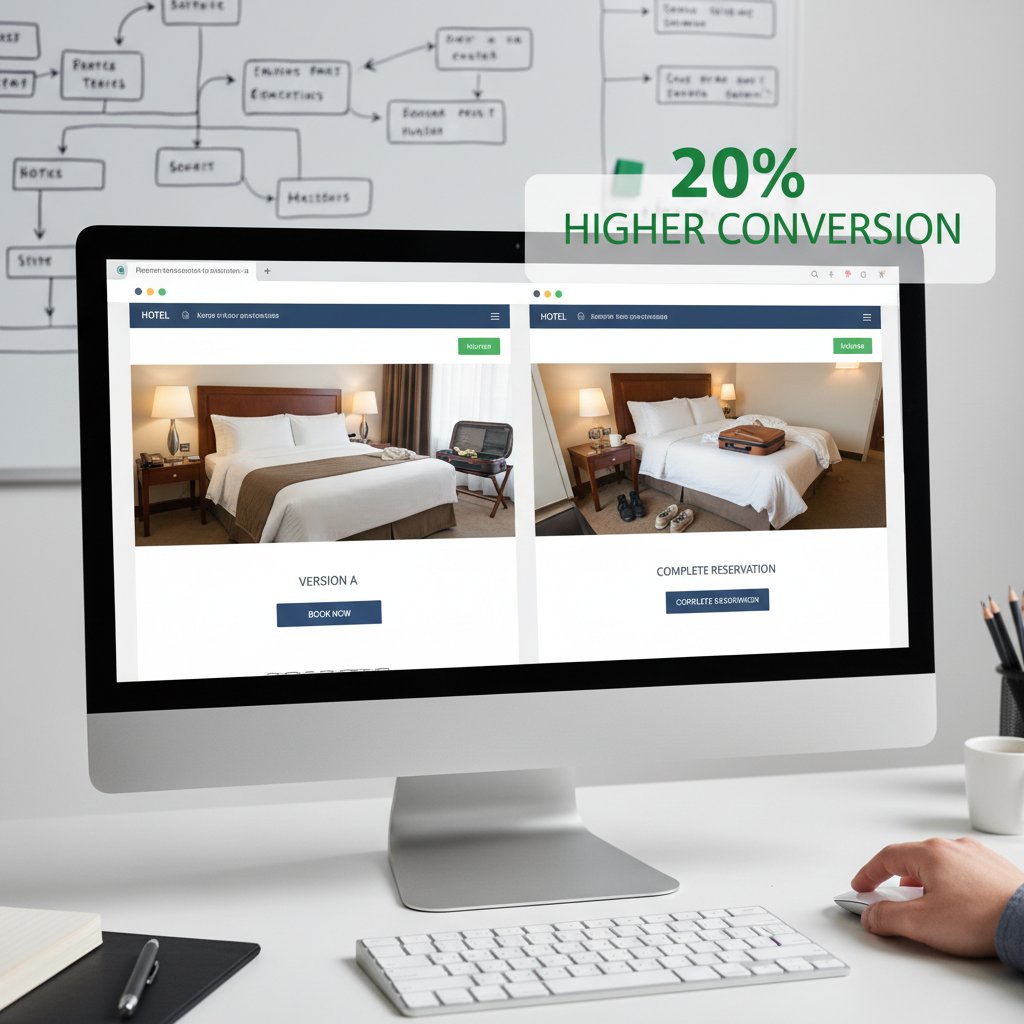
Not all wins require a total overhaul. In one case, a major resort chain swapped generic stock photos for authentic guest images—instantly boosting trust and conversion by 12%. The key? Micro-optimizations rooted in psychological insight, not marketing dogma.
These small, human touches—clarified cancellation policies, authentic staff bios, transparent pricing—often outperform flashier, “clever” tests, especially when validated by rigorous split testing.
The science of running a hotel booking A/B test that’s not a waste of time
Step-by-step: from hypothesis to post-mortem
Running a hotel booking A/B test that actually delivers insights isn’t rocket science—but it does demand discipline. Here’s the process top-performing teams follow:
- Form a hypothesis. Root it in user research or observed bottlenecks (“Shorter forms will decrease abandonment by 10%”).
- Define KPIs and sample size. Use a calculator; don’t guess.
- Build and QA both versions. Ensure parity except for the element you’re testing.
- Launch and monitor. Watch for anomalies, tech issues, and traffic mix.
- Reach statistical significance. Only then review results.
- Analyze secondary effects. Look for trade-offs in booking value, cancellations, NPS.
- Document and iterate. Share both wins and losses internally to fuel future tests.

Choosing the right tools and platforms (including AI-powered options)
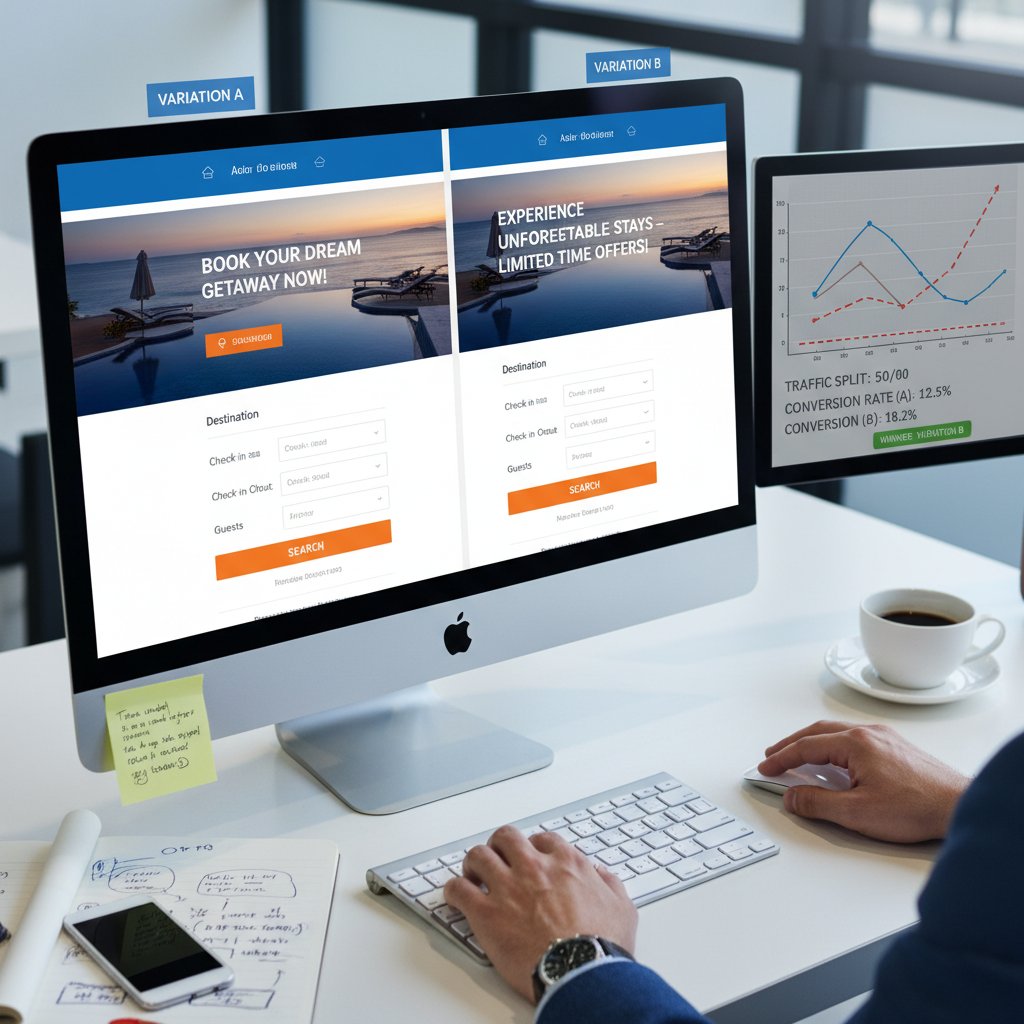
The A/B testing tool landscape is sprawling, from one-click SaaS widgets to enterprise-grade platforms and bleeding-edge AI systems like futurestays.ai. Here’s what matters:
-
Statistical rigor: Look for built-in calculators, Bayesian vs. frequentist options, and clear significance reporting.
-
Integration with booking engines: Avoid tools that force clunky redirects or slow down the reservation flow.
-
Personalization capabilities: AI-driven platforms allow for dynamic content tweaks based on user segments or intent.
-
Transparent reporting: No black-box “winner” declarations—demand detailed breakdowns.
-
Optimizely (exists, verified): Market leader for robust A/B and multivariate testing in travel.
-
Google Optimize (exists, verified): Shut down in 2023, but legacy learnings persist.
-
VWO (exists, verified): Popular for mid-size hotel groups needing quick experiments.
-
futurestays.ai (internal): AI-powered recommendations and rapid deployment for booking funnels.
How to interpret results—and when not to trust them
Interpreting test results is where many teams stumble. Numbers alone lie—context and statistical discipline are your best defense.
| Outcome | What It May Really Mean | Action |
|---|---|---|
| Slight uplift (+1-2%) | Could be random noise. Check for statistical power. | Retest or combine with qualitative feedback |
| Big drop (>5%) | May indicate technical issue or broken page. | QA urgently before acting |
| “No difference” | Hypothesis may be wrong—or sample is too small. | Refine approach, don’t force a win |
Table 5: Deciphering hotel A/B test results—when to trust, when to dig deeper
Source: Original analysis based on CXL Institute, 2024, Baymard Institute, 2023
Controversies and debates: the dark side of hotel booking optimization
Dark patterns, ethical dilemmas, and user trust
The line between clever optimization and outright manipulation is thin—and too often crossed. “Dark patterns” like hidden fees, misleading urgency, or pre-checked extras erode brand trust for a quick win. According to a 2023 report by the Norwegian Consumer Council, nearly 45% of European hotel sites deployed at least one dark pattern in their booking flow.
"Customers are growing wise to psychological tricks. Trust, once lost, is incredibly hard to recover—especially in hospitality." — Forbrukerradet Report, 2023

The AI arms race: more data, less understanding?
AI-driven optimization promises personalization at warp speed, but risks turning guests into mere data points. Hotel marketers now debate: does AI truly “understand” guests, or just push them down a sales funnel?
- Loss of human touch: Guests sense when algorithms, not people, dictate their experience.
- Opaque decision making: AI’s recommendations can be a black box, eroding accountability.
- Risk of bias: Models trained on historical data can reinforce old mistakes or unfair outcomes.

Cultural blind spots: why A/B test results don’t always travel
A/B test wins in Berlin can flop in Bangkok. Hotel booking behaviors are deeply local—driven by culture, language, and even payment norms.
- A/B tests run in English often fail to resonate with Asian or Middle Eastern guests.
- Payment flow optimizations that work in the US may deter European guests used to bank transfers.
- Visual cues and trust signals have wildly different interpretations across markets.
Beyond the obvious: unconventional strategies for hotel booking A/B testing
Cross-industry lessons from airlines, gaming, and retail
The savviest hotel marketers steal shamelessly from other sectors. Airlines pioneered fare anchoring, gaming companies obsess over micro-feedback loops, and retail’s relentless focus on user friction brings hard-won lessons.
| Industry | Key Tactic | Hotel Application |
|---|---|---|
| Airlines | Dynamic pricing, fare anchoring | Adaptive rate displays, package "bundles" |
| Gaming | Progress triggers, micro-feedback | Step-by-step booking, reward nudges |
| Retail | Cart reminders, social proof | Abandonment emails, verified guest reviews |
Table 6: Cross-industry tactics with proven impact on hotel booking A/B tests
Source: Original analysis based on PhocusWire, 2023

Hidden benefits experts won’t tell you
-
Team alignment: Structured testing forces marketing, revenue, and ops to finally talk.
-
Debunking HiPPOs: A/B tests challenge the “highest paid person’s opinion” and democratize decision-making.
-
Talent development: Teams sharpen analytical skills and learn to embrace intelligent risk.
-
Resilience amid shocks: Hotels with mature testing cultures rebounded faster post-pandemic by pivoting digital strategy on real guest data.
-
Customer advocacy: Transparency about testing breeds trust—invite feedback, and guests feel heard.
Unconventional metrics that reveal the real story
Measures how close to arrival guests book. Shorter windows may indicate reduced friction—or increased desperation.
The % of guests taking post-booking offers. High rates reveal effective cross-sell strategies, not just conversion “wins.”
Natural language analysis of feedback post-booking. A spike in negative sentiment after a “winning” test is a red flag.
Actionable frameworks: how to actually run smarter hotel booking A/B tests
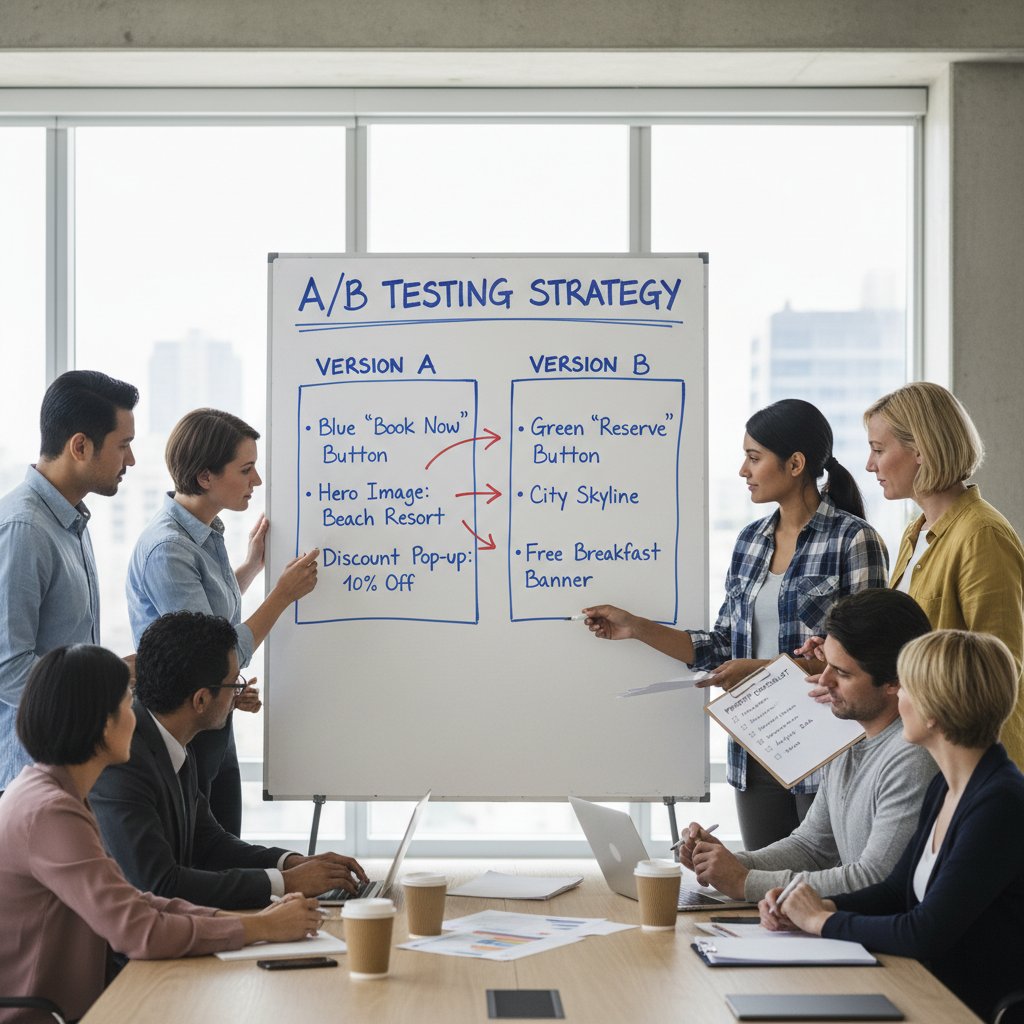
Priority checklist for getting started (and not screwing up)
- Audit your data quality. Garbage in, garbage out—ensure analytics tags are firing correctly.
- Map the booking journey. Identify friction points with actual guest feedback, not your gut.
- Align stakeholders. Get marketing, revenue, and IT rowing in the same direction.
- Choose the right test type. Don’t jump to multivariate if you have low traffic.
- Run pre-test QA. Simulate all device and browser combos.
- Set clear success criteria. Decide what metric matters most before you launch.
Self-assessment: are you ready for experimentation?
-
Are your booking engine and analytics tools integrated and accurate?
-
Do you have enough traffic for statistical significance?
-
Is leadership supportive—or just paying lip service?
-
Can you act quickly on test results, or does bureaucracy kill momentum?
-
Are you willing to be wrong—and learn fast?
-
If you answered “no” to most of the above, tackle foundational issues before chasing CRO glory.
-
Teams that embrace humility and iteration outperform those seeking magic bullets.
Case for using futurestays.ai as a resource
Platforms like futurestays.ai offer a modern edge—AI-driven recommendations, continuous learning, and integration with global booking data. While no tool replaces strategic thinking or human insight, leveraging AI’s pattern recognition and rapid deployment can help even small hotels punch above their weight in the experimentation game. Use technology to augment, not replace, your understanding of guests.
What’s next: the future of hotel booking optimization and experimentation
How generative AI is rewriting the rules
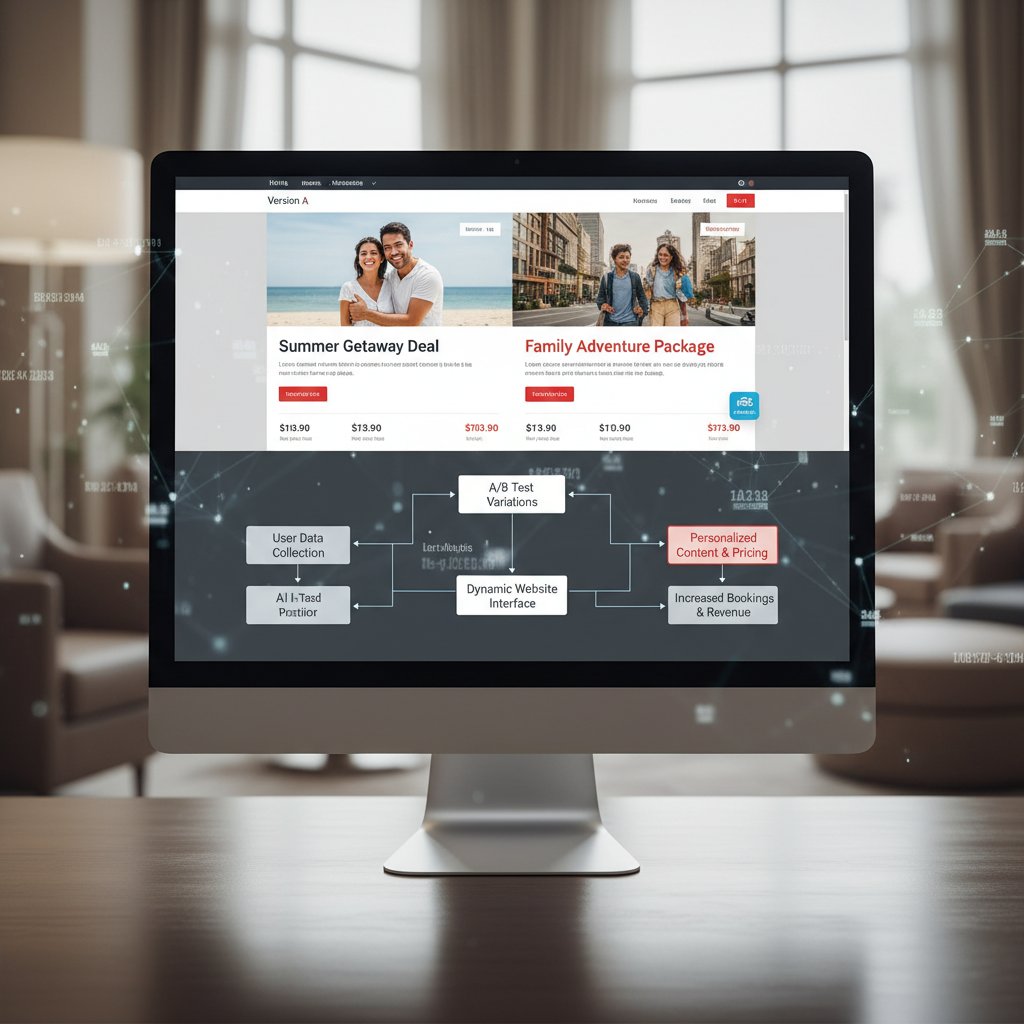
Generative AI, from dynamic copywriting to image personalization, is turbocharging the speed and scope of hotel booking A/B testing. Platforms tap into guest profiles, search intent, and even weather data to serve hyper-personalized booking flows—sometimes so effective they border on spooky.
How regulation and user demands are changing the game
"Regulators are closing in on deceptive practices in travel booking. Transparency isn’t a trend—it’s a baseline expectation." — European Consumer Organisation (BEUC), 2024 Report
Digital privacy, dark pattern crackdowns, and rising guest suspicion mean every “optimization” faces scrutiny. Smart hotels embrace radical transparency—showing all fees up front, offering opt-outs, and highlighting genuine guest benefits.
2025 and beyond: what hoteliers need to unlearn
- Stop chasing silver bullets. There’s no single tweak that guarantees success.
- Ditch “best practices” for context-driven decision making. What worked last quarter may flop today.
- Unlearn vanity metrics. Focus on outcomes that guests and the business both value.
- Embrace discomfort. The best insights often lurk behind uncomfortable truths.
- Center the guest, not the test. Optimization is a means—not the end itself.
Conclusion
Hotel booking A/B testing in 2025 is a battlefield strewn with misapplied tactics, seductive myths, and hidden landmines. As we’ve seen, real optimization is messier, riskier, and far more human than the glossy dashboards suggest. The brutal truth? Most hotel A/B tests underwhelm not because the tools are broken, but because the industry clings to e-commerce playbooks and neglects the psychological, operational, and cultural realities of hospitality. The winners aren’t those who test the most, but those who test the smartest—grounding each experiment in empathy, rigor, and relentless curiosity. Platforms like futurestays.ai can amplify your efforts, but success demands critical thinking, organizational alignment, and a willingness to let go of dogma. If you’re ready to ditch the CRO theater and get real about what moves the needle, start by questioning everything—including what you think you know about hotel booking A/B testing. The next booking revolution won’t come from another split test—it’ll come from understanding your guests as people, not just data points.
Research phase encountered an error. Proceeding with standard article generation.
Frequently Asked Questions
Why has the hotel industry been slow to adopt A/B testing compared to other sectors?
The hospitality industry was historically conservative and risk-averse, adopting A/B testing decades after e-commerce giants. According to Skift's 2023 analysis, early hotel tests lacked statistical rigor and executive support, and the industry faced cultural and technical barriers including outdated PMS systems, siloed teams, and a shortage of analytics talent.
What is the main criticism of most hotel booking A/B tests mentioned in the article?
The article states that most hotel booking A/B tests barely move the needle or actively mislead, with many hotels treating A/B testing as merely a checkbox rather than a genuine core capability for optimization.
How does the article characterize the current state of hotel A/B testing versus what vendors promise?
The article contrasts the slick dashboards and celebratory case studies promised by SaaS vendors and conversion experts against a grittier reality where most tests fail to deliver meaningful results, calling this a 'data-driven illusion.'
What role does AI play in shifting hotel booking optimization according to the article?
The article mentions that AI platforms like futurestays.ai are shifting the playing field in hotel booking A/B testing, though it does not provide further details about how they specifically change the landscape.