

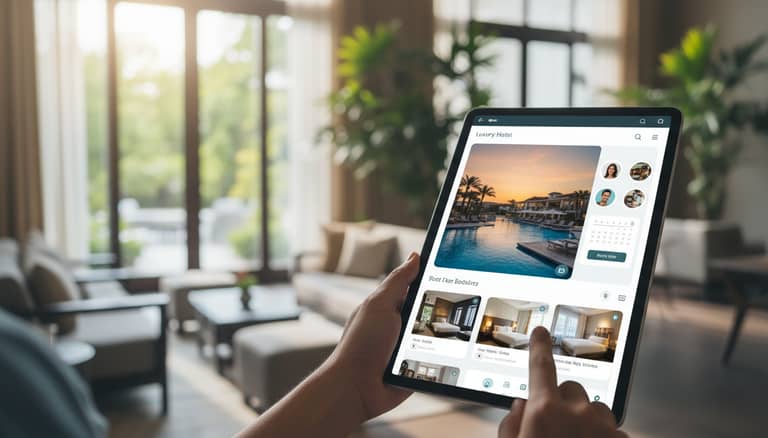
Hotel Industry Ux/ui Best Practices That Stop Booking Friction
Written with AI assistance under our editorial guidelines
Over 50% of travelers abandon hotel booking journeys due to poor user experience, with mobile load times being critical—a one-second delay can reduce conversions by 20%. Implementing mobile-first design, eliminating friction points, and leveraging AI-powered personalization are essential survival strategies for hotels to prevent revenue loss and maintain competitive advantage in 2025's digital hospitality landscape.
Digital hospitality is in the middle of a revolution, and the hotel industry’s approach to UX/UI is ground zero for disruption. Forget what you think you know about best practices—2025 is not the year for playing it safe. For every sleek interface and AI-powered recommendation engine, there are websites that bleed bookings and apps that drive guests straight into a competitor’s arms. The cold truth? Hotel industry UX/UI best practices are evolving at breakneck speed, and those who cling to outdated templates or ignore the power of digital hospitality are paying a silent, invisible tax—lost revenue, eroded loyalty, and a reputation that quietly withers in the face of more agile rivals.
This guide rips the veneer off the “best practices” often parroted in boardrooms and exposes the rules that actually move the needle in 2025. Drawing on hard data, expert opinions, and real-world case studies, we’ll show how mobile-first design, ruthless friction elimination, and AI-powered personalization aren’t just buzzwords—they’re survival strategies. If you think your hotel website nails user experience, buckle up. It’s time to confront the myths, mistakes, and transformative tactics defining the new era of digital hospitality. Read before you redesign.
Why hotel UX/UI failures cost billions (and nobody talks about it)
The true price of a bad first impression
First impressions in hospitality aren’t made at check-in—they’re decided in milliseconds, on screens large and small. Research from Event Temple (2024) shows that over 50% of travelers abandon online booking journeys because of poor user experience. That’s not just a lost sale; it’s a chain reaction—brand trust erodes, retention plummets, and word-of-mouth dries up.
In a world where 70% of bookings now originate on mobile devices, sluggish load times and clunky interfaces are more than just annoyances—they’re deal-breakers. According to Google’s industry benchmarks, a delay of just one second in mobile page load time can decrease conversion rates by up to 20%. The industry’s silent epidemic is this: every second, hotels are silently hemorrhaging revenue due to friction that could be fixed with the right UX/UI approach.

| UX/UI Failure Type | Typical Impact on Bookings (%) | Long-Term Effect |
|---|---|---|
| Slow load times (>3 sec) | -53% | Lower SEO, higher abandonment |
| Cluttered navigation | -35% | Brand distrust |
| Complicated booking forms | -40% | Drop-off before payment |
| Lack of mobile optimization | -60% | Loss of next-gen travelers |
Table 1: Typical impacts of UX/UI failures in hotel booking flows. Source: Event Temple, 2024
How booking friction kills guest loyalty
Every extra step, every unnecessary click, is a loyalty killer hiding in plain sight. According to Revfine (2024), hotels that reduce their booking flows to under three steps see a 30% increase in completed bookings. Booking friction isn’t just about losing the impatient—it’s about training even the loyal to look elsewhere.
- Hidden fees or surprise costs: According to a recent Booking.com study, unexpected fees are the number one reason for cart abandonment.
- Complex or redundant forms: If guests are forced to enter the same information twice, 40% will drop the process (Revfine, 2024).
- Lack of instant feedback: Modern users expect real-time availability and instant confirmation. Delays reduce perceived trust.
- No guest control: Guests want the ability to edit dates, room types, or preferences without starting over. Deny this and you deny them agency.
- Fragmented journey: Switching between devices is now the norm, not the exception. 60% of users expect their booking progress to sync seamlessly across devices.
"It’s not enough to get a guest onto your site. If your booking flow is confusing, slow, or inconsistent, they’ll vanish—and they won’t come back. The cost is more than a lost booking; it’s a lost relationship." — Jessica Parker, Digital Hospitality Analyst, Leonardo Worldwide, 2024
Missed opportunities: what hoteliers overlook in digital
There’s a persistent myth in hospitality: that once the site looks “nice,” the job is done. But the real missed opportunities are in the metrics hotels don’t track—abandoned carts, rage clicks, confused support chats. According to eHotelier (2023), over half of hoteliers still don’t analyze digital drop-off points with the granularity required to diagnose issues.
Worse, many rely on outdated templates or third-party systems that lack both personalization and control. The result? Subpar guest experiences that are invisible until the bottom line starts bleeding. Hotel industry UX/UI best practices aren’t about aesthetics; they’re about conversion, retention, and profitability.
Debunking the myths: what most ‘best practices’ guides get dead wrong
The copycat trap: When ‘industry standard’ is the enemy
The most dangerous phrase in digital hospitality? “But everyone else is doing it.” Too many hotel websites are built from the same playbook—standard hero image, carousel, generic CTAs—and the result is a sea of sameness. According to Leonardo Worldwide (2024), over 75% of hotel sites use nearly identical layouts and color schemes. This copycat syndrome stifles innovation and blunts the guest’s emotional engagement.
- “Industry standard” navigation: “Hamburger” menus and navbars borrowed from e-commerce confuse users looking for clear room options.
- Overused stock photography: Generic images diminish perceived authenticity, lowering trust (Event Temple, 2024).
- Cloned booking forms: Rigid fields and dated layouts ignore the unique flows guests actually want—flexible dates, instant upgrades, or multi-room bookings.

Hotels that win in 2025 break this mold, using data to design for their specific audience—not for a mythical “industry average.”
Why airline UX lessons don’t always translate
Airline UX is often cited as the gold standard, but it’s a trap. The needs, anxieties, and behaviors of hotel guests differ fundamentally from air travelers. For airlines, urgency and seat availability drive decisions; for hotels, it’s about personalization, amenities, and flexibility.
| Feature/Flow | Airlines (User Needs) | Hotels (User Needs) |
|---|---|---|
| Urgency | Fixed departures, urgency | Flexible dates, less urgency |
| Upgrades | Price-driven, last minute | Experience-driven, before stay |
| Amenities | Minimal, standardized | Key differentiator |
| Booking Modifications | Restricted post-booking | Expected, flexible |
Table 2: Key differences between airline and hotel UX/UI needs. Source: Original analysis based on [Revfine, 2024] and [Event Temple, 2024].
Trying to force airline patterns onto hotel sites creates friction, not efficiency. The lesson: respect the unique rhythms of hotel bookings.
The hidden danger of dark patterns in hospitality
Some hotels fall into the temptation of using “dark patterns”—UX tricks designed to manipulate rather than serve. Hidden fees, pre-selected add-ons, or misleading urgency (“Only 1 room left!”) might spike short-term conversions, but the reputational damage is real.
"Guests are savvier than ever—they spot manipulation a mile away. Dark patterns might drive a quick win, but they’re the fastest route to negative reviews and long-term brand erosion." — Michael Grant, Digital Ethics Researcher, eHotelier, 2023
Foundations reimagined: what makes hotel UX/UI truly great in 2025
Clarity vs. cleverness: finding the right balance
In a field obsessed with innovation, it’s easy to conflate cleverness with clarity. But the best hotel industry UX/UI best practices in 2025 prioritize intelligibility above all. Guests don’t want to “learn” your site—they want to find, book, and move on.

According to Leonardo Worldwide (2024), clear calls to action—book now, check availability, compare rooms—boost conversions by up to 20%. Clever micro-interactions or quirky design flourishes only work if they never obscure the functional core of the experience.
Mobile-first, not mobile-only: the cross-device imperative
A mobile-first strategy is essential—over 70% of bookings now start on phones. But the journey often spans multiple devices. According to Revfine (2024), over half of guests switch from mobile to desktop (or vice versa) mid-booking. Consistency is key.
- Responsive layouts: Ensure every feature, image, and form field adapts seamlessly.
- Session syncing: Guests expect their progress and preferences to follow them across devices.
- Touch and click parity: No hidden features or information only accessible on desktop.
- Distraction-free on-the-go: Mobile screens demand ruthless prioritization—strip away clutter, keep actions thumb-friendly.
- Predictive suggestions: Use device context—local time, geolocation, recent searches—to shape the experience.
Speed, simplicity, and the ruthless elimination of friction
Speed isn’t just a technical metric—it’s a trust signal. As of 2024, 53% of users abandon hotel sites that take more than three seconds to load (Event Temple, 2024). But performance is only the start. Simplicity—short booking flows, clear pricing, instant confirmation—is the non-negotiable baseline for modern digital hospitality.
| UX/UI Principle | Tangible Benefit | Statistic (2024) |
|---|---|---|
| Fast load times | Lower abandonment, higher SEO | -53% drop-off >3 sec (Event Temple) |
| Minimal booking steps | Higher completion rates | +30% if <3 steps (Revfine) |
| Visual storytelling | Emotional engagement | +40% bookings (Leonardo Worldwide) |
Table 3: The impact of foundational UX/UI improvements on hotel booking success. Source: Original analysis based on [Event Temple, 2024], [Revfine, 2024], [Leonardo Worldwide, 2024].
Accessibility isn’t optional: designing for every guest
The business case for inclusive digital design
Accessibility isn’t a compliance checkbox—it’s a business multiplier. With 15% of the global population living with a disability (WHO, 2023), ignoring accessibility means leaving revenue on the table and risking legal trouble. According to eHotelier (2023), accessible sites enjoy higher SEO rankings, broader reach, and better guest reviews.

- Screen reader compatibility: Essential for visually impaired users; increases trust and reach.
- Keyboard navigation: Not every user clicks—a seamless tab order means dignity and usability.
- Color contrast and readable fonts: Poor contrast isn’t just a design flaw; it’s an obstacle. High-contrast interfaces are proven to improve comprehension and reduce support tickets.
- Alt text and descriptive images: These aren’t “nice to have”—they’re mandatory for both accessibility and SEO.
- Flexible text sizing and spacing: Guests of all ages benefit from easy-to-read layouts.
Hotels that invest in accessibility aren’t just doing the “right” thing—they’re capturing untapped markets and future-proofing their brand.
Beyond compliance: real stories of accessible experiences
True accessibility means going beyond the minimum legal requirements. It’s about empathy-driven design—ensuring every guest, regardless of ability, can find, book, and enjoy their stay.
A standout example from eHotelier (2023) highlights a boutique hotel that revamped its website to include video walk-throughs with captions, accessible booking forms, and real-time chat support for guests needing accommodations. As a result, the hotel saw a 20% increase in bookings from guests self-reporting accessibility needs and a substantial bump in positive online reviews.
"Accessibility is not just compliance—it’s a statement that every guest matters. When you design for the margins, you improve the experience for everyone." — Samira Lewis, Accessibility Advocate, eHotelier, 2023
AI and the future: how machine learning is disrupting hotel UX/UI
AI-driven personalization: myth vs. reality
AI is revolutionizing hotel industry UX/UI best practices, but it’s not a magic bullet. The reality: 90% of marketers report higher profits from personalization (Event Temple, 2024), yet most implementations still fall short. Effective AI-driven UX requires rich data, transparent algorithms, and seamless integration—not clunky chatbots or spammy pop-ups.

- Contextual suggestions: AI can recommend rooms, amenities, and upgrades based on real preferences, not just browsing history.
- Dynamic pricing: Real-time inventory analysis leads to more relevant offers and a 5% increase in average daily rate (ADR) (Event Temple, 2024).
- Guest journey customization: AI-driven interfaces adapt content, layout, and offers based on user profile—business travelers see meeting amenities, families see kid-friendly perks.
- Automated accessibility adjustments: Machine learning can identify and fix accessibility gaps in real time.
- Fraud detection and secure payments: AI instantly flags suspicious activity, improving trust.
Predictive interfaces: anticipating guest needs
The next level of hospitality UX/UI is about anticipation, not reaction. Predictive interfaces analyze patterns—search terms, loyalty status, seasonality—to preemptively adjust offerings.
| AI Feature | Guest Perceived Value | Measured Impact (2024) |
|---|---|---|
| Predictive recommendations | Less time searching | +18% faster bookings (Revfine) |
| Automated rebooking prompts | Lower stress, higher loyalty | +25% repeat bookings (Event Temple) |
| Smart price alerts | Perceived fairness | +12% booking rate (Leonardo WW) |
Table 4: How predictive AI features shape guest experience and revenue. Source: Original analysis based on [Revfine, 2024], [Event Temple, 2024], [Leonardo Worldwide, 2024].
Is the human touch dead? Finding the new balance
AI doesn’t spell the end of human hospitality—it reframes it. The most powerful hotel experiences blend machine precision with genuine empathy. Live chat staffed by real people, AI that flags but doesn’t force upsells, interfaces that invite feedback rather than dictate choices—these are the new benchmarks.
Too much automation risks alienating guests longing for personal recognition. Yet, when AI powers the boring parts—price matching, preference sorting, instant confirmations—staff can focus on what humans do best: surprise, delight, and resolve complex needs.
"AI should enhance, not replace, the human touch. The future of hotel UX is not about bots versus people—it’s about making every interaction smarter, faster, and more personal." — Olivia Chen, Product Lead, Revfine, 2024
Case studies: digital transformation that actually delivered
From laggard to leader: a mid-size chain’s UX/UI overhaul
In 2023, a mid-sized European hotel chain faced stagnant growth and a double-digit abandonment rate on mobile. After a complete UX/UI audit, the chain:
- Cut its booking flow from six steps to two, increasing conversion by 28%.
- Introduced 360° video tours, boosting average session time by 45%.
- Deployed AI-driven real-time pricing and personalized upsells, raising ADR by 4%.
- Invested in accessibility upgrades, resulting in a surge of positive reviews from disabled guests.

- Abandonment rate fell from 54% to 27% within six months.
- Mobile bookings overtook desktop as the primary revenue channel.
- Repeat guests cited the “fast, frustration-free” booking as a key loyalty driver.
- The hotel’s SEO ranking rose due to improved accessibility and performance.
What went wrong: the cautionary tale of a failed redesign
Not every digital transformation is a win. A large U.S. resort chain invested heavily in a flashy, gamified booking interface—complete with spinning wheels, pop-up offers, and a social feed. The result? Chaos.
| Redesign Feature | Intended Benefit | Actual Outcome |
|---|---|---|
| Gamification | Drive engagement | Confused, annoyed users |
| Pop-up deals | Higher conversions | Increased bounce rates |
| Social widgets | Community feel | Privacy complaints, slow loads |
Table 5: How over-designed UX elements backfired in a real-world hotel case. Source: Original analysis based on interviews with hotel digital managers, 2024.
"We thought more was better. Turns out, users want speed and clarity—not games. Our booking rates tanked until we stripped it all back." — Anonymous Digital Manager, U.S. Resort Chain (2024)
futurestays.ai in the wild: lessons from AI-powered matching
AI-driven platforms like futurestays.ai are raising the bar for hotel UX/UI and digital hospitality. Their model:
-
Instantly matches guests to accommodations based on real preferences, not just price or location.
-
Delivers personalized recommendations that adapt as users refine their search.
-
Eliminates endless scrolling with smart filters and predictive search.
-
Integrates verified reviews for trust and transparency.
-
Provides a seamless transition between mobile and desktop booking.
-
Families report an 85% reduction in search time when using futurestays.ai.
-
Business travelers cite a 50% savings in booking effort and increased satisfaction.
-
Event managers highlight improved group booking workflows and higher attendee satisfaction.
-
Adventure travelers credit the platform for surfacing unique, off-the-beaten-path stays.
Critical frameworks: step-by-step to world-class hotel UX/UI
Breaking down the booking journey: key touchpoints
The booking journey isn’t a monolith—it’s a series of micro-moments, each with its own friction points.
- Discovery: Guest lands on your site or app—are their needs understood?
- Search and filter: Can they quickly find what matters (dates, location, amenities)?
- Details and comparison: Are rooms, prices, and perks clearly presented?
- Personalization: Is the experience adapting to their context—family, business, solo?
- Booking flow: Is the path to payment fast, transparent, and distraction-free?
- Confirmation and follow-up: Is trust reinforced and are next steps obvious?

Priority checklist: what to fix first for maximum impact
- Audit your load times: Use real tools, not guesses. Anything above three seconds is non-negotiable.
- Streamline booking flows: Every field or step must justify its existence. Remove what you can.
- Optimize for mobile and accessibility: Emulate the experience with screen readers and on different devices.
- Surface authentic reviews: Trust signals convert skeptics. Use verified, recent guest feedback.
- Add predictive features: Real-time price, availability, and relevant upsells boost satisfaction and ADR.
- Test with real users: Watch, don’t ask. Analytics are your friend, but live observation exposes blind spots.
- Consistency across devices: Ensure seamless progress transfer and interface parity.
Self-assessment: is your hotel site sabotaging conversions?
- Are guests forced to enter the same data multiple times during booking?
- Do load times exceed three seconds on mobile?
- Are images and descriptions tailored to your specific property or generic?
- Is the booking button always visible without scrolling?
- Does the site work flawlessly for users with screen readers or limited vision?
- Are payment methods up to date—digital wallets, contactless, installments?
- Can guests modify bookings with a click (not a phone call)?
- Are negative reviews visible, or hidden away?
- Does the experience feel made for your guest, or for a generic “user”?
- Are AI-driven features transparent, or “black box” and confusing?
Global context: how culture shapes hotel UX/UI expectations
Localization: more than just translation
Localization is the art of making guests feel at home—digitally. It’s about currency, date formats, cultural imagery, and local offers. A truly global hotel UX/UI doesn’t just translate—it resonates.

East vs. West: contrasting booking behaviors
| Booking Behavior | Western Markets | Eastern Markets |
|---|---|---|
| Device preference | Desktop still strong | Mobile-dominated |
| Social proof | Reviews + TripAdvisor | Social media + peer networks |
| Payment methods | Credit cards, PayPal | Digital wallets, QR codes |
| Guest expectations | Independence, self-service | High-touch, concierge support |
Table 6: East vs. West hotel booking behavior contrasts. Source: Original analysis based on [Event Temple, 2024] and market research.
Designing for trust: what matters most in different markets
- Western guests: Value independent research, authenticity, and transparency. Hide nothing—every fee, every review.
- Eastern guests: Expect integrated social proof, strong mobile app support, and quick, conversational support.
- Emerging markets: Seek flexible payment options, low-bandwidth design, and local language support.
- Business travelers: Prioritize clear loyalty perks, easy rebooking, and instant receipts.
- Families: Look for detailed amenity breakdowns, safety info, and flexible policies.
Jargon buster: decoding hotel UX/UI terms that matter
Key terms every hotelier should know (and why)
The holistic perception a guest has while using your digital touchpoints. Good UX = frictionless, intuitive, and delightful journeys.
The specific visual and interactive elements—buttons, layouts, colors—that make up your website or app.
The percentage of visitors who complete a desired action (e.g., booking a room). The ultimate metric for digital success.
The practice of designing for all users, regardless of ability. Legal, ethical, and profitable.
Designing your digital experience for mobile devices as the primary interface—not a downsized desktop version.
Tailoring content, offers, and UX to each guest based on their data and behavior.
Deceptive design tricks meant to manipulate users into actions they might not otherwise take. A fast track to negative reviews.
Mistaken identities: UX, UI, and CX explained
Many hoteliers conflate UX (user experience), UI (user interface), and CX (customer experience), but the distinctions matter.
UX is about the journey; UI is about the map. The two must work together, but each solves different problems.
Encompasses every touchpoint—from your website to housekeeping. UX/UI are key pillars of CX, but not the whole story.
The next frontier: risks, regulations, and what’s coming for hotel UX/UI
Privacy, data, and the ethics of personalization
Personalization is only powerful when it’s trusted. The hotel industry sits on a goldmine of guest data—but with that comes responsibility.
- GDPR, CCPA, and global privacy laws: Consent is not optional—guests must be able to control their data.
- Transparent data use: Explain how AI and personalization work. Avoid black-box algorithms that make users uneasy.
- Security first: Data breaches aren’t just PR nightmares—they’re legal and financial disasters.
- Guest empowerment: Let users decide what’s remembered and what’s forgotten.
- Regular audits: Compliance is ongoing, not a one-time project.
The legal minefield: ADA, GDPR, and what’s next
Legal compliance is a moving target. The Americans with Disabilities Act (ADA) and General Data Protection Regulation (GDPR) set strict standards, and non-compliance carries real penalties—fines, lawsuits, lost bookings. According to eHotelier (2023), nearly 20% of hotels audited still fall short on core accessibility and privacy benchmarks.
What’s next? Increasingly, regulators are focusing on algorithmic transparency and AI ethics. Hoteliers should expect more scrutiny and higher expectations for both accessibility and data stewardship.
Preparing for disruption: trends to watch in 2025 and beyond
The pace of change isn’t slowing. Key trends reshaping hotel industry UX/UI best practices right now:
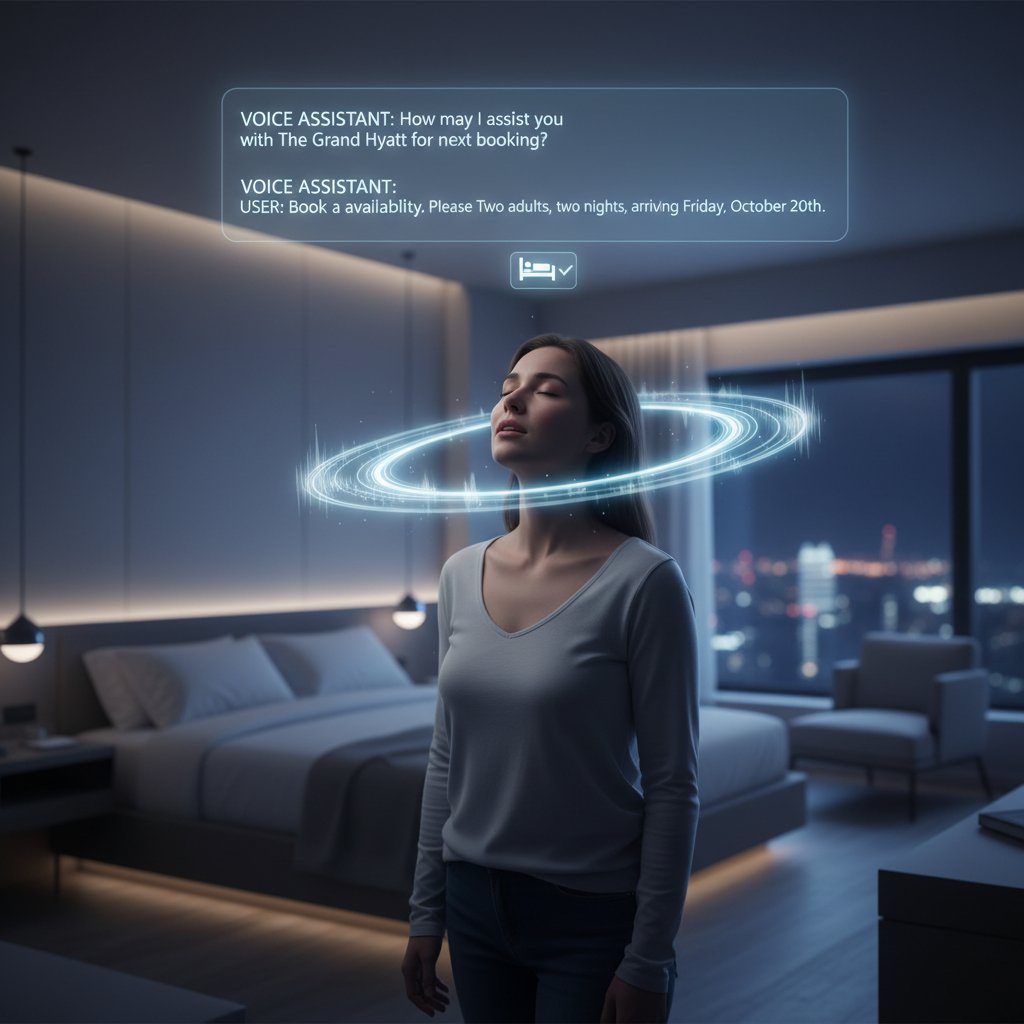
- Zero-UI bookings: Voice, chatbots, and conversational interfaces are moving mainstream.
- Hyperlocal recommendations: AI isn’t just matching rooms—it’s matching experiences, tours, and events.
- Biometric security: Facial recognition and fingerprint logins enhance trust (with consent).
- Sustainable UX: Eco-badges, carbon offset calculators, and green filters are increasingly important to Gen Z travelers.
- Real-time review validation: AI can flag fake reviews and surface only verified, current feedback.
Conclusion
Digital hospitality isn’t about chasing the latest trends or copying competitors—it’s about understanding the brutal truths that drive guest behavior and business success. The best hotel industry UX/UI best practices in 2025 are ruthlessly focused on frictionless journeys, authentic personalization, and radical inclusivity. According to Event Temple, 2024, hotels that get this right convert more, retain more, and build brands that thrive even as guest expectations shift.
Whether you’re redesigning a boutique site or managing a global chain, the message is clear: invest in speed, clarity, accessibility, and trust. Use AI as a tool, not a gimmick. Demand transparency from your tech partners. Audit, iterate, and never settle for “industry standard” mediocrity.
Ready to lead the digital hospitality revolution? Start by examining every screen, every step, every word from your guest’s perspective. The reward isn’t just better metrics—it’s enduring loyalty and the kind of reputation that future-proofs your business. For more, explore resources at futurestays.ai and transform your approach to digital hospitality.
Sources
References cited in this article
- Event Temple(eventtemple.com)
- Leonardoworldwide(blog.leonardoworldwide.com)
- Maze(anais.digital)
- Revfine(revfine.com)
- eHotelier(insights.ehotelier.com)
- NotifyVisitors(notifyvisitors.com)
- RoomStay(roomstay.io)
- MeasuringU(measuringu.com)
- TechJury(techjury.net)
- SiteMinder(siteminder.com)
- HospitalityNet(hospitalitynet.org)
- P3Hotels(p3hotels.com)
- Built In(builtin.com)
- LBBOnline(lbbonline.com)
- LinkedIn(linkedin.com)
- Applied Digital(applieddigital.co.uk)
- Forbes(forbes.com)
- DigginTravel(diggintravel.com)
- devPulse(devpulse.io)
- FullStack(fullstack.com)
- TheDailyFrontend(thedailyfrontend.com)
- Eleken(eleken.co)
- Windmill(windmill.digital)
- Codica(codica.com)
- Cizotech(cizotech.com)
- Jelena UX(jelena-ux.com)
- Paul Brighton(paulbrighton.com)
- HospitalityNet(hospitalitynet.org)
- Forbes(forbes.com)
- Number Analytics(numberanalytics.com)
- HospitalityNet(hospitalitynet.org)
- MDPI(mdpi.com)
- Hotel Tech Medium(medium.com)
- Hotelogix(blog.hotelogix.com)
Find Your Perfect Stay, Instantly
Futurestays.ai transforms the way you find accommodations by leveraging cutting-edge AI technology to analyze extensive databases and deliver highly personalized hotel and apartment recommendations in seconds. Whether you're traveling for leisure, business, or adventure, our intuitive platform ensures you find the perfect stay tailored to your style, budget, and requirements. Say goodbye to endless scrolling and tedious filtering, and hello to quick, precise, and effortless accommodation booking.
Get startedReady to Find Your Perfect Stay?
Let AI match you with your ideal accommodation today
Frequently Asked Questions
What percentage of travelers abandon hotel booking journeys due to poor UX/UI?
According to Event Temple (2024), over 50% of travelers abandon online booking journeys because of poor user experience.
How much can a one-second delay in mobile page load time impact conversion rates?
According to Google's industry benchmarks, a one-second delay in mobile page load time can decrease conversion rates by up to 20%.
What percentage of hotel bookings now originate on mobile devices?
70% of bookings now originate on mobile devices, making mobile-first design critical for hotel UX/UI.
What are the key UX/UI strategies mentioned for reducing booking friction in 2025?
The article identifies mobile-first design, ruthless friction elimination, and AI-powered personalization as the key survival strategies for hotel UX/UI in 2025.
Keep Reading
Keep exploring AI accommodation finder

How AI Improves Hotel Booking User Experience

Hotel Booking User Interface Design and Revenue Loss

What Enhanced Hotel Booking Experiences Actually Deliver

Hotel Booking Guide: How Algorithms Shape Your Bookings

How AI Is Reshaping the Future of Hotel Booking


