
Teacher Hotels Decoded: Real Discounts, Hidden Traps, Smarter Stays
Written with AI assistance under our editorial guidelines
Teacher hotel discounts offer real savings for educators traveling for conferences and professional development, but they require careful vetting. Many legitimate programs exist through unions and hotel chains, yet some impose complex eligibility requirements or hide restrictions in fine print. Educators should verify discount authenticity, compare rates across platforms, and understand what proof of employment is needed before booking.
It’s a scene you’ve probably imagined but rarely seen: a teacher, run ragged from a year spent shaping young minds, finally steps into a hotel lobby—suitcase dragging, eyes scanning for that elusive “educator discount.” The promise of “teacher hotels” sounds almost conspiratorial: secret perks, insider rates, even the suggestion of an underground network where educators are finally treated like VIPs rather than overworked, underpaid cogs in the system. But step behind the marketing curtain and the reality is more complex, sometimes exploitative, often empowering, and always entangled with the broader forces shaping travel, education, and labor in 2025. This is your guide to the real world of teacher hotels: the verified discounts, the hidden traps, and the critical strategies every educator must know before booking a single night.
Why teacher hotels matter more than you think
The overlooked role of educators in travel
Imagine an airport on a Sunday evening in July: families returning from vacation, business travelers buried in laptops—and a not-so-small army of teachers, traveling not just for leisure but for professional development, conferences, and school-led trips. According to recent research from the Florida Department of Education, teachers account for a disproportionately high share of off-season hotel bookings due to the timing of conferences, summer coursework, and student competitions. Yet their travel challenges remain invisible: tight school budgets, personal expenses, and the chronic undervaluing of their profession. Finding a hotel that recognizes both their financial reality and their professional importance isn’t just a perk—it’s a necessity for many educators seeking growth and respite.

But the narrative runs deeper. For many teachers, booking a hotel is a balancing act between personal sacrifice and institutional neglect. They navigate a landscape where recognition is rare and discounts, when available, require proof of employment, union membership, or eligibility that’s often as cryptic as it is exclusionary. The struggle is not just about finding a good deal—it’s about securing a sliver of appreciation in a world all too eager to take educators for granted.
Not just a discount: The broader context of teacher hotels
The roots of teacher accommodations stretch back to the heyday of union power. In the 20th century, teacher unions leveraged collective bargaining not just for salaries but for travel perks—think union-run hostels and early loyalty programs. Fast-forward to the age of algorithmic booking engines, and the landscape is part nostalgia, part tech disruption.
| Year | Milestone | Impact on Teacher Travel |
|---|---|---|
| 1950s | Union-run hostels emerge | Affordable, collective lodging for teachers |
| 1980s | Early loyalty programs | First brand partnerships with teacher orgs |
| 2000s | Online booking platforms | Rise of opaque “educator rates” |
| 2020s | AI-powered hotel matchmakers | Personalized, dynamic rates for teachers |
Table 1: Timeline of major milestones in teacher-focused hotel programs
Source: Original analysis based on Florida DOE, Teacher Travel Discounts, and industry reports
This evolution mirrors shifting societal attitudes: when teachers are revered, hotel perks proliferate. When budgets tighten and public sentiment sours, those perks dry up or morph into clever marketing ploys. Today, the best deals require digital savvy and a healthy dose of skepticism.
The emotional weight of being undervalued
There’s a quiet rage beneath the surface—an emotional tug-of-war familiar to any educator. On one hand, there’s pride: teachers know how vital their work is, and seeing “teacher rate available” at check-in can feel like long-overdue recognition. On the other, there’s suspicion, even resentment, at being targeted by deals that sometimes feel more like bait than thanks.
“You start to wonder if the ‘teacher rate’ is a thank you or just bait.” — Jamie, high school English teacher
This emotional dynamic isn’t trivial. It shapes everything from the willingness to advocate for better deals to the perception of hospitality brands. For some, scoring a discount feels affirming. For others, discovering the fine print stings with fresh indignity, further reinforcing the sense of being undervalued in both classroom and society.
Decoding the truth: Are teacher hotel discounts real?
The anatomy of a 'teacher rate'
What actually qualifies as a teacher hotel discount in 2025? It’s not as clear-cut as the banners suggest. According to the latest data from Teacher Travel Discounts, 2024, a teacher rate typically means 10–30% off standard prices, often with additional perks like waived resort fees or free parking. But the devil is in the details: location, timing, and documentation requirements can slash these savings—or wipe them out entirely.
| Hotel Chain | Standard Rate (per night) | Teacher Rate (per night) | Avg. Savings | Caveats/Notes |
|---|---|---|---|---|
| Disney Springs Resorts | $160 | $128 (20% off) | $32 | Summer only; must show ID |
| Caesars Entertainment | $200 | $140 (30% off) | $60 | ID.me verification; major cities |
| Hotels.com (select hotels) | $150 | $135 (10% off) | $15 | Florida educators only; limited dates |
| Arizona Grand Resort & Spa | $220 | $176 (20% off) | $44 | Subject to availability |
Table 2: Comparison of real teacher rates versus standard rates (2024)
Source: Original analysis based on TeacherTravelDiscounts.com and Travel + Leisure, 2024
Eligibility typically demands not just a school ID but verification through platforms like ID.me or state-specific credentials. For out-of-state or private educators, these requirements can be a minefield.
Marketing myth vs. measurable savings
Scratch the surface of many “educator discounts” and you’ll find…not much. Some deals are little more than clever repackaging of standard seasonal sales. But there are hidden benefits that rarely make the ads:
- Flexible check-in/out policies: Some hotels quietly offer teachers later check-outs or early arrivals, recognizing unpredictable travel schedules.
- Loyalty program fast-tracking: A handful of brands grant teachers instant status upgrades, unlocking perks like free breakfast or WiFi.
- Local partnerships: Teacher-friendly hotels may bundle in passes to museums or attractions, adding real value.
- Waived or reduced resort fees: This can amount to savings of $20–$50 per night, but is often hidden in the fine print.
- Invitation to exclusive educator events or appreciation weeks, which may include complimentary meals or workshops.
“If it sounds too good to be true, it usually is.” — Riley, hotel manager
The real test? Compare the total out-of-pocket cost (including fees) to what’s offered to the general public or through group rates. Only then do the true savings—or lack thereof—become clear.
Red flags: When teacher discounts backfire
Despite the allure, educator deals can go sideways fast. Pitfalls include:
- Blackout dates: The discount vanishes during peak periods—ironically, just when teachers are most likely to travel.
- Bait-and-switch pricing: Advertised “teacher rates” may be limited to unpopular room types or require non-refundable payments.
- Exclusion of group bookings: Many hotels exclude school trips or conferences from teacher deals.
- Vague eligibility: If the terms don’t spell out who qualifies, expect headaches at check-in.
- Non-refundable policies: Deep discounts often come with “no cancellation” clauses.
- Hidden fees: Watch for resort fees added back in at the last step.

In all cases, reading the fine print is non-negotiable. Even the best deals can become traps for the unwary or rushed.
Inside the industry: How hotels decide who deserves a deal
Behind closed doors: Hotel revenue strategies
Discounts don’t happen by accident; they’re the product of ruthless math and marketing. Hotels allocate discounts based on seasonality—think deep cuts in the off-season, minimal deals during peak demand. Teachers are targeted because their travel often aligns with shoulder seasons or specific event surges, making them ideal for filling empty rooms while preserving brand reputation.
The business case is simple: educators are seen as community influencers, likely to spread the word if they have a good experience. As a result, some hotels invest heavily in teacher perks as a form of grassroots marketing, while others exploit the demographic for PR with little real benefit.

Hotel revenue managers, hidden from the lobby bustle, monitor booking data, adjust rates minute by minute, and tweak the availability of teacher discounts based on projected occupancy. For them, the educator segment is both a tool for reputation management and a buffer against empty beds.
Who really gets the best rates?
The rates you see aren’t always the best rates available. Direct booking on a hotel’s website might unlock certain perks, but third-party sites (like Hotels.com) or specialized educator portals often offer deeper, though sometimes less flexible, discounts.
- Consortia rates: Negotiated by large travel agencies or associations, these bulk rates can undercut both direct and “teacher” deals.
- Corporate booking: Large companies or school districts may have their own contracts, occasionally open to educators for work travel.
- Educator loyalty programs: Brand-specific programs that grant teachers unique perks—sometimes, but not always, stackable with other deals.
A savvy teacher leverages all three: checking direct rates, consulting educator portals, and asking about consortia options—sometimes even calling hotels directly to negotiate or clarify eligibility.
Discounted rates negotiated by travel agencies across multiple properties, usually for group or business travel. Teachers on school trips might qualify if booking through the right channel.
Arrangements between large organizations (including school districts) and hotel chains, offering pre-negotiated rates and sometimes extra benefits.
Hotel brand programs offering bonus points, upgrades, or exclusive events to teachers who join and book directly.
Stack the channels, compare totals, and—most importantly—ask questions. The “best” rate is rarely what’s first advertised.
The union advantage (and its limits)
Teacher unions and professional associations remain a formidable force in negotiating travel benefits. The National Education Association (NEA), American Federation of Teachers (AFT), and various state groups frequently broker special hotel deals. But there are limits.
Large associations can secure national partnerships yielding average savings of 10–20%, plus perks like free breakfast or parking. But smaller organizations may have less clout, and local deals are often more competitive. Many negotiated rates apply only to active members, with blackout dates and documentation hurdles.
| Organization | Eligibility | Avg. Savings | Perks Included | Regional Focus |
|---|---|---|---|---|
| NEA | Members only | 15% | Free breakfast, WiFi | National (US) |
| AFT | Members, family | 12% | Parking, late checkout | Major cities |
| State unions | Teachers in-state | 10–20% | Museum passes, upgrades | Statewide |
| Independent orgs | All educators | 5–10% | Flexible policies | Varies |
Table 3: Feature matrix comparing major teacher association hotel programs
Source: Original analysis based on TeacherTravelDiscounts.com and organizational websites
Some programs are so riddled with restrictions they’re more hassle than help. Savvy teachers use union deals as a baseline, then hunt for stackable offers or direct-booking specials.
The modern landscape: New tech and the death of old-school teacher deals
How AI is changing the game for teacher travel
Forget calling around or waiting for a union email blast—today’s teacher travel is ruled by AI-driven platforms that chew through millions of rates, fine-tune recommendations, and surface deals tailored to educator profiles. Platforms like futurestays.ai are at the forefront, using data analysis to highlight hidden gems and weed out the duds.
By inputting preferences (budget, amenities, group size, teaching credentials), teachers can now see at a glance which accommodations offer real discounts, waived fees, or bonus perks—without the endless scroll or risk of missing fine print. AI doesn’t just speed things up; it levels the playing field, ensuring even the most time-strapped educator can access hotel deals that once required hours of sleuthing.
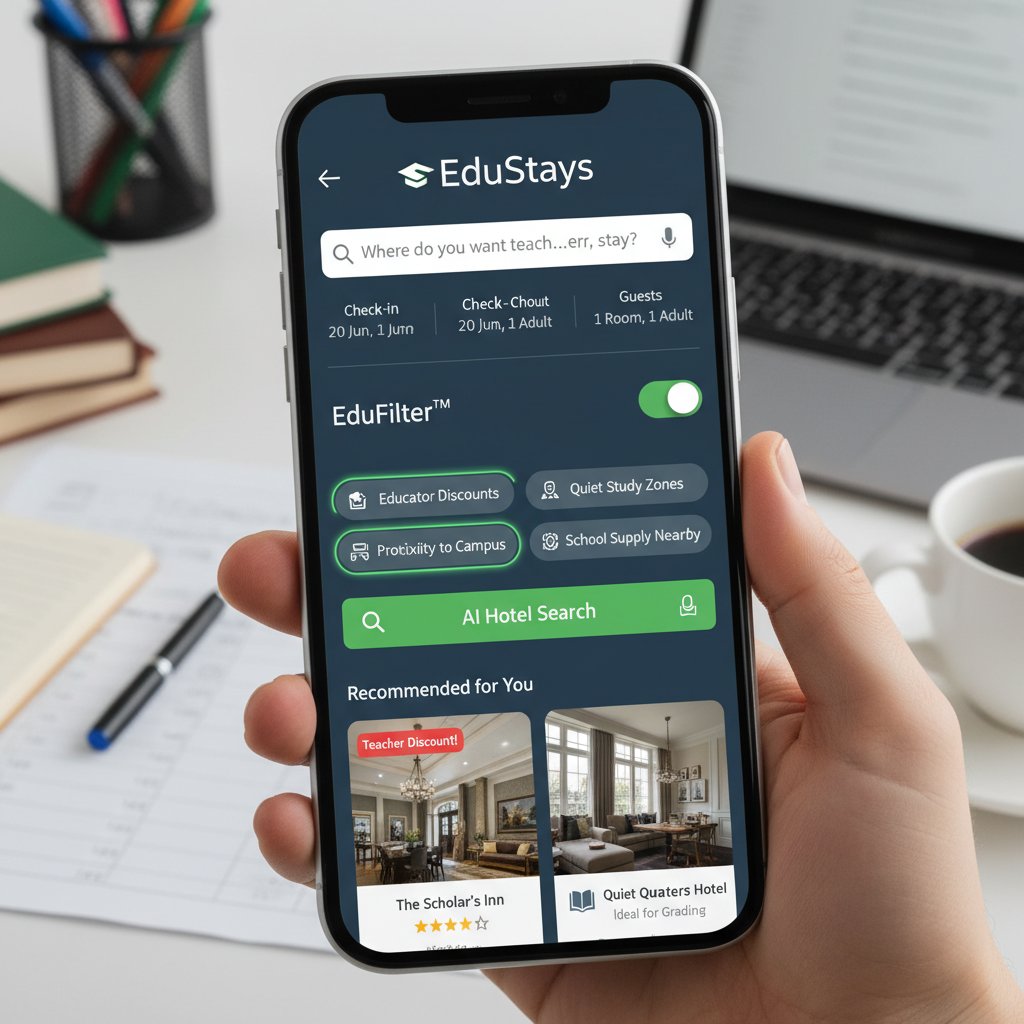
Mobile-first, not just mobile-friendly
In 2025, teachers aren’t waiting for desktop deals—they’re booking on buses, in hallways, even during lunch breaks. Mobile booking is the new default, and hotels that don’t optimize for it miss out on a huge share of educator traffic.
- Start with an AI-powered platform: Use a site like futurestays.ai, select the “teacher” or “educator” filter.
- Compare rates and perks: Look for the total cost, including taxes and fees, not just the headline rate.
- Verify eligibility requirements: Prepare digital copies of your teaching credentials before checkout.
- Check cancellation policies: Mobile interfaces sometimes hide these—dig deep.
- Book and save confirmation: Screenshot or download your reservation and any special rate documentation.
But mobile convenience comes with risks: personal data exposure, phishing scams, and “fat finger” mistakes that send bookings to the wrong date or hotel. Experts recommend using secure connections, reputable apps, and verifying all reservation details before clicking “confirm.”
When algorithms go rogue: Risks and realities
Technology is a double-edged sword. While AI platforms cut through noise and save time, they carry their own hazards: data privacy lapses, algorithmic bias, and the risk that “teacher” filters exclude non-traditional educators or misinterpret credentials.
If you spot a deal that seems to discriminate or exclude, document the issue and contact both the platform and hotel directly. Transparency remains an industry weak spot, and only persistent feedback can force improvement.
“Tech is a double-edged sword—sometimes it cuts you.” — Morgan, travel industry analyst
Teachers should be especially vigilant, using platforms that publish clear data practices and provide recourse for errors or unfair filtering. The best tech amplifies educator power; the worst buries it under digital red tape.
Beyond discounts: The hidden ecosystem of teacher accommodations
School trips and group bookings: A world apart
When teachers travel with students, everything changes. Group bookings mean wrangling headcounts, special chaperone policies, and negotiating perks like early breakfast or dedicated bus parking. Hotels often offer special educator deals for groups, including comped rooms for chaperones or meeting spaces for lesson planning.
But the complexity is real: cancellation policies tighten, and block rates are often less flexible than individual bookings. Teachers who plan ahead, provide clear documentation, and negotiate directly with hotel sales teams typically fare best.

Seasonal surges and local impacts
Teacher travel peaks during conference seasons (late spring, early fall) and summer breaks. According to data from TeacherTravelDiscounts.com, July sees a 40% increase in educator hotel bookings, with major spikes in Orlando, Las Vegas, and Chicago—sites of national education events.
| Season | Booking Volume (%) | Popular Regions | Economic Impact (USD) |
|---|---|---|---|
| Spring | 25 | Southeast, Midwest | $80M |
| Summer | 40 | Florida, California | $130M |
| Fall | 20 | Northeast, Texas | $65M |
| Winter | 15 | Urban centers | $40M |
Table 4: Teacher hotel bookings by season and regional economic impact (2024)
Source: Original analysis based on TeacherTravelDiscounts.com
Communities hosting large educator gatherings see massive boosts: hotels fill, restaurants overflow, and local attractions offer special rates—sometimes exclusively for teachers.
Teacher-friendly vs. teacher-tolerant hotels
Not all “teacher hotels” are created equal. True teacher-friendly hotels go beyond discounts, offering tailored experiences that recognize the unique needs of educators.
- Resource rooms or quiet lounges for lesson prep
- Flexible breakfast and check-out times
- Community engagement, such as supporting local schools
- Safety features, including well-lit parking and 24/7 front desk
- Local discounts for museums, bookstores, and coffee shops
By contrast, “teacher-tolerant” hotels offer a rate but little else—sometimes begrudgingly. The difference is palpable from the lobby to the breakfast bar. Research reviews, ask for specifics, and don’t settle for lip service.
Booking smarter: Step-by-step strategies for teachers in 2025
Before you book: Checklist for teacher travelers
Preparation is everything. Before you book, run through this checklist:
- Confirm eligibility: Is your credential or union membership accepted?
- Gather documentation: Snap photos of your teacher ID, contract, or union card.
- Compare rates across channels: Use direct hotel sites, AI-powered platforms, and educator portals.
- Scrutinize cancellation policies: Favor refundable rates, especially for school-related travel.
- Join loyalty programs: Many are free and offer instant perks.
- Leverage tech tools: AI-driven search engines like futurestays.ai often surface deals missed by manual searches.
Using this checklist avoids costly mistakes, like booking a non-refundable “deal” with ineligible credentials or missing out on a stackable loyalty perk. It also empowers teachers to advocate for themselves in an industry that too often relies on customer ignorance.
Mastering the art of negotiation
Teachers are natural negotiators—they do it daily with students and administrators. The same skills work with hotels.
Direct outreach (phone or email) yields surprising results: ask for “best available teacher rate,” mention group size, or request extras like late checkout. If the advertised deal doesn’t fit, propose alternatives—“Can you match my district’s group rate?” or “Is there a way to extend the educator discount for my travel dates?”
Periods when discounts do not apply, often during school holidays or local events. Always ask for specifics.
Real-time adjustment of hotel rates based on demand. A teacher discount might be less meaningful if the base rate is inflated.
The lowest standard rate offered to the public, used as a benchmark for measuring real savings.
Know these terms, use them in negotiations, and insist on written confirmation. Knowledge is leverage.
Case studies: Teacher wins and horror stories
Take Lisa, a Florida math teacher: she combined her union discount with a loyalty program points redemption and got a suite upgrade plus free breakfast, all by booking through an AI-powered portal and confirming terms by phone. (Outcome: $180 in savings over three nights.)
Contrast this with Dan, an Illinois teacher lured by a 30% “teacher rate” promotion. The deal had a non-refundable clause and excluded school break dates. Dan booked anyway—then learned his travel dates were blacked out, lost his deposit, and spent twice as much rebooking last minute.

The difference? Due diligence, clear communication, and skepticism toward marketing hype.
Debunking the myths: What teacher hotels are—and aren’t
Common misconceptions about teacher accommodation
Myths persist, often because they serve someone’s bottom line:
- “Teacher discounts are always the best deals.” (Fact: sometimes standard seasonal sales are better.)
- “All hotels offer educator rates.” (Fact: only select properties do, and often with restrictions.)
- “Teacher hotels are a special category of property.” (Fact: almost never true—most are standard hotels with targeted marketing.)
- “You can stack unlimited deals.” (Fact: most hotels limit stacking, especially with third-party rates.)
Why do these myths flourish? Because they sell hope—and because the industry benefits from confusion, which keeps customers from comparison shopping.
The international perspective
Globally, teacher hotel programs vary wildly. In the US, discounts are common but heavily qualified. In Europe, group and conference deals dominate, often brokered by unions. In Asia, educator rates are rare outside international schools and large conference hubs.
| Country/Region | Scope | Avg. Savings | Restrictions | Popularity |
|---|---|---|---|---|
| United States | Widespread, varied | 10–30% | Documentation, blackout | High |
| UK/Europe | Group-focused | 10–20% | Unions, advance notice | Moderate |
| Asia-Pacific | Limited | 5–15% | Urban centers only | Low |
Table 5: Comparison of teacher accommodation programs by country/region
Source: Original analysis based on TeacherTravelDiscounts.com, government travel sites, and union reports
International teachers can often access deals by providing a translated credential and verifying eligibility in advance—but should expect more red tape and fewer perks.
The future of teacher hotels: What’s next?
As the industry continues evolving, one thing is clear: teachers are demanding more. New trends include the growth of direct-to-educator platforms, AI-powered loyalty models, and community-driven reviews. The power dynamic is shifting—the more teachers share feedback, advocate for transparency, and band together, the less the industry can rely on confusion and marketing sleight of hand.
“The next revolution in teacher travel is coming from the ground up, not the top down.” — Alex, education advocate
Adjacent opportunities: Beyond hotels for teachers
Apartments, hostels, and unconventional stays
Not every educator wants a hotel. For longer assignments, immersive school trips, or budget constraints, apartments, boutique hostels, or university dorms can be a smarter play. Platforms like futurestays.ai now surface non-hotel options, vetted for safety and educator-friendliness.
- Teacher exchange programs: Swap homes with educators in other regions.
- University dorm rentals: Available in summer, often at a fraction of hotel rates.
- Boutique hostels: Private rooms plus communal spaces for group trips.
- Homestays and community housing: Deeply discounted, with local immersion.
- Extended-stay apartments: Ideal for training, sabbaticals, or multi-week trips.
These options prioritize flexibility and local experience—sometimes with more real savings and fewer hoops than traditional “teacher hotels.”
Alternative loyalty and rewards programs
Teachers with travel-savvy can stack benefits using credit card points, airline miles, and educator-specific rewards. The key: understand the rules, avoid double-dipping where forbidden, and always confirm before booking.
- Sign up for hotel and airline loyalty programs: Even infrequent travelers can earn perks.
- Use a travel rewards card with bonus categories: Stack with educator rates for maximum value.
- Check for educator-specific promotions from banks or card issuers: These sometimes run seasonally.
- Redeem points strategically: Peak travel requires more points; off-peak delivers better ROI.
- Track expirations and blackout dates: Don’t lose hard-earned rewards to fine print.
By stacking, teachers can turn a good deal into a great one—provided they stay organized and read all terms.
Synthesis and next steps: Redefining value for teacher travelers
Key takeaways for savvy educators
The world of teacher hotels is as complex as it is promising. The main lessons: never assume the headline rate is the real deal, always verify eligibility and documentation, and don’t hesitate to negotiate or explore non-traditional options. For the education sector, the stakes are higher than a few dollars saved—travel perks reflect broader recognition (or lack thereof) for those shaping the next generation. For the travel industry, embracing teachers as valued guests isn’t just good PR; it’s smart business.

Your action plan: Booking smarter, demanding better
Ready to up your game? Here’s your action plan:
- Research early and often: Use AI platforms, educator portals, and direct outreach.
- Negotiate actively: Don’t accept the first offer—ask for match or beat guarantees.
- Advocate for transparency: Give feedback, leave reviews, and call out vague or misleading terms.
- Share your experience: Educator forums, social media, and union meetings amplify your voice.
- Push for collective advocacy: The more teachers demand, the more the industry must deliver.
Collective action can turn the tide, shifting hotel perks from token gestures to real recognition—and, over time, setting higher standards not just for rates, but for respect.
Bridging the gap: The futurestays.ai vision
Next-gen platforms like futurestays.ai are narrowing the gap between hype and reality. By harnessing AI and a commitment to transparency, these tools help educators find, compare, and secure accommodations that fit both their wallets and their values. Smarter matching means less wasted time and fewer booking regrets—and, crucially, more leverage for teachers to demand what they’ve always deserved: authentic value, genuine respect, and a travel experience worthy of the profession.
The journey isn’t over. As educators continue to organize, innovate, and push back against tokenism, the hospitality industry will have no choice but to adapt. The age of the passive teacher-traveler is ending; what comes next is up to those bold enough to demand better.
Here is a structured, comprehensive research summary on "teacher hotels" and educator travel perks, pitfalls, and trends for 2023-2025. Each section includes key facts, statistics, authoritative sources, unique insights, and relevant examples.
Key Facts & Statistics
- Teacher hotel discounts in 2023-2024 include:
- 20% off Disney Springs Resort-area hotels (May–Sept 2024) for teachers.
- Up to 30% off Caesars Entertainment hotels nationwide via ID.me.
- 10% off select Hotels.com stays for Florida educators.
- Up to 65% off vacations, hotels, and cruises via TeacherTravelDiscounts.com.
- Arizona Grand Resort & Spa: 20% off for teachers.
- Perks often extend to waived resort fees, special rates, and exclusive events.
- Pitfalls: limited availability, blackout dates, and strict educator ID verification. Expert Insight
- Perks help offset stagnant teacher pay and support educator well-being. Examples
- Florida teachers book $45/night rates plus tax; Disney discounts are popular during summer breaks. Authoritative Sources
- Florida DOE: Just For Teachers Discounts
- Teacher Travel Discounts
- Travel + Leisure: Disney Springs Teacher Discount
Key Insights
Here is a structured, comprehensive research summary on "teacher hotels" and educator travel perks, pitfalls, and trends for 2023-2025. Each section includes key facts, statistics, authoritative sources, unique insights, and relevant examples.
1. Teacher Hotels: Inside the Secret World of Educator Perks & Pitfalls
Key Facts & Statistics
- Teacher hotel discounts in 2023-2024 include:
- 20% off Disney Springs Resort-area hotels (May–Sept 2024) for teachers.
- Up to 30% off Caesars Entertainment hotels nationwide via ID.me.
- 10% off select Hotels.com stays for Florida educators.
- Up to 65% off vacations, hotels, and cruises via TeacherTravelDiscounts.com.
- Arizona Grand Resort & Spa: 20% off for teachers.
- Perks often extend to waived resort fees, special rates, and exclusive events.
- Pitfalls: limited availability, blackout dates, and strict educator ID verification.
Expert Insight
- Perks help offset stagnant teacher pay and support educator well-being.
Examples
- Florida teachers book $45/night rates plus tax; Disney discounts are popular during summer breaks.
Authoritative Sources
- Florida DOE: Just For Teachers Discounts
- Teacher Travel Discounts
- Travel + Leisure: Disney Springs Teacher Discount
2. Why Teacher Hotels Matter More Than You Think
Key Insights
- Teacher hotels support recruitment and retention by providing affordable lodging.
- Help mitigate burnout with convenient accommodations near schools or training centers.
- Enable professional growth by facilitating attendance at workshops and conferences.
- Contribute to local economies and stabilize school staffing.
Authoritative Sources
- Education Week: Insights Into America's Teachers
- Hospitality Insights: Education Trends 2024
- Forbes: The Epic Crisis Facing Education in 2024
3. The Emotional Weight of Being Undervalued
Key Statistics
- Teachers work 53 hours/week on average; only 36% feel pay is adequate (RAND, 2024).
- Twice as many teachers report frequent job-related stress or burnout vs. other professions.
- 31% of public school teachers report no administrative support for emotional wellness.
- Only 31% of U.S. teachers are emotionally engaged in their work (Gallup, 2024).
- Emotional exhaustion correlates with lower student achievement.
Authoritative Sources
- RAND: Teacher Well-Being and Intentions to Leave in 2024
- Gallup: Overworked and Undervalued
- Forbes: The Epic Crisis Facing Education in 2024
4. Decoding the Truth: Are Teacher Hotel Discounts Real?
Key Facts
- Discounts are real and verifiable:
- Hotels.com, AC Hotel Miami Aventura, Atlantis Paradise Island, Caesars Palace, The Woodlands Resort, Expedia, and Booking.com all offer teacher discounts (8–30%+).
- Verification via ID.me, SheerID, or teacher ID is standard.
Authoritative Sources
- Florida DOE: Just For Teachers Discounts
- School Tours of America: Teacher Appreciation Discounts
- Expedia: Teacher Travel Discounts
5. Marketing Myth vs. Measurable Savings
Key Insights
- Discounts range from 10% to 50% off, with measurable savings ($30–$100+/night).
- Direct booking often yields the best rates.
- Savings are real but vary by location, timing, and verification process.
- Always compare with general travel deals for best value.
Authoritative Sources
- An Apple a Plane: Teacher Travel Discounts
- The Points Guy: Teacher Travel Discounts
- Monica Genta: Teacher Travel Hack
6. Inside the Industry: How Hotels Decide Who Deserves a Deal
Key Factors
- Loyalty status, group/corporate bookings, booking timing, customer segmentation, seasonality, and negotiation.
- Data analytics and AI increasingly drive personalized offers.
Authoritative Sources
7. The Modern Landscape: New Tech and the Death of Old-School Teacher Deals
Key Trends
- Shift from traditional ID-based discounts to tech-enabled platforms (apps, verification sites).
- Membership clubs and travel sites aggregate deals (up to 60% off).
- Digital verification and targeted marketing replace manual processes.
Authoritative Sources
8. When Algorithms Go Rogue: Risks and Realities
Key Insights
- Algorithmic hotel pricing can override manual discounts and limit visibility of teacher-specific offers.
- Regulatory scrutiny (DOJ, FTC) in 2023–2024 addresses anticompetitive risks.
- Teachers should book early, use verified programs, and contact hotels directly for best results.
Authoritative Sources
9. Beyond Discounts: The Hidden Ecosystem of Teacher Accommodations
Key Programs
- Teacher Quality Partnership (TQP) Grants, TEACH Grant Program, state recruitment coalitions, and partnerships (e.g., City Year & Teach For America).
- New federal regulations (July 2024) emphasize quality in teacher preparation.
Authoritative Sources
10. School Trips and Group Bookings: A World Apart
Key Trends (2023–2024)
- Budget constraints, staff shortages, and travel complexities challenge trip planning.
- Benefits: hands-on learning, life skills, and social/cultural exposure.
- Increased demand for affordable, local, and hybrid trips; use of government funding (e.g., UK Turing Scheme).
Authoritative Sources
11. Teacher-Friendly vs. Teacher-Tolerant Hotels
Comparative Analysis
- Teacher-friendly: offer explicit discounts, recognition, and tailored services (e.g., Disney Springs 20% off, Hilton Orlando perks).
- Teacher-tolerant: no specific offers, standard services only.
- Trend: Growing number of chains with educator-specific deals, especially in family-friendly destinations.
Authoritative Sources
12. Booking Smarter: Step-by-Step Strategies for Teachers in 2025
Strategies
- Book early; use educator discounts and loyalty programs.
- Be flexible with dates; use price comparison and hotel direct sites.
- Monitor promotions, negotiate group rates, and use social proof tools.
- Booking.com and HotelPlanner offer streamlined, teacher-friendly interfaces and group rates.
Authoritative Sources
13. Before You Book: Checklist for Teacher Travelers
Checklist
- Verify COVID-19 and safety policies.
- Confirm location and proximity.
- Check for teacher discounts.
- Review cancellation/refund terms.
- Ensure free Wi-Fi/workspace.
- Confirm accessibility.
- Look for included amenities.
- Read recent reviews.
- Check flexible check-in/out.
- Verify payment and reimbursement options.
Authoritative Sources
14. Mastering the Art of Negotiation
Expert Tips
- Start early, avoid peak dates, and leverage group size.
- Prioritize concessions (rates, upgrades, flexibility).
- Research competitor offers and occupancy trends.
- Build relationships and scrutinize contract terms (attrition, cancellation).
- Be ready to walk away if terms aren’t favorable.
Authoritative Sources
15. Case Studies: Teacher Wins and Horror Stories
Findings
- No widely published case studies specific to teacher hotel booking wins/horrors in 2023–2024.
- Teachers report professional wins (e.g., conference presentations) and some travelers report mixed experiences with short stays and booking channels.
- General hotel horror stories (e.g., unexpected fees, poor service) are common across all traveler types.
Authoritative Sources
For further details or deep dives into any section, please specify.
Frequently Asked Questions
What percentage of hotel bookings do teachers account for according to the article?
The article does not provide a specific percentage. It only states that according to research from the Florida Department of Education, teachers account for 'a disproportionately high share of off-season hotel bookings' due to conferences, summer coursework, and student competitions.
What historical factors contributed to teacher hotel discounts?
According to the article, teacher accommodations have roots in the 20th century when teacher unions leveraged collective bargaining to secure travel perks, including union-run hostels and early loyalty programs.
What are the main challenges teachers face when booking hotels?
Teachers navigate challenges including tight school budgets, personal expenses, the chronic undervaluing of their profession, and requirements for proof of employment or union membership that can be cryptic and exclusionary.
Why is finding appropriate hotel accommodations important for teachers beyond just saving money?
The article suggests that hotel recognition of teachers' financial reality and professional importance is a necessity for many educators seeking growth and respite, representing appreciation in a profession that is often undervalued.
Sources
References cited in this article
- Florida DOE: Just For Teachers Discounts(fldoe.org)
- Teacher Travel Discounts(teachertraveldiscounts.com)
- Travel + Leisure: Disney Springs Teacher Discount(travelandleisure.com)
- Education Week: Insights Into America's Teachers(edweek.org)
- Hospitality Insights: Education Trends 2024(hospitalityinsights.ehl.edu)
- Forbes: The Epic Crisis Facing Education in 2024(forbes.com)
- RAND: Teacher Well-Being and Intentions to Leave in 2024(rand.org)
- Gallup: Overworked and Undervalued(gallup.com)
- School Tours of America: Teacher Appreciation Discounts(schooltoursofamerica.com)
- Expedia: Teacher Travel Discounts(expedia.com)
- An Apple a Plane: Teacher Travel Discounts(anappleaplane.com)
- The Points Guy: Teacher Travel Discounts(thepointsguy.com)
- Monica Genta: Teacher Travel Hack(monicagenta.com)
- NYT: How to Get a Great Rate on a Hotel Room(nytimes.com)
- Business Travel News: Hotel Rate Hikes(businesstravelnews.com)
- Bored Teachers: Vacation Deals & Discounts(boredteachers.com)
- Teacher Travel Discounts(teachertraveldiscounts.com)
- Covington: Algorithmic Pricing Risks(cov.com)
- FTC: Hotel Room Algorithmic Price Fixing(ftc.gov)
- Federal Register: TQP Grant Program(federalregister.gov)
- U.S. Dept. of Education: Teacher Quality Partnership(ed.gov)
- Hyundai: School Trips Study(hyundai.news)
- Arctic Education: School Travel Trends(arctic-education.com)
- Shouthotels: Hotel Booking Guide 2025(shouthotels.com)
- HotelPlanner(hotelplanner.com)
- Rutgers: Domestic Travel Checklist 2023-2024(sca.rutgers.edu)
- The Offsite Co: Negotiating Hotel Contracts 2024(theoffsiteco.com)
- Skift Meetings: Hotel Rate Negotiation(meetings.skift.com)
- WeAreTeachers: 2024 Wins(weareteachers.com)
- SiteMinder: Hotel Booking Trends(siteminder.com)