

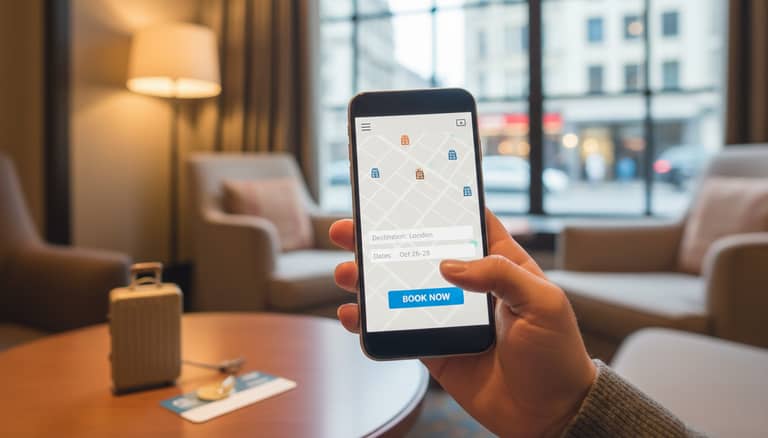
User-Friendly Hotel Booking, or a Maze of Dark Patterns?
Written with AI assistance under our editorial guidelines
Modern hotel booking platforms have devolved into mazes of dark patterns and hidden fees rather than user-friendly solutions, with 52% of travelers abandoning bookings due to opaque experiences. Despite promises of transparency and convenience, the proliferation of competing booking sites, contradictory information, and algorithmically manipulative interfaces has replaced the simplicity of direct hotel phone calls with stress and confusion.
Step up, traveler. If you thought user-friendly hotel booking was a solved problem—just another item on your digital to-do list—think again. The modern booking battlefield is paved not with convenience, but with half-truths, dark patterns, and a mess of platforms each promising a frictionless experience. Here’s the raw truth: “user-friendly” has become a buzzword, a suit of digital armor hiding a war for your clicks, your cash, and ultimately, your trust. In an era when 52% of travelers still abandon bookings because the experience is so frustratingly opaque, the industry’s definition of user-friendliness clearly isn’t working (HotelTechnologyNews, 2024). The stakes are high: your time, your money, your sanity. This guide rips the marketing gloss off hotel booking, exposes the traps, and arms you with the truth—plus the tactics you really need to win the game. Whether you’re a solo backpacker, a business pro, or a family wrangling toddlers and suitcases, this is the anatomy of the hotel booking revolution you deserved yesterday.
Why does booking a hotel still feel like a trap?
The evolution from phone calls to digital chaos
Rewind a couple of decades. Hotel booking was analog: a phone call, a polite inquiry, a ledger scribbled by hand. It was slow, yes—but also straightforward. You spoke to a human, you got a price, you made a decision. Then, online booking platforms arrived, promising a utopia of transparency, selection, and instant confirmation. The digital age should have been the great equalizer: more choice, faster results, purportedly better deals. But what started as liberation quickly devolved into a minefield of pop-ups, hidden fees, and algorithmic manipulation.

The proliferation of booking sites—over a dozen new global entrants joined the top ranks in just the past year (SiteMinder, 2024)—has created information overload. Instead of clarity, travelers now juggle endless tabs, comparing prices, reading contradictory reviews, and navigating interfaces designed to stress rather than soothe. As hotelier Mark succinctly puts it:
"Booking used to be simple—now it’s a maze." — Mark, Independent Hotelier, 2024
Here’s how we got here:
| Year | Milestone | Impact on User Experience |
|---|---|---|
| 1980s | Rise of toll-free hotel numbers | Direct communication, limited options |
| 1995 | Launch of first online booking (Travelweb) | Choice expands, but usability uneven |
| 2005 | OTAs (Expedia, Booking.com) dominate | Mass listings, more confusion, price wars |
| 2013 | Mobile booking apps proliferate | On-the-go access, inconsistent interfaces |
| 2020 | AI personalization emerges | Promise of relevance, but black-box choices |
| 2024 | 17+ new major booking platforms | Choice overload, UX fragmentation |
Table 1: Key milestones in hotel booking technology and their impact. Source: Original analysis based on SiteMinder, 2024, HospitalityNet, 2024
Today, what should be a streamlined transaction has become a complex negotiation with the interface itself.
The psychology of user frustration
It’s not just the clutter—it’s the calculated confusion. Confusing interfaces, hidden fees, and relentless upselling breed distrust. According to industry research, 52% of travelers abandon their bookings partway through, not because they changed their minds, but because the process is so riddled with traps and surprises (HotelTechnologyNews, 2024).
The booking experience, for many, evokes a cocktail of anxiety, regret, and FOMO. You’re bombarded with “only two rooms left!” warnings, ticking countdowns, and artificially urgent “last chance!” deals. It’s a pressure cooker engineered to rush your decisions and spike your stress.
Red flags to watch for on booking sites
- Opaque pricing: The price shown upfront rarely reflects the final amount. Taxes, resort fees, and “service charges” appear at the last moment.
- Fake scarcity: “Only 1 room left!” often refers to inventory on that platform, not at the hotel.
- Countdown timers: Urgency tricks that rarely correlate with real booking slots disappearing.
- Overwhelming filter lists: More options, but less clarity—often hiding what you actually care about.
- Inconsistent cancellation policies: Hidden in fine print or vague wording.
- Manipulative upsells: “Recommended” rooms or “better” deals are algorithmically biased.
- Contradictory reviews: Flood of unverifiable or irrelevant reviews sowing more doubt than trust.
Designers of these platforms exploit cognitive biases—scarcity, loss aversion, and the allure of exclusivity—to steer you into quick decisions. It’s not about convenience; it’s about conversion.
Defining 'user-friendly' beyond the marketing hype
What real travelers actually want
The disconnect is glaring: travel sites trumpet “user-friendliness,” but users crave something more elemental—clarity, honesty, control. Surveys consistently show that travelers’ top priorities are transparent pricing, responsive customer support, easy navigation, and no hidden fees. According to SiteMinder (2024), direct bookings now account for about half of all hotel reservations, yielding 60% higher revenue per booking than OTAs—a testament to the value travelers place on trustworthy, streamlined, and transparent interactions.
| Platform | Ease of Use | Transparency | Customer Support | Speed of Booking |
|---|---|---|---|---|
| Booking.com | 8/10 | 6/10 | 7/10 | 8/10 |
| Expedia | 7/10 | 5/10 | 6/10 | 7/10 |
| Marriott Direct | 9/10 | 9/10 | 8/10 | 9/10 |
| Airbnb | 7/10 | 6/10 | 8/10 | 7/10 |
| Futurestays.ai | 9/10 | 9/10 | 9/10 | 9/10 |
Table 2: Comparison of top booking platforms by user-rated features. Source: Original analysis based on SiteMinder, 2024, HospitalityNet, 2024

The surprise? Users don’t want endless filters or minimal interfaces as much as they want honest, direct answers to simple questions: “What will I actually pay?” “What happens if my plans change?” “Can I get help if things go sideways?”
Debunking myths about what makes a booking site easy to use
The industry’s obsession with “minimalist” design often sacrifices substance for style. More filters don’t mean better results; sometimes, they just deepen the labyrinth. A barebones interface can hide critical details, while a “feature-rich” site may bury the essentials in noise.
"Simplicity is a double-edged sword in UX. Too little detail, and users feel lost; too much, and you drown in options." — Sara, Senior UX Researcher, 2024
Key UX terms you need to know
- Usability: Measures how efficiently users can accomplish their goals. A platform is usable if a first-time visitor can book without confusion or error.
- Accessibility: The degree to which a site can be used by everyone, including those with disabilities. Accessible platforms offer screen reader compatibility, alternative text, and easy navigation for all.
- Personalization: Customizing recommendations and search results based on user data. Effective personalization means relevant options, not just more options.
- Dark patterns: Deceptive design tricks that nudge users into actions they might not have chosen consciously, like unintentional upgrades or insurance add-ons.
- Friction: Any obstacle in the booking flow—extra clicks, unclear instructions, or confusing layouts—that slows down or frustrates the user.
The dark patterns lurking in hotel booking UX
Manipulation techniques hiding in plain sight
Dark patterns are the hospitality industry’s dirty secret. They’re subtle manipulations woven into the fabric of booking platforms—designed to steer, rush, or confuse. Whether it’s a countdown timer ticking down from 30 seconds every time you reload the page, or a slashed-out “original price” that never really existed, these tactics are engineered to tilt the odds in the platform’s favor.
Recent investigations by HotelTechnologyNews, 2024 confirm that fake scarcity warnings and hidden fees are rampant. The user is nudged, prodded, and sometimes outright tricked into booking faster, often at a less-than-optimal rate.

Hidden benefits of spotting dark patterns early
- Protect your wallet: Spotting hidden fees means you keep more of your money.
- Reduce stress: Recognizing urgency tricks lets you book at your own pace, not theirs.
- Improve satisfaction: Transparent bookings mean fewer nasty surprises at check-in.
- Increase confidence: Knowing what to expect makes you less anxious about your purchase.
- Empower your choices: You’re less likely to buy unwanted extras or insurance.
- Reward trustworthy platforms: Your business goes to brands that actually value honesty.
The ethical debate rages: Are these just “clever marketing” or outright digital deception? Many experts argue that when design exploits human psychology to undermine clear, informed consent, it crosses a line.
How to identify and avoid booking site traps
You don’t need a degree in behavioral economics to spot manipulative patterns—just a skeptical eye and a willingness to slow down.
Step-by-step guide to a safe, user-friendly booking
- Start with a direct hotel search: Always compare the platform’s price to the official hotel site.
- Scrutinize the final price: Click through to the last step before paying; that’s where hidden fees appear.
- Watch for countdown clocks: If the timer resets on page reload, ignore it—it’s not real urgency.
- Read cancellation policies closely: Make sure they're clear and match your needs.
- Check user reviews for consistency: Look for patterns in complaints, not just average scores.
- Avoid automatic add-ons: Deselect pre-checked insurance or breakfast unless you genuinely want them.
- Use platforms committed to transparency: Some, including futurestays.ai, are raising the bar for honest, clear booking flows.
When 'user-friendly' goes too far: the hidden costs of over-simplification
What features are sacrificed for the sake of simplicity?
In the race to declutter interfaces, some platforms have gone too far—stripping out essential details just to “feel” simple. The result? Travelers make snap decisions with half the facts, leading to nasty surprises on arrival.
"I booked in two clicks, but missed the hidden deposit. It was ‘easy’ but cost me." — Alex, Frequent Traveler, 2024
The trade-off is real: what you gain in speed, you may lose in clarity. According to Navan, 2024, desktop users—who typically have access to richer information—convert at a much higher rate than mobile users, who are often lured by flashy but data-poor interfaces.
Balancing ease of use and transparency
The best booking experiences don’t hide complexity—they manage it. Giving users access to clear, accessible information—even if it means one extra click—empowers smarter decisions.
| Booking Flow | Pros | Cons |
|---|---|---|
| Streamlined (minimal) | Fast, simple, low cognitive load | Details hidden, more surprises, less control |
| Detailed (comprehensive) | Transparent, empowering, fewer surprises | May feel overwhelming, slightly slower |
Table 3: Comparison of streamlined vs. detailed booking flows. Source: Original analysis based on Navan, 2024, HotelTechnologyNews, 2024
Demand more: Don’t reward platforms for hiding the fine print. Choose those that lay everything on the table—even if it’s not the prettiest interface on the web.
AI and the next frontier of user-friendly booking
How smart algorithms are reshaping the experience
Artificial intelligence is rapidly transforming hotel booking. AI-driven platforms like futurestays.ai claim to analyze hundreds of data points—reviews, prices, preferences—to surface highly relevant recommendations in seconds. According to HospitalityNet (2024), AI adoption in hospitality is growing by a staggering 40% annually, promising more personalized and efficient booking flows.
The upside? Personalized matches, real-time price alerts, and reduced time spent searching. The risk? Black-box algorithms can obscure how choices are made—or introduce bias if not properly managed.

Platforms like futurestays.ai are at the vanguard, but experts stress the importance of user control: Algorithms should guide, not dictate, and the “why” behind recommendations must be transparent.
Does AI empowerment risk losing the human touch?
There’s a tension here: Automation brings efficiency, but can it replace a seasoned concierge or the gut feeling of chatting with a local?
"The smartest AI still can’t match a local’s advice." — Jamie, Hotel Concierge, 2024
The answer isn’t binary. Blend AI’s power with real human insight—read the algorithm’s suggestions, then cross-check with trusted advice or verified reviews. Hybrid intelligence beats either one alone.
The accessibility gap: who gets left behind in the user-friendly revolution?
Barriers for people with disabilities and older travelers
Think “user-friendly” applies to everyone? Think again. Many booking platforms fail to account for the realities of disabled and older travelers. Poor color contrasts, lack of screen reader support, or confusing navigation can turn booking a trip into an obstacle course.
According to recent research, more than 15% of travelers face significant accessibility barriers on mainstream booking sites (Clover Media, 2024). Elderly users struggle with small fonts, unclear language, or features that assume digital fluency.

Unconventional uses for user-friendly hotel booking
- Language translation integration: Essential for non-native speakers navigating foreign listings.
- Screen reader compatibility: Critical for visually impaired travelers.
- Voice-command navigation: Useful for people with mobility limitations or dexterity issues.
- Simplified booking flows: Ideal for users with cognitive disabilities.
- High-contrast modes: Supports those with color blindness or low vision.
Innovations (and missed opportunities) in inclusive design
Some platforms are making strides—incorporating alt text, voice commands, and multilingual support. But many more lag behind, either through neglect or lack of awareness.
Checklist for booking site accessibility
- Clear, high-contrast text and backgrounds
- Full keyboard navigation support
- Descriptive alt text on all images
- Screen reader compatibility
- No time-limited forms or timers
- Simple, jargon-free language
- Adjustable font sizes and layouts
- Transparent customer support for accessibility issues
The business case is obvious: Inclusive platforms expand their audience and build trust, while exclusion is a fast track to negative reviews—and lost revenue.
Insider secrets: what booking platforms don’t want you to know
Hidden fees, rate manipulation, and the illusion of choice
Under the hood, many booking platforms mask the true cost of your stay. Taxes and “service fees” are buried until the checkout screen. Some sites even manipulate prices based on your device or browsing history—an open secret in the industry.
Data from HospitalityNet, 2024 shows hidden fees averaging 11% of the total price on mainstream OTAs.
| Platform | Average Hidden Fees (%) | User Satisfaction (1-10) |
|---|---|---|
| Booking.com | 9 | 7 |
| Expedia | 12 | 6 |
| Marriott Direct | 3 | 9 |
| Airbnb | 15 | 6 |
Table 4: Summary of hidden fees and satisfaction by platform. Source: Original analysis based on HospitalityNet, 2024, SiteMinder, 2024
To protect yourself, always scan for the total cost—never assume the first price is the whole story.
How to outsmart the system and book smarter
The rules of the game are stacked, but they’re not unbreakable.
Priority checklist for booking smarter
- Use private browsing to avoid price manipulation based on cookies.
- Compare at least three platforms—including direct hotel websites.
- Always click through to the payment page to check the true total.
- Read cancellation and refund policies word-for-word before booking.
- Look for verified guest reviews, not just star ratings.
- Avoid upsells you don’t need—uncheck any “recommended” extras.
- Sign up for loyalty programs if you plan to return—they often unlock real savings.
- Capture screenshots or save receipts for dispute protection.
- Double-check location and amenities on an independent map or source.
- Trust your instincts: If a deal seems too good to be true, pause and verify.
Never let a slick interface or flashy deal override your due diligence.
Case studies: booking disasters and triumphs
When user-friendly design saves the day
Consider the story of Jenna, who planned a last-minute getaway. Using a platform that prioritized transparent pricing, real-time room availability, and instant chat support, she booked and checked in without a hitch. The process was seamless; the digital confirmation was accepted instantly at check-in, and she was even offered a complimentary upgrade for direct booking.

The key? Every detail, from taxes to cancellation terms, was front and center—no fine print, no last-minute surprises.
Lessons learned: Transparency and real support build loyalty. A “user-friendly” experience isn’t about being the fastest; it’s about being the most honest.
Where good intentions go wrong
Then there’s Priya, who trusted a “two-click” minimalist platform. She booked quickly, but missed the tiny note about a mandatory $120 cleaning fee and a “no refund” cancellation policy.
"I thought ‘user-friendly’ meant no surprises—until I checked out." — Priya, Traveler, 2024
The aftermath? Hours negotiating with customer service, a busted budget, and a vow to never trust a platform that values appearance over substance.
Don’t mistake “easy” for “safe.” Scrutinize the details—even if the site claims to do it for you.
The future of booking: what should travelers demand?
Setting higher standards for the next wave of platforms
It’s time to demand more: honesty, personalization, and control. Travelers deserve platforms that put transparency above conversion tricks and real value above hollow marketing.
Future-focused concepts for next-gen booking
- Predictive personalization: Algorithms that adapt to your real needs—without bias or manipulation.
- Ethical AI: Not just smart, but explainable and fair recommendations.
- Universal design: Booking flows accessible to all, regardless of ability or background.
- Real-time transparency: Instant updates on price changes, availability, and hotel policies.
Push platforms like futurestays.ai and others to adopt these standards. You’re not just a user—you’re the reason they exist.
What does the ideal 'user-friendly' booking look like?
Picture this: You enter your preferences once. Instantly, a curated set of options appears—no hidden fees, no misleading urgency. Every amenity, policy, and review is verified and easy to digest. You book, receive instant confirmation, and check in with zero friction. If you need help, real support is a tap away. That’s not just user-friendly. That’s user-first.

Final takeaways:
- Always scrutinize “easy” claims—demand transparency and control.
- Use multiple sources and double-check details before booking.
- Reward platforms that put honesty and accessibility first.
- Remember: In the hotel booking arms race, an informed traveler is the most dangerous contender of all.
Sources
References cited in this article
- SiteMinder Hotel Booking Trends(siteminder.com)
- HospitalityNet: 10 Booking Trends 2024(hospitalitynet.org)
- Navan Online Travel Stats(navan.com)
- HotelTechnologyNews(hoteltechnologynews.com)
- The Atlantic: Hotel Booking Nightmare(theatlantic.com)
- Travelport Report(thrillist.com)
- ResearchGate: Customer Confusion(researchgate.net)
- Emerald Insight: Booking Psychology(emerald.com)
- MeasuringU: Hotel UX Benchmarks(measuringu.com)
- Ezee Absolute: Consumer Behavior(ezeeabsolute.com)
- TravelBoom: Hotel Marketing Myths(travelboommarketing.com)
- arXiv: Dark Patterns Taxonomy(arxiv.org)
- Medium: HotelTonight Case(medium.com)
- Norton: Booking Scams(us.norton.com)
- Forbes: Travel Scams(forbes.com)
- Fallz Hotels: Hidden Fees(fallzhotels.com)
- Mighty Travels: Hidden Costs(mightytravels.com)
- Cloudbeds: Hotel Tech Trends(cloudbeds.com)
- eHotelier: Best Practices(insights.ehotelier.com)
- Congress.gov: Hotel Fees Transparency Act(congress.gov)
- eHotelier: AI Tech Predictions(insights.ehotelier.com)
- BookVisit: AI in Hotels(bookvisit.com)
- The Hotels Network: AI Trends(info.thehotelsnetwork.com)
- NetSuite: AI in Hospitality(netsuite.com)
- Level Access: Hotel Web Accessibility(levelaccess.com)
- UsableNet: Accessibility Journey(blog.usablenet.com)
- Hospitality Technology: Tech Trends(hospitalitytech.com)
- ResearchGate: Hotel Tech Innovations(researchgate.net)
- Infosecurity Magazine: Booking.com Cybersecurity(infosecurity-magazine.com)
Find Your Perfect Stay, Instantly
Futurestays.ai transforms the way you find accommodations by leveraging cutting-edge AI technology to analyze extensive databases and deliver highly personalized hotel and apartment recommendations in seconds. Whether you're traveling for leisure, business, or adventure, our intuitive platform ensures you find the perfect stay tailored to your style, budget, and requirements. Say goodbye to endless scrolling and tedious filtering, and hello to quick, precise, and effortless accommodation booking.
Get startedReady to Find Your Perfect Stay?
Let AI match you with your ideal accommodation today
Frequently Asked Questions
What percentage of travelers abandon hotel bookings due to poor user experience?
According to the article, 52% of travelers still abandon bookings because the experience is frustratingly opaque, indicating that user-friendliness in hotel booking remains a significant unsolved problem.
How has hotel booking changed from the past to today?
Hotel booking evolved from straightforward phone calls with human agents to a digital landscape filled with multiple booking platforms, pop-ups, hidden fees, and algorithmic manipulation, creating information overload instead of the promised transparency.
Why have modern hotel booking platforms become more complicated?
The proliferation of over a dozen new global booking platforms in the past year has created information overload, forcing travelers to juggle endless tabs, compare contradictory reviews, and navigate interfaces designed to stress rather than simplify the booking process.
What dark patterns are hidden behind the 'user-friendly' marketing of hotel booking sites?
The article describes hotel booking platforms as using 'half-truths, dark patterns, and a mess of platforms' while engaging in 'a war for your clicks, your cash, and ultimately, your trust,' though specific dark patterns are not detailed in the excerpt provided.
Keep Reading
Keep exploring AI accommodation finder

Hotel Booking Interfaces: What the Traps Are and How to Avoid Them

Hotel Booking with Enhanced User Experience in 2026: What Really Works

How AI Improves Hotel Booking User Experience

Hotel Booking with Easy Interface: the Real Changes

Hotel Booking Usability Improvements That Actually Boost Revenue
