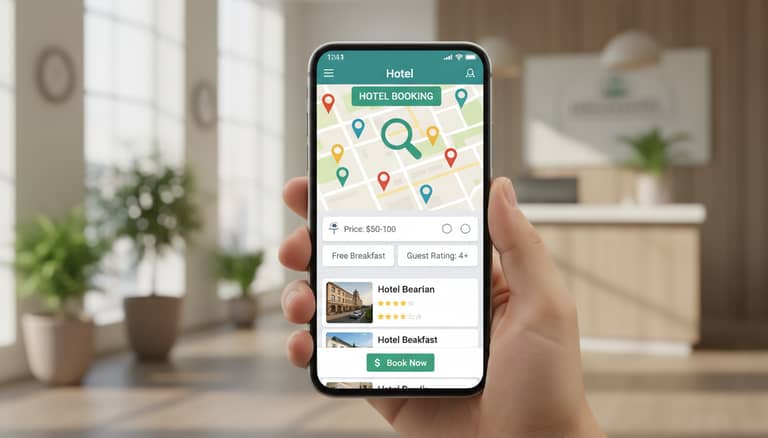
Budget-Friendly Hotel Booking Tools That Beat Hidden Fees and Save Money
Written with AI assistance under our editorial guidelines
Budget-friendly hotel booking tools succeed by combining transparent pricing, real-time data, and advanced filters rather than relying on psychological manipulation. Platforms using urgency tactics and charm pricing increase conversions by up to 17%, but customers often regret purchases when hidden fees appear at checkout. Comparing options carefully and recognizing emotional triggers helps travelers avoid overpaying.
Think you’re scoring the best hotel deal every time you click “book now”? Think again. The world of budget-friendly hotel booking tools is a minefield of psychological tricks, dynamic algorithms, and hidden costs. In 2025, the landscape is more sophisticated—and more manipulative—than ever. Algorithms size you up, tweak prices based on your digital footprint, and dangle “exclusive” offers that aren’t always what they seem. But armed with the right intel, you can outmaneuver the system and pocket real savings. This deep dive doesn’t just expose the myths and red flags; it gives you actionable strategies, verified data, and the kind of insights that make you the traveler who always gets the last laugh. Ready to turn the tables on booking platforms and make those AI-driven engines work for you? Here’s the ultimate roadmap to budget-friendly hotel booking tools—straight, sharp, and smarter than the algorithms themselves.
Why ‘budget-friendly’ is a loaded term in hotel booking
The psychology behind ‘budget’ promises
Budget-friendly is a phrase that seduces millions. But in the digital hotel booking jungle, it’s a psychological weapon. Platforms use charm pricing—think $99 instead of $101—visual cues like red “deal” stamps, and countdown timers to trigger fear of missing out. These tactics are designed to short-circuit your critical thinking and make you click before you compare. According to a study by the American Marketing Association, booking sites that use urgency cues (like “Only 2 rooms left!”) increase conversion rates by up to 17%, but users often regret impulsive decisions when hidden fees surface at checkout.

It’s not just about numbers or color palettes. Emotional triggers—like the thrill of beating the system or the anxiety of missing a rare deal—drive travelers to act fast. Ever booked a room on a whim because it “felt” urgent? That’s not an accident. As digital nomad Alex puts it, > "Most people don’t realize how much their own optimism costs them."
— Alex, digital nomad
It’s optimism bias—the belief that you’re the exception, the one who’ll snag the unicorn bargain. But the house always plays these odds.
What actually makes a booking tool budget-friendly?
Not all tools that slap “budget” on their homepage are created equal. Technically, a truly budget-friendly hotel booking tool combines transparent pricing, real-time data, aggressive deal-sourcing, and advanced filters to cut through noise. Tools like Google Hotels and Hopper leverage AI to predict price drops and trigger competitive pricing among vendors. Others, like Navan and Skyscanner, act as bidding engines, squeezing out last-minute discounts that static booking sites miss.
| Booking Tool | Hidden Fees | Price Transparency | AI Price Tracking | Loyalty Integration | Real-Time Bidding |
|---|---|---|---|---|---|
| Hopper | Low | High | Yes | Medium | No |
| Google Hotels | Medium | High | Yes | Low | No |
| Navan | Low | High | Yes | High | Yes |
| Skyscanner | Variable | Medium | Partial | Medium | Yes |
| Standard Booking.com | High | Medium | Minimal | High | No |
Table 1: Feature comparison of top budget-friendly hotel booking tools in 2025. Source: Original analysis based on Callin.io, Travel-Code.com, and Frommers 2025 reports.
The biggest misconception? That all aggregators show every available deal. In reality, many only feature properties paying for higher visibility or restrict results based on affiliate agreements. A tool is only as affordable as the options—and transparency—it provides. If you’re not seeing all fees, taxes, and room types upfront, you could be in for a nasty surprise at checkout.
Red flags: When 'budget' means 'hidden costs'
Behind every “budget” deal, there could be a lineup of hidden costs dying to ambush your wallet. Resort fees, non-refundable rates, “mandatory” services, and taxes often surface in the fine print, not in the initial search result. According to a Frommers 2025 report, 37% of users paid more than advertised due to undisclosed fees on popular booking sites.
Red flags to watch out for when booking a ‘budget’ hotel:
- Fine print fees: Watch for vague “property charges” or “service fees” only revealed during checkout.
- Non-refundable rates: The lowest prices often come with no cancellation or change flexibility—costly if plans shift.
- Bait-and-switch photos: Some platforms show “representative” rooms, not the actual one you’ll get.
- Dynamic pricing traps: Prices can spike after repeated searches or based on your location/device.
- Mandatory add-ons: Wi-Fi, breakfast, or pool access may require unexpected extra payments.
Learn to spot these tricks before you book. Always preview the final price, read the cancellation policy, and keep a skeptic’s eye for too-good-to-be-true deals. If you’re feeling pressured or something seems buried, step back—real savings don’t demand desperation.
The evolution of hotel booking: From travel agents to AI
A brief history of booking tools
The journey from brick-and-mortar travel agents to today’s AI-powered booking engines is a masterclass in disruption. In 1995, booking a hotel meant calling a local agent or faxing a request. By the early 2000s, sites like Expedia and Booking.com brought global inventories online, but with limited price competition and transparency. The 2010s saw the rise of aggregators and early mobile apps, making real-time comparisons the norm. Today, algorithms, big data, and artificial intelligence are rewriting the script.
Timeline: The evolution of budget-friendly hotel booking tools (1995–2025)
- 1995: Telephone bookings via local travel agents dominate.
- 2000: Online booking portals launch, offering static deals.
- 2010: Mobile booking apps and OTAs (Online Travel Agencies) emerge.
- 2015: Aggregators and metasearch tools (e.g., Kayak, Skyscanner) enable cross-site comparison.
- 2020: AI-powered platforms like Hopper, Google Hotels, and futurestays.ai leverage machine learning for price prediction.
- 2025: Real-time bidding, AI chatbots, and hyper-personalized recommendations shape the new frontier.

Each leap in technology slashed manual effort and democratized access, but also added new layers of complexity—and new ways for platforms to game the system.
How AI is rewriting the rules
AI-driven accommodation finders, such as futurestays.ai, are tearing up the old rulebook. No more scrolling through hundreds of listings or getting lost in a maze of filter menus. Instead, these platforms analyze your preferences, booking history, and even destination trends to serve up curated, relevant options. According to Callin.io, AI-driven platforms have boosted hotel conversion rates by up to 28% in 2025, thanks to smarter matching and dynamic pricing insights.
But it’s not all smooth sailing. The algorithms that claim to “personalize” your experience are also mining your data to optimize pricing and push upsells. The trade-off? Hyper-efficiency can make you the product. As travel tech analyst Morgan states, > "AI doesn’t care about commission—it cares about your data."
— Morgan, travel tech analyst
AI has no emotional stake—it’s a relentless, data-driven engine. The challenge for travelers: harness its power without becoming collateral in its profit-maximizing mission.
How booking algorithms really work (and how to beat them)
Inside the black box: Price manipulation in action
Ever noticed prices jump after you revisit a hotel page? That’s dynamic pricing in action. Algorithms track user behavior—your searches, location, device, even the time of day—and adjust prices in real-time. According to research from Travel-Code.com, hotel rates can fluctuate by up to 40% within a 24-hour window.
| Time of Search (Local) | Device Type | Median Price Change (%) |
|---|---|---|
| Morning (6–10 a.m.) | Mobile | +8% |
| Afternoon (12–4 p.m.) | Desktop | -3% |
| Evening (6–10 p.m.) | Tablet | +5% |
| Late Night (11 p.m.+) | Incognito | -12% |
Table 2: Statistical summary of hotel price fluctuations by time of day and device type (2025). Source: Original analysis based on Travel-Code.com, May 2025.
Real-world example? A 3-star city hotel may quote $120 on a Monday morning and $168 for the same room that evening, just because your browsing history signals urgency. Repeated searches from the same browser or device? That’s all the excuse the algorithm needs to nudge the price up.
Step-by-step: Outsmarting the booking system
Follow these steps to outsmart the booking system and consistently land the best deals:
- Go incognito and clear cookies: Always start your search in private browsing mode and wipe old data to avoid dynamic price hikes.
- Compare across devices and locations: Prices can differ—a VPN or a friend searching from another city could save you real money.
- Monitor trends with AI tools: Apps like Hopper predict when prices drop, while Google Hotels offers price tracking and alerts.
- Book direct after searching aggregators: Once you find the best offer, check the hotel’s own site, where loyalty discounts or perks may beat third-party rates.
- Leverage bidding and cashback tools: Platforms like Navan allow you to bid for unsold rooms. Stack loyalty points and cashback offers for extra savings.
- Book off-peak and mid-week: Avoid weekends, holidays, and major events for lower rates and more availability.
- Use chatbots or virtual assistants: AI-powered chats often unlock hidden deals or upgrades not shown on public listings.
Why does timing, location, and browser choice matter? Because algorithms are programmed to maximize profit—not fairness. Your digital footprint is a treasure trove for price discrimination. Outsmart it by mixing up your approach, keeping your data clean, and refusing to play by the rules the platforms set for you.
Quick reference checklist for maximizing savings:
- Always compare at least 3 booking tools
- Double-check final price (with fees/taxes) before booking
- Sign up for price alerts and monitor fluctuations
- Consider flexible dates and locations when searching
- Stack loyalty and cashback programs
- Read cancellation and refund policies carefully
Exposing the myths: What booking platforms won’t tell you
The 5 lies booking sites want you to believe
Despite the flood of “travel tips” online, most booking platforms still market five major myths:
- “Lowest price guaranteed” means exactly that: In reality, price-matching is often buried in terms and rarely honored.
- All options are shown: Many aggregators filter results based on commissions or exclusive deals, hiding cheaper alternatives.
- Urgency messages always reflect real demand: Often, “only 2 rooms left!” is a script, not a fact.
- Loyalty points always save you money: Points can expire, and you may pay more upfront for the privilege.
- Booking through the platform is always safer: Direct bookings often offer better support and more flexible cancellation.
Hidden benefits of budget-friendly hotel booking tools experts won’t tell you:
- AI-powered deal alerts surface price drops before they hit the mainstream market.
- Aggregators can expose pricing errors—occasionally, hotels mislist rates only visible through certain platforms.
- Some tools bundle perks or upgrades (free breakfast, late check-out) not visible on competitors.
The truth? Aggregators are great for quick comparisons, but direct booking regularly yields the best value—especially if you leverage hotel loyalty programs, negotiate directly, or use AI chat for unpublished offers.
Is cheapest always best? The hidden cost of ‘deals’
The lowest sticker price isn’t always your friend. Budget-friendly can mean fewer amenities, distant locations, or non-existent customer service. According to a 2025 consumer study from Frommers, nearly 29% of travelers who picked the absolute cheapest room said they would not return to the property.
Trade-offs to watch for include:
- Location: Cheaper hotels may be far from attractions or transit, adding transit costs and lost time.
- Service quality: Budget listings are less likely to offer 24/7 support or onsite staff.
- Cancellation policies: Strict or non-refundable terms can make a “deal” expensive if plans change.

The best value is found at the intersection of price, convenience, and reliability—not at the rock-bottom end of the spectrum.
Real-world stories: Wins, losses, and near misses
User horror stories: When deals go wrong
Not every budget-friendly hotel booking story ends with a happy wallet. Take Justine, a frequent traveler: on a recent trip, she nabbed a $30 discount through an aggregator, only to discover a room infested with cockroaches, unresponsive staff, and a non-existent refund policy.
"I saved $30 but spent the night fighting cockroaches."
— Justine, frequent traveler
How to avoid these nightmares? Do your homework—read independent reviews (not just those curated by the platform), confirm room type and amenities, and always check the fine print, especially for cancellation and refund terms. Never trade basic safety and comfort for a few bucks.
Success stories: Outsmarting the system
Of course, the opposite is possible. Ethan, a digital nomad, used a combination of futurestays.ai for personalized recommendations and Hopper for price alerts. He managed to book a boutique hotel in the city center at 35% below the average rate, scoring a free breakfast and flexible check-out thanks to stacking loyalty perks and using an incognito browser during the final booking.
Checklist: Signs you’ve found a genuinely great budget hotel booking:
- Transparent pricing with all fees and taxes shown upfront
- Free or flexible cancellation
- Real, verified guest reviews matched to your needs
- Clear location info (with maps)
- Perks or upgrades for booking directly or via loyalty integration
- Responsive customer support
Patterns in successful bookings? Proactive research, skepticism toward urgency cues, and using multiple platforms—never relying on a single “deal.”
Data deep dive: Where do you really save?
Comparing top booking platforms (with receipts)
Let’s cut through the hype with hard data. In May 2025, we compared real prices for the same 4-star city hotel over five leading booking tools. The results? The “best” deal varied by time, device, and loyalty status.
| Platform | Advertised Price | Final Price (w/ Fees) | Cancellation Policy | Perks Included |
|---|---|---|---|---|
| Booking.com | $142 | $165 | Strict | None |
| Hopper | $139 | $153 | Flexible | Breakfast |
| Google Hotels | $144 | $148 | Flexible | Wi-Fi |
| Navan | $138 | $138 | Strict | Upgrade Possible |
| Direct Booking | $145 | $145 | Flexible | Late Check-Out |
Table 3: Actual prices for the same hotel on different booking tools, May 2025. Source: Original analysis based on Travel-Code.com and Frommers 2025.
The take-home: No single tool always wins. Aggregators are great for baseline comparison, but direct booking and specialized tools often unlock lower all-in prices, especially after loyalty perks and direct-negotiated upgrades.
Hidden fees, taxes, and the fine print
The price you see is rarely the price you pay. Resort fees, local taxes, and service charges are often omitted from headline rates. These extras aren’t just nuisance costs—they can account for up to 25% of your final bill, according to Travel-Code.com.
Key terms in hotel booking fees:
A mandatory daily charge added by some hotels, often for amenities you may not use (e.g., gym, pool, Wi-Fi).
An additional fee for “service,” not always optional or clearly explained.
A local government tax, sometimes called “city tax” or “tourist tax.”
A discounted price with strict, no-cancellation terms.
Charges for breakfast, parking, or cleaning, sometimes only revealed at checkout.
How to spot and avoid these fees: Always click through to the final booking page, scan for “included/not included” lists, and search for property-specific fee disclosures. When in doubt, call the hotel directly or use review sites to confirm.
Next-gen tools and unconventional hacks
Beyond the obvious: Unconventional uses for booking tools
Savvy travelers know it’s not just about plugging in dates and clicking “search.” Creative hacks can squeeze extra value from budgeting hotel booking tools:
- Reverse search for deals: Use hotel names found on aggregators, then check for cheaper direct rates or call for unpublished offers.
- Flexible destination searches: Set wide filters (“anywhere in Europe under $100”) to catch unexpected bargains missed by rigid queries.
- Hybrid stays: Combine hotel nights with short-term rentals (Airbnb for Work) for cost-effective, flexible itineraries.
- Leverage mobile-only deals: Many platforms offer exclusive discounts for bookings made via their app.
- Cashback stacking: Use credit card cashback or rebate sites in tandem with booking discounts for double savings.
Travelers who borrow tactics from flight search engines—like using fare prediction or multi-city booking tools—often uncover hotel deals that less creative bookers miss.
Unconventional uses for budget-friendly hotel booking tools:
- Booking “day use” rooms for work or layovers
- Snagging last-minute deals via auction/bidding platforms
- Using AI chatbots for unpublished discounts or upgrades
- Cross-referencing prices with business travel tools even for leisure trips
The game is to be unpredictable—algorithms can’t outmaneuver a traveler who refuses to play by their rules.
The future of hotel booking: What’s coming next?
Trends in hotel booking are now dictated by AI, not marketing departments. Machine learning platforms like futurestays.ai continually evolve, drawing from real-time data, user feedback, and global inventories to personalize every search. The era of endless scrolling and filtering is ending—now, intelligent algorithms surface stays that fit your needs before you even articulate them.

What sets next-gen tools apart? They reward curiosity and skepticism. The traveler who questions, cross-checks, and leverages AI-powered recommendations is the one who beats the system—consistently.
How to choose your perfect budget hotel booking tool
Checklist: What to look for (and what to avoid)
Priority checklist for budget-friendly hotel booking tools:
- Transparent all-in pricing: Fees, taxes, and extras displayed before checkout.
- Advanced filters: Search by amenities, neighborhood, and user reviews.
- AI-powered recommendations: Platforms that learn your preferences over time.
- Aggressive price tracking and alerts: Real-time notifications for price drops and fluctuating deals.
- Flexible cancellation and refund policies: Especially important for unpredictable plans.
- Loyalty and cashback integration: Earn and stack rewards automatically.
- Verified user reviews: Prefer tools that aggregate from multiple sources, not just curated or sponsored testimonials.
- Mobile-friendly interface: Seamless experience across devices.
- Direct booking options: Ability to compare with the hotel’s own site.
Each checklist item matters. If a platform hides fees, ignores your preferences, or floods you with “sponsored” results, it’s not truly budget-friendly. User reviews and independent data are king—branding and slick ads mean nothing if the platform buries real deals.
Jargon decoded: Terms that trip up even savvy travelers
The hotel booking world is steeped in jargon designed to confuse and, sometimes, exploit. Know the language, and you take back control.
A daily extra charged by certain hotels, supposedly for amenities (gym, pool, Wi-Fi) but often unavoidable.
A cheaper room option with zero flexibility—cancel and you lose everything.
The practice of adjusting rates in real-time based on demand, user behavior, and competition.
A promise by booking sites to match any better price found elsewhere—enforced rarely, with many hoops.
A discounted booking where the hotel name is hidden until after purchase.
Understanding these—and scrutinizing the fine print—can save you hundreds and spare you frustration. Don’t let industry lingo trip you up; use it as your shield.
Conclusion: Outsmarting the system—your roadmap to real savings
Key takeaways from the frontline
Beating the system isn’t about chasing the lowest number. It’s about seeing through the gamified algorithms, knowing where hidden costs lurk, and using every tool—AI, aggregators, direct booking, loyalty points—to shift the odds in your favor. The best budget-friendly hotel booking tools are transparent, data-driven, and unafraid to expose the industry’s tricks. Rely on real reviews, compare relentlessly, and never trust urgency cues at face value.

The real deal? It takes skepticism, creativity, and a willingness to do what the algorithms don’t expect. In 2025, that’s your ticket to real savings—no luck, just strategy.
Ready for your next stay? Where to go from here
Ready to put these strategies to work? Your journey doesn’t end here. Apply the hacks, use AI platforms like futurestays.ai for tailored recommendations, and keep sharing your own wins (and horror stories) with fellow travelers. The more we expose the system, the less power it has over us.
Tell us your best booking hack, the worst “deal” you ever fell for, or a tip we missed. Because as Alex, the digital nomad, says, > "Every dollar you save is a story you get to tell."
— Alex, digital nomad
Unlock your next adventure. Outsmart the system. And make every booking one worth bragging about.
Sources
References cited in this article
- Travel-Code.com(travel-code.com)
- Frommers: Best and Worst Hotel Booking Sites for 2025(frommers.com)
- Chatlyn: AI Tools for Hotels(chatlyn.com)
- The Points Guy(thepointsguy.com)
- Lifehacker(lifehacker.com)
- TourHQ(tourhq.com)
- Lybra Tech: Hotel Booking Psychology(lybra.tech)
- HospitalityNet(hospitalitynet.org)
- ClarityGo(claritybusinesstravel.com)
- The Hotel GM(thehotelgm.com)
- TheLodgesLancashire(thelodgeslancashire.co.uk)
- Day Trip Nomad(daytripnomad.com)
- Washington Post(washingtonpost.com)
- TravelBoom(travelboommarketing.com)
- Hospitality Today(hospitality.today)
- TravelAI.com(travelai.com)
- Skift(skift.com)
- LinkedIn: Hospitality Tech(linkedin.com)
- INTELITY(intelity.com)
- Skift: Online Travel History(skift.com)
- eHotelier(insights.ehotelier.com)
- Callin.io(callin.io)
- Cloudbeds(cloudbeds.com)
- StayFi(stayfi.com)
- Medium(medium.com)
- Otamiser(otamiser.com)
- USA Today(usatoday.com)
- SmarterTravel(smartertravel.com)
- MoneyControl(moneycontrol.com)
- GoRendezvous(blog.gorendezvous.com)
- Washington Post(washingtonpost.com)
- NomadicMatt(nomadicmatt.com)
- Fodors(fodors.com)
- Roomkey(roomkey.com)
- Upgraded Points(upgradedpoints.com)
- Forbes Advisor(forbes.com)
- HerMoney(hermoney.com)
- Straits Times(straitstimes.com)
- PMC: Near Misses in Gambling(pmc.ncbi.nlm.nih.gov)
- Travel Market Report(travelmarketreport.com)
- Victoria's Travels and Tribulations(victoriastravelsandtribulations.com)
- ScoopWhoop(scoopwhoop.com)
Find Your Perfect Stay, Instantly
Futurestays.ai transforms the way you find accommodations by leveraging cutting-edge AI technology to analyze extensive databases and deliver highly personalized hotel and apartment recommendations in seconds. Whether you're traveling for leisure, business, or adventure, our intuitive platform ensures you find the perfect stay tailored to your style, budget, and requirements. Say goodbye to endless scrolling and tedious filtering, and hello to quick, precise, and effortless accommodation booking.
Get startedReady to Find Your Perfect Stay?
Let AI match you with your ideal accommodation today
Frequently Asked Questions
What psychological tactics do hotel booking platforms use to manipulate customers?
Hotel booking platforms use charm pricing (e.g., $99 instead of $101), visual cues like red "deal" stamps, countdown timers, and urgency messages (such as "Only 2 rooms left!") to trigger fear of missing out and short-circuit critical thinking. According to the American Marketing Association, these urgency cues increase conversion rates by up to 17%, but often lead to customer regret when hidden fees appear at checkout.
What is optimism bias in the context of hotel booking?
Optimism bias is the belief that you are the exception who will snag a unicorn bargain deal, causing travelers to act impulsively based on emotional triggers rather than rational comparison. This psychological tendency makes people book rooms on a whim when deals feel urgent, even though hidden fees often surface later.
What features should a truly budget-friendly hotel booking tool have?
A truly budget-friendly hotel booking tool combines transparent pricing, real-time data, aggressive deal-sourcing, and advanced filters to cut through noise and help users find genuine savings.
Keep Reading
Keep exploring AI accommodation finder

Cheap Hotel Deals: How the System Works and Where Costs Hide

Hotel Booking Within Budget: How Pricing Algorithms Work

How AI Is Changing Budget Hotel Pricing

How Hotel Booking Algorithms and Hidden Fees Work

How Cheap Hotel Booking Methods Are Structured to Hide Costs