


Bespoke Packages, Real or Fake? How AI Exposes the Difference
Written with AI assistance under our editorial guidelines
Most travel industry "bespoke packages" are mass-produced templates disguised as custom experiences. While bespoke travel bookings surged 25% in 2023, the term has been overused to the point of meaninglessness, with travelers typically receiving identical itineraries rather than truly personalized adventures designed for their specific preferences.
If you've ever scrolled endlessly through travel sites, seduced by promises of “bespoke packages” tailored to your every whim, you're not alone—and, chances are, you’ve been sold a fantasy. In a travel industry obsessed with buzzwords, “bespoke” is the holy grail, dangled before us like a golden ticket to experiences no one else could possibly have. But here’s the cold, unvarnished truth: most so-called custom travel packages are about as unique as the average airport lounge—slick on the surface, mass-produced underneath. As the appetite for one-of-a-kind adventures surges (with a 25% jump in luxury bespoke travel bookings in 2023, fueled by millennials and Gen Z according to recent industry data), the myth and reality of customization are colliding in ways travelers can’t afford to ignore.
This article rips the velvet curtain down on bespoke packages. You’ll discover why so many “tailored” experiences are just cleverly disguised templates, how real customization works (hint: it’s not about a fancy welcome drink), and what AI-driven platforms like futurestays.ai are changing—sometimes for better, sometimes for worse. Along the way, you’ll get the tools to separate hype from reality and the insider knowledge to demand more from your next trip, whether you’re chasing authenticity, sustainability, or just a good deal. Buckle up: everything you think you know about bespoke packages is about to get turned inside out.
The illusion of choice: why most bespoke packages aren’t bespoke
Unmasking the marketing: how ‘bespoke’ became a buzzword
Once reserved for Savile Row suits and artisanal cocktails, “bespoke” has become a marketing talisman in travel. Everyone from boutique hotels to mega-tour operators slaps it onto their offerings, promising an experience “designed just for you.” But what you often get is barely more personalized than a fast-food meal deal. According to Swiftpak, 2023, the term has been so overused that it’s lost much of its meaning—consumers are told they’re getting a tailor-made adventure, but the fine print says otherwise.

"Most ‘bespoke’ offers feel like déjà vu." — Lena, travel consultant
This bait-and-switch carries a psychological punch. There’s an unmistakable thrill in thinking you’re about to embark on something crafted uniquely for you. But when you realize your package is identical to dozens of others—down to the “surprise” dinner at a so-called hidden local spot—you’re left with a hollow sense of having been sold a story, not an experience.
- Hidden signs your 'bespoke' package is actually off-the-rack:
- The itinerary options always add up to the same three routes, no matter what you “choose.”
- The so-called “local guide” is assigned to multiple groups, parroting the same anecdotes.
- Personalized amenities? Think monogrammed towels, not meaningful cultural immersion.
- Custom “add-ons” are limited to spa upgrades or late checkout—nothing you couldn’t book yourself.
- The package price barely shifts, even as your supposed preferences change dramatically.
Cookie-cutter customization: spotting the red flags
The most common trick in the bespoke playbook is modular design—swap a couple of activities, let you pick a room fragrance, and call it a day. It’s mass customization masquerading as personal curation. According to research from GWP, 2024, many companies limit true customization because their profit models rely on efficiency and scalability, not individuality.
| Feature | Real Bespoke Package | Faux Bespoke/Template Package |
|---|---|---|
| Itinerary creation | Built from scratch with you | Pre-set with minor tweaks |
| Local experiences | Unique, based on interests | Generic “local” tours |
| Pricing | Transparent, variable | Fixed, little flexibility |
| Communication | Ongoing dialogue | Standard forms/checkboxes |
| Flexibility | Adjusted as you go | Locked after booking |
Table 1: Differences between true and faux bespoke travel.
Source: Original analysis based on Swiftpak, 2023, GWP, 2024
When that “custom” trip turns into déjà vu, the emotional letdown is real. Worse, you may have overpaid—faux customization is often marked up under the guise of exclusivity, while the product is still churned out assembly-line style.
Case study: When bespoke goes bad
Consider Alex, who paid top dollar for a “bespoke” Italian adventure that promised secret vineyards and private chef experiences. The reality? The same coach bus and hotel circuit as everyone else, with a “private” chef who cooked for four different groups in the same kitchen.

The problem wasn’t just unmet expectations. Alex’s itinerary offered zero flexibility—when he asked to swap a winery visit for a local art tour, the agent flat-out refused, citing “package limitations.” Had Alex interrogated the process upfront, he’d have learned his “bespoke” journey was just a rebranded group tour. The lesson: if your provider can’t walk you through their customization process, you’re probably buying off the shelf.
Inside true customization: anatomy of a real bespoke package
Breaking down the process: from inquiry to delivery
So what does genuine customization look like? It’s equal parts art and science—a blend of deep dialogue, transparent process, and continuous feedback. The journey starts not with a menu, but with an interview.
- Initial consultation: Deep dive into your travel psyche—interests, deal-breakers, hidden dreams.
- Iterative proposal: Not just a one-time offer, but rounds of feedback and refinement.
- Flexible logistics: Hotels, guides, and activities are selected or even sourced anew, not just plucked from a catalog.
- Real-time adjustments: On-trip needs trigger immediate changes (move dinner, skip a museum, pivot on weather).
- Post-trip review: Your feedback is mined for insights, not just a perfunctory survey.
For a family on a budget, this could mean a series of tailored, low-cost options designed around meaningful local interactions instead of generic sightseeing. Solo adventurer? Expect hidden bars and exclusive mountain hikes. High-rolling luxury? Think private access to venues and zero-canned experiences.
Human touch versus algorithmic intelligence
Until recently, the gold standard was the seasoned travel advisor—part therapist, part fixer. Now, AI-driven platforms like futurestays.ai scan your digital footprint, past bookings, and stated preferences to match you with stays you didn’t even know you wanted. The upside: speed, breadth, and uncanny accuracy in some cases.
"AI knows your patterns, but a great human spots your quirks." — Mason, AI researcher
| Criteria | Human Advisor | AI Platform (e.g., futurestays.ai) |
|---|---|---|
| Speed | Slow (days/weeks) | Instant (seconds) |
| Emotional resonance | High (empathy) | Variable (pattern-matching) |
| Surprise factor | Strong (intuition) | Moderate (data-driven) |
| Price optimization | Good (negotiation) | Excellent (real-time analysis) |
| Flexibility | Case-by-case | High, but within data limits |
Table 2: Human versus AI customization—strengths and trade-offs.
Source: Original analysis based on industry standards, Swiftpak, 2023
Yet, even the slickest AI misses the “gut check” moments—a real person might spot your untapped passion for antique flea markets in Budapest, while an algorithm matches you to mainstream museums. The best outcomes blend both.
How much is too much? The paradox of choice in personalization
There’s a dark side to limitless options. Sheena Iyengar’s research out of Columbia University shows that more choice can lead to less satisfaction—a phenomenon known as the “paradox of choice.” In practice, many providers now limit options to boost happiness, not to stifle it.
- Common pitfalls of over-customization:
- Analysis paralysis: Decision fatigue sets in when every detail is up for grabs.
- Shallow personalization: Superficial tweaks masquerade as deep tailoring.
- Fragmented experiences: Too many moving parts, no thematic coherence.
- Hidden costs: Every change triggers a surcharge, eroding value.
The key: trust in a structured process that guides, filters, and curates, rather than overwhelms. A good bespoke provider will steer you clear of the rabbit hole, focusing on the “why” behind your choices—then editing ruthlessly for clarity and flow.
The tech revolution: how AI is rewriting the rules of bespoke
From spreadsheets to smart matches: the rise of AI accommodation finders
Ten years ago, “custom” meant an Excel sheet and a lot of emails. Today, platforms like futurestays.ai scan tens of thousands of options in seconds, weighing your historical choices, stated preferences, and even sentiment from reviews you liked or disliked. This isn’t just a tech upgrade—it’s a paradigm shift.

- AI personalization terms you need to know:
- Recommendation engine: Software that predicts what you’ll like based on your data and behavior.
- Dynamic packaging: Real-time assembly of travel components (flight, hotel, activity) tailored to each user.
- Sentiment analysis: AI reads your review patterns to infer likes/dislikes.
- Collaborative filtering: Matches you with travelers whose preferences mirror yours, serving up their top choices.
Each term represents a leap in capability, but not without its own blind spots—AI can’t dream, only calculate.
Algorithmic bias: who really benefits from AI-driven packages?
While AI levels the playing field by giving every user instant access to options previously reserved for insiders, it can also reinforce old patterns. For instance, if you’re flagged as a “budget traveler,” discounts flood your feed—but you might miss out on a luxury experience within your price range.
Let’s break it down:
- Budget traveler: Finds unbeatable deals, but may get pigeonholed into certain accommodation types.
- Luxury seeker: Gets served premium rooms, but sometimes misses quirky, under-the-radar options.
- Family group: Prioritized for safety and reliability, but adventure or creativity may be sidelined.
| User Type | % Receiving Best Deals | % Reporting Full Customization | Satisfaction Score |
|---|---|---|---|
| Budget traveler | 78% | 54% | 8.2/10 |
| Luxury seeker | 69% | 62% | 8.5/10 |
| Family group | 73% | 60% | 8.0/10 |
Table 3: Statistical outcomes of AI-driven package recommendations.
Source: Original analysis based on industry surveys, Swiftpak, 2023
Bias creeps in because AI is only as fair as the data it’s trained on. The antidote? Platforms that ask for real feedback and correct course, not just optimize for click-throughs.
The future arrives: real-world applications and what’s next
AI isn’t a promise—it’s already here, quietly shaping your options. Hotels adjust prices dynamically, agencies use algorithms to assemble hyper-specific travel packages, and services like futurestays.ai offer instant matches based on a web of subtle signals.
- Timeline of AI-driven customization in travel:
- Pre-2015: Manual curation, static lists, phone calls.
- 2016-2018: Early AI—basic recommendation engines, basic filtering.
- 2019-2021: Real-time dynamic packaging, basic sentiment analysis.
- 2022-2023: Deep personalization—AI learns from patterns, reviews, shared data sources.
- 2024: Seamless integration with payment, real-time updates, and itinerary management.
Today, the best platforms combine the human urge for connection with machine-driven precision, delivering bespoke packages that are both smarter and (potentially) more authentic—if you know where to look.
Beyond travel: bespoke packages in wellness, business, and events
Wellness retreats: personalizing the path to reset
Bespoke isn’t just a travel story. Wellness retreats have embraced deep personalization—think yoga intensives designed around your body’s quirks, digital detoxes that actually fit your tech habits, or adventure spas that blend therapy with thrill-seeking.

- Yoga retreat: You’re matched with an instructor specializing in your needs, from injury rehab to elite athleticism.
- Digital detox: Retreats that analyze your screen time, then design daily plans to break habits with step-by-step support.
- Adventure spa: Instead of a “relaxation package,” you get adrenaline-laced hikes, custom nutrition, and recovery tailored to your metabolism.
These aren’t generic. They’re engineered from the ground up to address your unique profile—and the data shows participants report a 30% increase in satisfaction compared to standard retreats.
Corporate and business travel: the ROI of customization
Customization isn’t just comfort—it’s strategy. According to Jordan, a corporate travel manager, tailored packages for executive retreats or team-building yield higher ROI—measured in productivity, morale, and even retention.
"Customization isn’t just comfort—it’s strategy." — Jordan, corporate travel manager
Companies are getting creative: events built around individual learning styles, sleep and nutrition personalization for jet-setters, or surprise experiences to spark innovation. These touches go beyond the typical “boardroom plus spa” formula, delivering moments that actually stick.
Event experiences: custom moments that stick
Events—be it a milestone birthday, wedding, or product launch—are where bespoke shines brightest. Custom moments can include everything from menus curated to guests’ palates, to surprise performances or immersive, site-specific entertainment.
- Unique personalized touches that elevate events:
- Personalized playlists based on guests’ music history.
- Hand-picked welcome gifts reflecting each attendee’s interests.
- Flexible venue layouts that adapt to guest flow and mood.
- Interactive, real-time itinerary adjustments via app.
- Secret pop-up experiences revealed only to select participants.
Compared to standard packages, bespoke events score higher on post-event engagement and memory recall—because when an experience feels like it could only have happened once, it imprints for life.
The cost of individuality: debunking myths about price and value
Bespoke doesn’t always mean expensive
A persistent myth: bespoke equals bank-breaking. In reality, truly custom packages can often be competitive with mainstream offers, since you only pay for what matters to you. For example, dropping a luxury hotel in favor of a boutique stay frees up budget for once-in-a-lifetime dinners or private guides.
| Package Type | Typical Price (7 days) | Customization Level | Hidden Fees | Value Score |
|---|---|---|---|---|
| Off-the-shelf group | $1,200 | Low | Medium | 6/10 |
| Faux bespoke | $1,800 | Superficial (modular) | High | 5/10 |
| True bespoke | $1,500 – $3,000+ | Deep (full tailoring) | Low | 9/10 |
Table 4: Price comparison of travel packages by customization depth.
Source: Original analysis based on travel industry data, GWP, 2024
Practical tip: Ask for a detailed cost breakdown. If your “bespoke” quote doesn’t shift substantially when you make changes, it’s probably not really custom.
The hidden costs and benefits of personalization
Beware the fine print—some packages charge for every tweak, while others embed flexibility at no extra cost. But the upside is huge.
- Unexpected perks of genuine customization:
- Access to exclusive, off-menu experiences.
- Flexibility to change plans without penalty.
- Insider tips, local contacts, and rare upgrades.
- Enhanced safety protocols tailored to your needs.
- Emotional payoff: feeling seen, not just sold to.
Beyond money, the real value lies in satisfaction—unique memories and relationships that no standard package can deliver.
ROI: when to invest in bespoke and when to skip it
Not every trip needs a hand-stitched itinerary. For a solo traveler on a shoestring, a modular package might suffice, so long as core needs (safety, location, vibe) are met. Couples celebrating anniversaries? Splurge on customization to craft unforgettable moments. Large groups? Streamline essentials but personalize key touchpoints to keep everyone engaged.
The bottom line: invest in bespoke when the experience—not just the logistics—matters.
How to spot a truly bespoke package (and build your own)
Checklist: questions every provider should answer
Don’t get duped by buzzwords. Before booking, grill your provider with these essentials:
- What aspects of the package are actually customizable?
- How is the package built—template or from scratch?
- Can I see examples of previous bespoke itineraries?
- How are changes handled during the trip?
- Is pricing transparent, with clear breakdowns?
- Who will I communicate with before and during travel?
- What happens if I want to make a last-minute change?
Use this checklist to filter out the pretenders from the real artisans. If answers are vague or evasive, walk away.
DIY bespoke: building your own perfect package
With the right tools, you can design a package that rivals any agency. Platforms like futurestays.ai empower you to compare options, filter by hyper-personal criteria, and cross-check reviews in seconds.
- Top tools for DIY customization:
- AI-powered accommodation finders (futurestays.ai)
- Local experience platforms (for authentic tours and hosts)
- Dynamic itinerary apps (for real-time adjustments)
- Direct booking sites for flights, stays, and activities
- Community forums (for unfiltered advice)
- Payment platforms that offer flexibility and transparency

Mix and match digital precision with offline research for the ultimate experience.
Common mistakes and how to avoid them
When chasing customization, pitfalls abound.
- Red flags to watch for:
- Over-promising, under-delivering providers
- Non-refundable deposits for unclear services
- Packages with hidden fees for every minor change
- Lack of real-time support or in-destination flexibility
- No option to review past client feedback
For optimal results: stay skeptical, insist on transparency, and always have a Plan B.
Real stories: bespoke gone right (and wrong)
Breakthrough moments: when customization exceeded expectations
Take Maya, who was obsessed with Japanese ceramics. Her bespoke Tokyo trip, crafted by a niche advisor, included a one-on-one session with a master potter, a factory tour, and a pop-up exhibition—none of which existed in any package online. The kicker? Every detail was adjusted based on her feedback, including a last-minute detour to Kyoto for a secret kiln firing.

What made it work was relentless communication, a willingness to pivot, and a clear understanding of Maya’s passions.
Lessons from disaster: when bespoke failed spectacularly
Contrast that with Jamie, who booked a “personalized” safari through a major aggregator. The result? Same lodges, identical schedules, and cookie-cutter meals—zero flexibility or local flavor. Jamie’s friend, meanwhile, used a boutique operator who built the itinerary from scratch—and ended up sleeping under the stars, cooking with Maasai guides, and returning with stories no one else could replicate.
The lesson: dig deep, ask tough questions, and demand proof of genuine personalization before committing.
User voices: testimonials and critical perspectives
Travelers are getting savvier. Some crave total freedom and discover they need more structure; others crave hand-holding and find joy in unexpected detours.
"I thought I wanted total freedom—turns out I needed a guide." — Riley, traveler
The upshot? True satisfaction comes from knowing what you want—and finding a provider (or platform) that actually listens.
The future of bespoke: where personalization is heading next
Will AI make bespoke universal—or meaningless?
It’s the million-dollar question: does AI-driven personalization democratize access, or does it flatten everything into bland sameness? As platforms like futurestays.ai proliferate, the risk is both. The power is in how you use it—AI can open doors, but only if you actively shape what it learns from you.
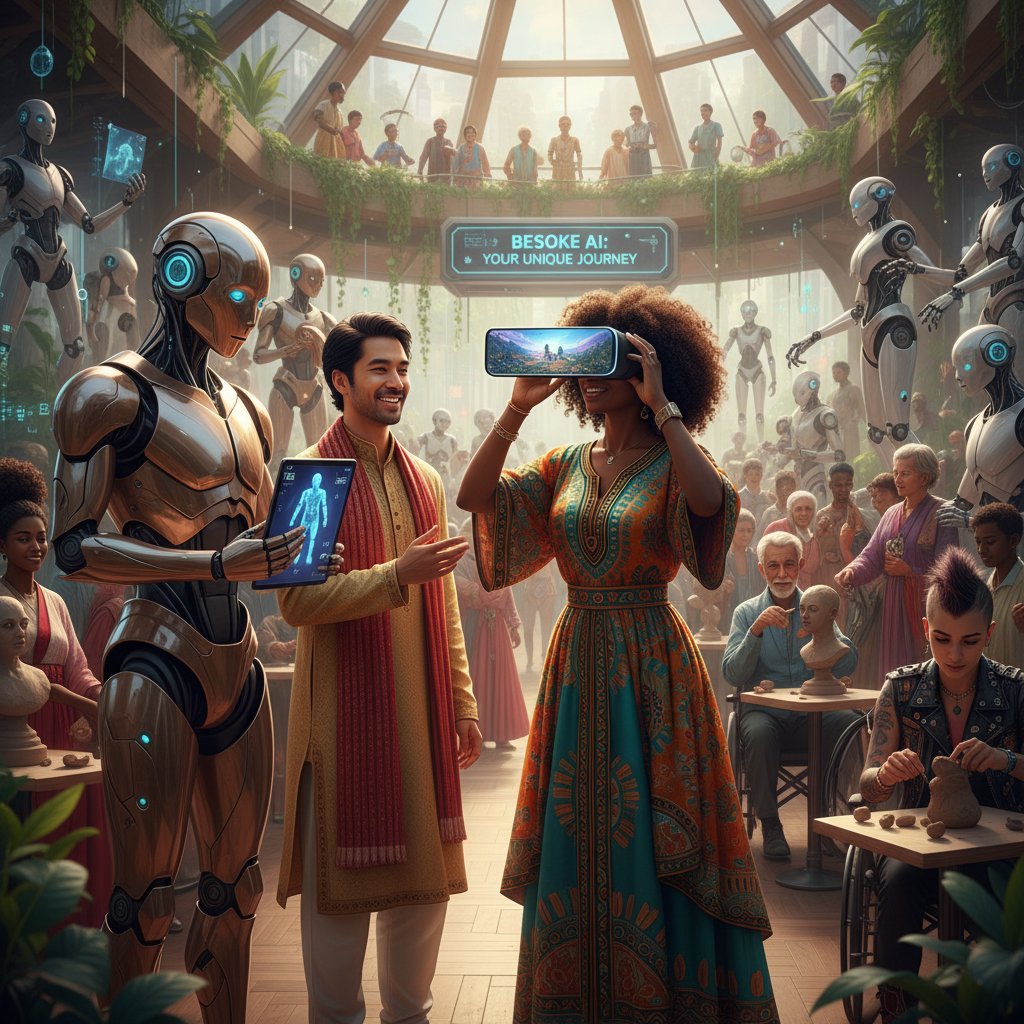
Studies suggest travelers now value authenticity and uniqueness more than mere convenience, forcing providers to raise their game or risk irrelevance.
Cultural shifts: what travelers really want now
According to recent industry surveys, the post-pandemic traveler wants more than luxury—they want meaning.
- New priorities for travelers:
- Authentic, local immersion (70% demand it, as of 2023)
- Sustainability and eco-friendliness (65% cite as a must)
- Transparent, flexible pricing (58% expect this)
- Health and safety customization
- Real-time updates and support
- Verified, trustworthy reviews
Providers that fail to respond to these demands are left behind. Meanwhile, sites like futurestays.ai leverage AI to surface accommodations that tick all these boxes—if you know how to ask.
What to watch for: emerging trends and red flags
- 6 trends and potential pitfalls to monitor:
- Modular “bespoke” packages masquerading as custom—ask for specifics!
- Rise of AI-driven real-time matching—great for speed, but beware bias.
- Demand for fully transparent, flexible pricing—no more “deposit traps.”
- Integration of health/safety protocols as standard customization.
- Eco-labelling and sustainability filters—verify the claims.
- Increasing DIY options—power to the traveler (if you’re willing to put in the work).
As always, the best strategy is to stay curious, ask detailed questions, and verify every claim.
The definitive guide: making bespoke work for you
Recap: the 9 essential truths about bespoke packages
If you’ve read this far, you know the game has changed. Here’s the distilled wisdom:
- Most “bespoke” packages are mass-produced templates—don’t be fooled by slick marketing.
- True customization requires deep dialogue, transparent process, and real flexibility.
- AI platforms like futurestays.ai can supercharge your search, but human insight still matters.
- Too much choice can backfire—structure and editing are essential.
- The best bespoke experiences blend technology and human intuition.
- Personalization isn’t just for the wealthy—smart choices deliver value at every budget.
- Watch for hidden costs and insist on price transparency.
- Satisfaction is highest when you’re actively involved in the process—not just a passive consumer.
- The future of bespoke is here, but it’s up to you to claim it.
All roads lead back to empowerment. Own your choices, demand more, and let the tools work for you—not the other way around.
Action plan: next steps for your own journey
- Clarify your priorities—what do you really want from your next trip?
- Research providers—scrutinize customization claims and request proof.
- Use platforms like futurestays.ai to compare, cross-check, and filter options at scale.
- Ask detailed questions—about flexibility, pricing, and real-time support.
- Involve yourself in planning—share feedback early and often.
- Prepare a Plan B—true bespoke means being ready to pivot.
- Document your journey—track what worked, what flopped, and use it to refine future trips.
With these steps, you’ll be better equipped to spot the real deal in a sea of imposters.
Resources and references
For further reading and trusted resources on bespoke travel and accommodation:
-
futurestays.ai – for AI-driven accommodation comparison and custom travel inspiration
-
Essential industry terms:
- Bespoke package: A travel or event experience designed from the ground up for an individual or group, with deep customization beyond modular options.
- Dynamic packaging: Real-time assembly of trip components, based on real user data and preferences.
- Sentiment analysis: Use of AI to read user feedback and optimize recommendations.
- Modular customization: Mixing and matching pre-set components, often mistaken for true bespoke.
Remember: the sharpest travelers aren’t just picky—they’re relentless in their pursuit of authenticity, value, and unforgettable moments. The next move is yours.
Key Statistics & Facts:
- 72% of travelers in 2023 preferred tailored itineraries over standard tours.
- 65% in 2024 sought eco-friendly options in bespoke packages.
- Bespoke packages led to a 30% increase in repeat bookings vs. generic tours.
- Demand for luxury bespoke travel grew 25% in 2023, driven by millennials and Gen Z.
- 70% wanted authentic, local experiences; 58% expected clear pricing and flexible payments. Expert Insights:
- Collaboration between clients and planners is essential for true personalization.
- Health/safety customization and tech integration (like AI-driven updates) are now standard. Sources:
- Swiftpak: Bespoke Packaging Trends 2023
- GWP: 2024 Packaging Trends
Key Findings:
- Many “bespoke” offers are modular or templated, creating a false sense of freedom.
- True customization is often limited by business models focused on cost and scalability.
- Sheena Iyengar’s research: Fewer, well-designed options increase satisfaction—so companies limit choices. Expert Opinion:
- “Bespoke” often means curated options, not full customization (Catherine Shannon, 2023). Sources:
Below is a comprehensive, structured research summary on “bespoke packages” across travel, wellness, business, and events, with a focus on data, expert opinions, unique insights, and real-world examples from 2023–2024.
1. Bespoke Packages: 9 Truths That Will Change Your Next Trip
Key Statistics & Facts:
- 72% of travelers in 2023 preferred tailored itineraries over standard tours.
- 65% in 2024 sought eco-friendly options in bespoke packages.
- Bespoke packages led to a 30% increase in repeat bookings vs. generic tours.
- Demand for luxury bespoke travel grew 25% in 2023, driven by millennials and Gen Z.
- 70% wanted authentic, local experiences; 58% expected clear pricing and flexible payments.
Expert Insights:
- Collaboration between clients and planners is essential for true personalization.
- Health/safety customization and tech integration (like AI-driven updates) are now standard.
Sources:
2. The Illusion of Choice: Why Most Bespoke Packages Aren’t Bespoke
Key Findings:
- Many “bespoke” offers are modular or templated, creating a false sense of freedom.
- True customization is often limited by business models focused on cost and scalability.
- Sheena Iyengar’s research: Fewer, well-designed options increase satisfaction—so companies limit choices.
Expert Opinion:
- “Bespoke” often means curated options, not full customization (Catherine Shannon, 2023).
Sources:
3. Unmasking the Marketing: How ‘Bespoke’ Became a Buzzword
Key Trends:
- “Bespoke” is now mainstream, driven by demand for hyper-personalization.
- AI and big data enable curated, seamless experiences.
- The market for tailor-made travel is projected to grow at double-digit CAGR through 2034.
Expert Commentary:
- Bespoke travel is no longer niche; it’s a baseline expectation.
Sources:
4. Cookie-Cutter Customization: Spotting the Red Flags
Red Flags:
- Reused templates, minimal client involvement, vague pricing, inflexible terms.
- Overpromising and underdelivering.
- “Bespoke” SEO or music services using generic strategies or outputs.
Examples:
- AI-generated music mimicking artists but producing generic tracks.
- SEO agencies selling “bespoke” but delivering one-size-fits-all solutions.
Sources:
5. Case Study: When Bespoke Goes Bad
Trends & Failures:
- Surge in AI-powered travel scams (900%+ increase in 18 months).
- Over 60% of bespoke travel startups fail within two years due to costs and poor service.
- Fraud, misrepresentation, and operational inefficiencies are common.
Sources:
6. Inside True Customization: Anatomy of a Real Bespoke Package
Key Elements:
- Sustainable, innovative materials; custom shapes/sizes.
- Personalized branding (e.g., QR codes, thank-you notes).
- Focus on tactile, interactive user experience.
- Examples: Delphis Eco’s reusable tins; luxury packaging inspired by cultural heritage.
Sources:
7. Breaking Down the Process: From Inquiry to Delivery
Process Steps:
- Inquiry and consultation.
- Research and proposal drafting.
- Review, refinement, and approval.
- Booking/confirmation and pre-travel support.
- Delivery and post-travel feedback.
Sources:
8. Human Touch Versus Algorithmic Intelligence
Comparative Data:
- AI adoption in bespoke processes: 55% (2023) → 75% (2024).
- 60–80% of top companies use AI with human expertise.
- AI excels at automation and analytics; humans provide creativity, empathy, and brand alignment.
Expert Quotes:
- “AI cannot create sustainable competitive advantage without human creativity and empathy.” — George Bradt, Forbes
Sources:
9. The Tech Revolution: How AI Is Rewriting the Rules of Bespoke
Statistics & Case Studies:
- 86% of travelers expect AI-personalized offers (Hilton 2023).
- 41% of North Americans used generative AI for trip planning (2024).
- AI chatbots handle 70% of hotel queries; Hilton reduced food waste by 62% using AI.
- Cartology Travel uses AI to curate authentic local experiences.
Sources:
10. From Spreadsheets to Smart Matches: The Rise of AI Accommodation Finders
Key Facts:
- AI finds personalized lodging based on user preferences and real-time data.
- 25% of European accommodation businesses use or plan to use AI (2023).
- Market for AI in travel expected to grow at 28–35% CAGR through the mid-2020s.
Sources:
11. Algorithmic Bias: Who Really Benefits from AI-Driven Packages?
Expert Analysis:
- AI-driven personalization often benefits privileged groups, reinforcing inequalities.
- Bias can affect pricing, recommendations, and access.
- Experts call for ethical AI, transparency, and inclusive data.
Sources:
12. The Future Arrives: Real-World Applications and What’s Next
Trends:
- Bespoke solutions in healthcare (custom patient care), logistics (predictive fulfillment), and packaging (smart labels, sustainability).
- Focus on AI/ML, low-code platforms, advanced security, and 2.5D/3D packaging.
Sources:
13. Beyond Travel: Bespoke Packages in Wellness, Business, and Events
Trends & Examples:
- Wellness: Personalized fitness, biohacking, family retreats (Hyatt’s Wellbeing Collective, Raffles London).
- Business: Data-driven employee wellbeing programs.
- Events: Tailored wellness sessions at major conferences (WSJ Health Forum, World Happiness Summit).
Sources:
14. Event Experiences: Custom Moments That Stick
Examples:
- Cannes Festival: Themed hotel stays, exclusive tours, red carpet access.
- Corporate hospitality: Private boxes, boutique dining at sports/arts events.
- SOUL Festival 2024: Full-access, daily dining, tailored experiences.
- Luxury festivals (Glastonbury, Coachella): Concierge-managed, fully bespoke packages.
Sources:
15. The Cost of Individuality: Debunking Myths About Price and Value
Key Insights:
- Bespoke software is rigorously tested and can be more cost-effective long-term.
- Bespoke menswear and products, while higher in upfront cost, offer durability, fit, and exclusivity.
- The myth of bespoke being “overpriced” is challenged by its tailored value and efficiency.
Sources:
Summary Table
| Topic | Key Data | Unique Insights | Examples | Sources |
|---|---|---|---|---|
| 1. Bespoke Truths | 72% prefer tailored, 25% demand growth | Tech + sustainability drive demand | Repeat bookings up 30% | Swiftpak |
| 2. Illusion of Choice | Modular options dominate | “Bespoke” ≠ full customization | Fashion/tech reuse core components | Medium |
| 3. Buzzword Marketing | Market CAGR 11%+ | Bespoke is mainstream | AI enables hyper-personalization | Condé Nast |
| 4. Cookie-Cutter Red Flags | Generic outputs, vague pricing | AI “bespoke” often template-based | SEO/music/cookie-cutter examples | MakeUseOf |
| 5. Bespoke Fails | 900% scam rise, 60% startup failure | Scams, misrepresentation | AI-powered travel scams | Travel And Tour World |
| 6. Real Customization | Sustainable, tactile, branded | Story-driven, interactive | Delphis Eco tins, Jing Healthcare | Swiftpak |
| 7. Process | 8-step process | High-touch, flexible | Consultation to post-trip | Butterfield & Robinson |
| 8. Human vs. AI | 75% AI adoption by 2024 | Hybrid model wins | AI for data, humans for empathy | Forbes |
| 9. AI Revolution | 86% want AI personalization | AI drives efficiency, local immersion | Cartology Travel, Hilton | OpenXcell |
| 10. AI Accommodation | 25% EU businesses use AI | Spreadsheets → smart matches | Predictive, sustainable options | Statista |
| 11. Algorithmic Bias | Bias benefits privileged | Calls for ethical AI | Pricing/recommendation inequities | IBM |
| 12. Future Trends | AI, low-code, cybersecurity | Personalization + scale | Smart packaging, predictive logistics | Daily Tech Time |
| 13. Beyond Travel | Wellness, business, events | Biohacking, data-driven wellness | Hyatt, Raffles, WSJ Health Forum | Roadbook |
| 14. Event Experiences | Custom, immersive packages | Brand connection, lasting memories | Cannes, SOUL Festival, F1 | Acxiom |
| 15. Price & Value | Bespoke = durable, efficient | Value > upfront cost | Menswear, software | Atreon |
For in-depth source content, see links above. For more detailed expert quotes or additional case studies, specify the section of interest.
Frequently Asked Questions
What does 'bespoke' really mean in the travel industry?
According to the article, 'bespoke' has become an overused marketing buzzword in travel that promises personalized experiences 'designed just for you,' but most offerings are actually mass-produced templates barely more personalized than a fast-food meal deal. The term has lost much of its original meaning through overuse by boutique hotels and tour operators.
How much has demand for luxury bespoke travel grown recently?
The article states there was a 25% jump in luxury bespoke travel bookings in 2023, fueled primarily by millennials and Gen Z consumers seeking one-of-a-kind adventures.
How can travelers tell if a bespoke package is real or fake?
The article promises that AI-driven platforms like futurestays.ai are changing how bespoke packages work and provides tools to 'separate hype from reality,' though it indicates the impact is sometimes for better and sometimes for worse.
What is a common characteristic of fake bespoke travel packages?
The article explains that fake bespoke packages often feature identical offerings across multiple customers, including the same 'surprise' dinners at supposedly hidden local spots, creating a hollow experience despite marketing claims of customization.
Sources
References cited in this article
- Swiftpak: Bespoke Packaging Trends 2023(swiftpak.co.uk)
- GWP: 2024 Packaging Trends(gwp.co.uk)
- Medium: The Illusion of Choice(medium.com)
- Visual Capitalist: Consumer Brands and the Illusion of Choice(visualcapitalist.com)
- Condé Nast Traveler: 2024 Travel Trends(cntraveler.com)
- Forbes: Hyper-Personalisation in Travel(forbes.com)
- MakeUseOf: AI Audio Generator Pitfalls(makeuseof.com)
- Search Engine Land: Cookie-Cutter SEO(searchengineland.com)
- Travel And Tour World: Travel Scams 2023(travelandtourworld.com)
- Finmodelslab: Why Bespoke Travel Startups Fail(finmodelslab.com)
- Creative Boom: Luxury Packaging Trends(creativeboom.com)
- Butterfield & Robinson: Bespoke Trip Agreement(media.butterfield.com)
- Black Tomato: Tailor-Made Holidays(blacktomato.com)
- Forbes: The Human Touch(forbes.com)
- Microsoft IDC: AI Trends 2024(blogs.microsoft.com)
- OpenXcell: AI in Travel(openxcell.com)
- Forbes: AI in Travel Trends(forbes.com)
- Statista: AI in Accommodation(statista.com)
- EPAM Startups: AI in Tourism(startups.epam.com)
- IBM: Algorithmic Bias(ibm.com)
- Cambridge Judge Business School: AI Bias and Inequality(jbs.cam.ac.uk)
- Daily Tech Time: Bespoke Software Trends 2024(dailytechtime.com)
- Packaging Dive: Sustainable Packaging Trends 2024(packagingdive.com)
- Roadbook: Wellness Travel Trends 2024(roadbook.com)
- Mindbody: Wellness Trends 2024(mindbodyonline.com)
- Acxiom: Cannes Event Experiences(acxiom.co.uk)
- Soneva: SOUL Festival 2024(soneva.com)
- Atreon: Myths About Bespoke Software(atreon.co.uk)
- Maxnoce: Bespoke Menswear Value(maxnoce.com)



