

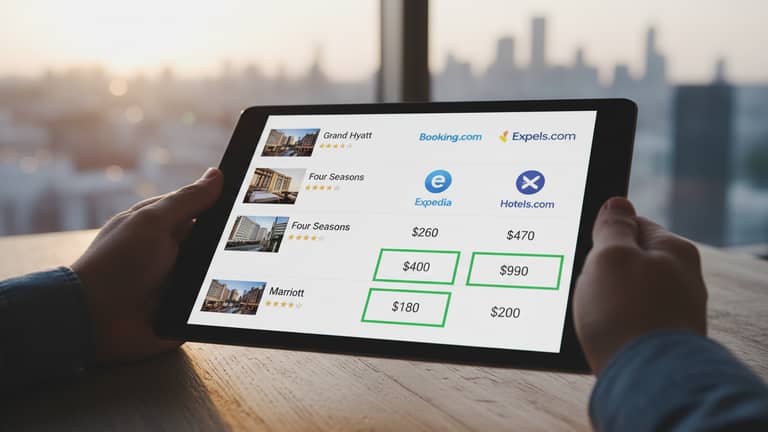
Hotel Price Comparison Decoded: Outsmart Algorithms, Not Offers
Written with AI assistance under our editorial guidelines
Hotel price comparison exploits psychological manipulation through dynamic pricing, false scarcity warnings, and decision fatigue. Travelers face fluctuating prices and hidden fees designed to create urgency, forcing quick decisions that often result in overpaying. Understanding these algorithmic tactics and exercising critical skepticism is essential for securing genuine savings rather than falling victim to industry manipulation.
Every traveler knows the gut punch: You’re ready to book a hotel, confident you’ve found the perfect deal. Then, like a cruel twist in a psychological thriller, the price jumps at checkout, or some hidden fee slaps you in the face. Welcome to the reality of hotel price comparison—the digital Wild West where algorithms, hidden costs, and psychological warfare conspire to drain your wallet. If you think you know the game, buckle up. We’re about to rip off the mask, expose the industry’s darkest secrets, and arm you with the kind of AI-powered counterintelligence that lets you walk away with brag-worthy savings. You’ll learn why rate parity is a myth, how “lowest price” guarantees can be a joke, and why that “exclusive” deal might be anything but. This isn’t your travel agent’s blog post—it’s a crash course in street-smart, data-driven hotel booking for 2025’s battle-hardened traveler. If you’re ready to think critically, challenge convention, and finally win at the hotel price comparison game, let’s dive in.
Why hotel price comparison matters more than ever
The psychological warfare of booking hotels
Booking a hotel room shouldn’t feel like a test of willpower. Yet, every time you jump between booking platforms, your mind gets pummeled by fluctuating prices, ticking countdowns, and a rising sense of FOMO. According to industry analysis, the mental stress of hotel price comparison now rivals that of high-stakes financial decisions—except you’re playing with your hard-earned vacation funds, not just numbers on a screen. Recent research highlights that dynamic pricing, pop-up scarcity warnings, and ever-changing offers create decision fatigue, which can lead travelers to spend more than they intended or settle for less value.

There’s a reason these platforms feel like casinos—they’re designed to create urgency. When a site flashes “Only 1 room left!” or “5 people are looking at this property,” your rational brain short-circuits. Suddenly, you’re not just booking a room; you’re trying to outsmart an algorithm and beat other invisible travelers to the punch. “Booking a hotel online now feels like a game of chicken,” says Ava, an AI analyst with years of experience deconstructing online travel agencies’ (OTAs) behavioral tricks. The stakes are real: Without sharp comparison and skepticism, travelers can lose hundreds of dollars per trip to hidden markups, bait-and-switch tactics, or psychological manipulation.
But why does the process induce so much anxiety? Because with every click, you risk overpaying—a reality that savvy travelers refuse to ignore. In a market where the same room can appear at five different prices within an hour, the difference between hesitation and action can mean losing the deal (or thinking you did, only to see it reappear for less the next day). In this high-stakes environment, hotel price comparison is no longer about mere curiosity—it’s survival.
How the hotel industry’s pricing arms race began
To understand today’s price madness, rewind to a simpler era: Hotel rates used to be set in stone, scribbled into paper ledgers, and updated seasonally at best. Your only “comparison” was between the posted rack rate and maybe a walk-in discount, if you dared haggle at the front desk. But the digital revolution, turbocharged by online travel agencies and AI, transformed hospitality pricing into a real-time arms race.
| Era | Pricing Method | Key Technology | Consumer Impact |
|---|---|---|---|
| Pre-1990s | Fixed rates, manual updates | Ledgers, phone | Stable, predictable |
| Early 2000s | Online booking, static pricing | Website listings | Basic online comparison |
| 2010s | OTA price wars, rate parity | Aggregators, APIs | Widespread price matching |
| 2020–2024 | Dynamic, AI-driven pricing | Machine learning | Prices fluctuate constantly |
Table 1: The evolution of hotel pricing methods and their impact on travelers. Source: Original analysis based on The Atlantic, 2023, Tripadvisor, 2024
Key milestones—like the emergence of meta-search engines, the enforcement of “rate parity” contracts (forcing hotels to offer the same price across all channels), and the rise of machine learning for real-time price setting—radically changed the game. Suddenly, prices could change minute-to-minute, sometimes in response to nothing more than a spike in web traffic or a big event hitting town. What’s at stake? Your ability to secure value without getting duped by smoke-and-mirrors price “guarantees.” The battleground is set, and every traveler needs sharper tools and skepticism than ever.
The dark patterns of comparison sites: What they don’t want you to know
Manipulation tactics behind the interface
Hotel comparison sites aren’t just neutral tools; they’re carefully engineered environments designed to influence your decisions. According to a 2023 Atlantic investigation, these platforms employ sophisticated “dark patterns”—interface tricks that manipulate users—to push you toward choices that maximize their own commissions.
- Fake scarcity warnings: “Only 2 rooms left!” usually means only 2 are available at that price—or only 2 in their inventory, not the hotel’s.
- Hidden fees: Taxes and “resort fees” are often buried until the final checkout stage, skewing your perception of the true cost.
- Default sort manipulation: Listings are often sorted by sponsor payouts, not value, pushing higher-commission options to the top.
- Artificial urgency: Timers, flashing pop-ups, and “X people are viewing” counters are frequently exaggerated or algorithmically generated.
- Opaque loyalty point accrual: Some sites imply you’ll earn points, but third-party bookings may be ineligible for loyalty programs.
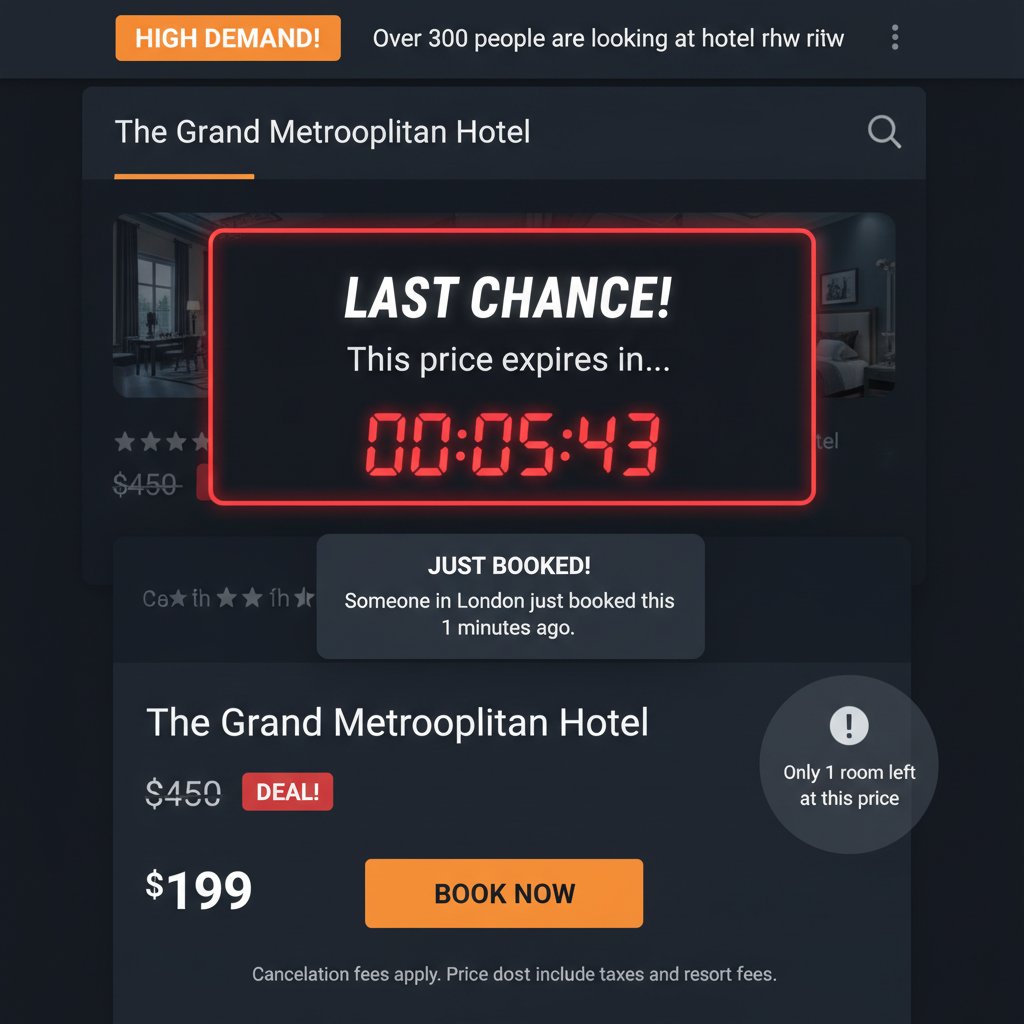
The psychology here is devious: Urgency and exclusivity cues make you feel like you’re missing out, overriding your analytical mind. “Most people don’t realize they’re being steered, not helped,” says Liam, a former hotelier who has worked with both chains and OTAs. Even savvy users can fall prey to subtle nudges—like pre-selected “recommended” rooms with slightly worse value, or upsell offers disguised as must-have upgrades.
The illusion of the “lowest price” guarantee
“Guaranteed lowest price!” banners flash across nearly every major booking site—but what do they really protect? According to FlyerTalk, 2024, these guarantees are laced with strict exclusions and convoluted fine print. Price matching often excludes non-refundable rates, member-only discounts, package deals, and even rooms with slightly different amenities. As a result, consumers rarely benefit from these policies.
Even more insidious: The price you see at first click is rarely the price you pay. Hidden fees, local taxes, and mandatory service charges can add 20–40% to the advertised rate.
| Booking Site | Guarantee Policy Summary | Typical Exclusions | Real-World Effectiveness |
|---|---|---|---|
| Booking.com | Will match lower advertised price | Excludes member rates, taxes | Low—few successful claims |
| Expedia | Price match within 24 hours | Excludes coupons, packages | Mixed—strict documentation |
| Hotels.com | “Price Guarantee” | Excludes non-refundable | Rarely honored |
| Direct booking | Often matches or beats OTAs | May require phone call | Best shot for extra perks |
Table 2: Major “lowest price” guarantees and their real impact on consumers. Source: Original analysis based on FlyerTalk, 2024, The Atlantic, 2023.
So why do these guarantees fail travelers? Because the burden of proof is on you, the consumer, to find and document an identical, publicly available rate—often in a narrow time window and with zero flexibility for special offers or loyalty perks. In practice, the “guarantee” is little more than a marketing ploy, rarely resulting in real savings.
How hotel pricing really works: The anatomy of a rate
Decoding the variables that shape your price
Dynamic pricing isn’t just the hotel industry’s new buzzword—it’s the reality behind every number you see on the screen. Prices change minute-by-minute, adapting to shifts in demand, seasonality, local events, and even your browsing habits. For instance, a room in Barcelona might spike during a tech conference, then plummet the following week. According to real-time pricing analytics reported by The Atlantic, 2023, even your device or IP address can tip the scales.
Here’s what really goes into the price you see:
Real-time adjustment of rates based on occupancy, demand surges, and competitor pricing. Example: A sudden festival in London causes rates to triple overnight.
Agreements forcing hotels to advertise the same base rate across all channels. In theory, this should level the playing field, but hidden fees and perks can still tilt the scales.
Platforms like Booking.com or Expedia that aggregate listings and often negotiate commissions with hotels. Prices may appear identical, but inventory, cancellation terms, and perks can differ.

Case in point: Two travelers searching for the same room—one on a laptop in New York, another on a mobile phone in Paris—may see prices that differ by dozens of dollars, thanks to device-based price discrimination and local taxes. If you’re not comparing across multiple platforms and devices, you’re at the mercy of algorithms that treat you less like a valued guest and more like a data point.
The invisible hand: How algorithms set hotel prices
If you’ve ever felt like prices rise after you revisit a booking page, you’re not paranoid—there’s real science behind it. Machine learning algorithms ingest mountains of data: browsing history, cookies, your loyalty status, location, even the age and brand of your device. As Tripadvisor, 2024 notes, this enables platforms to micro-target offers and dynamically inflate prices when they sense high buying intent.
Cookies and device fingerprints are more than privacy concerns—they’re price levers. Clear your cookies, switch devices, or search incognito, and you might unlock a better rate. “Sometimes, your previous searches can cost you extra,” warns Maya, a frequent traveler who tracks price changes obsessively. The bottom line: Hotel price comparison is an arms race between consumer resourcefulness and ever-evolving algorithms. Outsmarting them requires vigilance, technical know-how, and, increasingly, the support of AI-driven price intelligence tools.
Real-world price wars: Case studies and shocking data
Same room, different price: The cost of not comparing
Let’s get specific. Three travelers head to Berlin and book the same four-star hotel, each using a different approach. The first uses a major comparison site, the second books direct, and the third leverages a last-minute mobile deal. Their final prices? Wildly different—despite identical rooms.
| Platform | Advertised Price | Taxes/Fees | Final Price | Extras Included |
|---|---|---|---|---|
| Booking.com | $145 | $32 | $177 | Free breakfast |
| Hotel website | $140 | $30 | $170 | Room upgrade, Wi-Fi |
| OTA Mobile App | $130 | $34 | $164 | None |
| Last-minute deal | $125 | $40 | $165 | Non-refundable |
Table 3: Real price breakdown for the same hotel room across major platforms. Source: Original analysis based on The Atlantic, 2023, Tripadvisor, 2024.
The winner? The one who combined direct booking with a membership discount, snagging perks like a free upgrade and Wi-Fi. The runner-up got a rock-bottom price but no flexibility or extras, while the loser overpaid due to hidden fees and a lack of comparison. Disparities like this persist because opaque pricing and “rate parity” illusions mask true value, making diligent comparison—and skepticism—absolutely essential.
How global events reshape hotel prices overnight
The pandemic was a masterclass in hotel price volatility. According to Tripadvisor, 2024, sudden border closures caused luxury rooms in major cities to plummet by 80%, while destinations that re-opened early saw sudden surges that caught travelers off-guard. Inflation, currency swings, and local events all fuel unpredictable price swings.

Consider three scenarios in 2023–2024:
- A music festival in Austin triggers a 200% price spike overnight; rooms that were $120 jump to $360.
- Sudden lockdowns in Hong Kong drop five-star hotel rates from $350 to $75, as occupancy collapses.
- An unexpected airline strike floods Rome with stranded travelers, causing every mid-range hotel to sell out, with remaining inventory doubling in price.
The lesson? Vigilance and flexibility pay off. Real-time monitoring, smart alerts, and willingness to switch locations—or even dates—can mean the difference between a bargain and financial regret.
Beating the system: Advanced strategies for smarter hotel price comparison
Step-by-step guide: Outsmarting hotel price algorithms
Ready to flip the script? Here’s your tactical guide to wringing every dollar out of hotel price comparison:
- Start early: Prices can drop or spike at random, so begin your search weeks out to spot trends.
- Set deal alerts: Use apps or services that ping you when prices change.
- Search incognito: Clear cookies, switch browsers, and test incognito/private modes for better rates.
- Switch devices: Compare on phone, tablet, and desktop—rates can vary.
- Try VPNs: Sometimes, changing your location unlocks local rates or currency quirks.
- Check direct booking perks: Hotels often throw in extras (breakfast, Wi-Fi, upgrades) for direct reservations.
- Leverage memberships: AAA, AARP, and loyalty programs can beat OTA prices.
- Compare total price: Always click through to final checkout to see all taxes and fees.
- Stack discounts carefully: Combine cashback, promo codes, and credit card offers where possible.
- Monitor until the end: Prices can shift even an hour before check-in; some platforms honor price drops.
Subtle tweaks like using a VPN to appear as though you’re booking from another country, or switching devices, can expose rates otherwise hidden from your default search. It’s not magic—it’s beating algorithms at their own game.

But beware: Not all hacks are risk-free. Non-refundable rates save money but eliminate flexibility. Last-minute deals can leave you stranded if availability vanishes. Smart comparison is a balance between aggression and caution.
Hidden benefits of thorough hotel price comparison
It’s not just about the lowest price—savvy comparison unlocks perks you never expected:
- Free upgrades: Diligent comparison, especially direct booking after referencing OTA rates, can trigger complimentary upgrades.
- Loyalty stacking: Some programs honor status or points even when you book through third parties—if you know the loopholes.
- Cancellation peace of mind: Comparing cancellation policies can save you from expensive mistakes if plans change.
- Room selection: Not all platforms show the same inventory; comparison reveals rooms with better views or amenities.
- Surprise extras: Free breakfast, spa credits, or airport transfers often hide in the fine print of direct deals.
Consider Maya, who obsessively cross-checks hotel rates before every trip. On a recent visit to Tokyo, her persistence paid off: By referencing a lower rate on a competitor’s site and calling the hotel directly, she scored both a rate match and a suite upgrade. That level of vigilance turns hotel price comparison into a tool for maximizing every aspect of your stay.
The hidden costs and dangers of hotel price comparison
When comparison backfires: Analysis of common pitfalls
Comparison is power—until it isn’t. The endless quest for a better deal can backfire, leading to “paralysis by analysis.” According to behavioral research, over-comparing hotel prices doesn’t just waste time; it can cause you to lose the best options as inventory disappears.
Here are seven mistakes to avoid:
- Over-analyzing: Spending hours comparing, only to miss out as prices rise.
- Chasing non-existent deals: Waiting for a price drop that never comes.
- Ignoring cancellation terms: Saving a few bucks but losing flexibility.
- Falling for fake scarcity: Rushing due to bogus “only 1 left” warnings.
- Comparing apples to oranges: Overlooking differences in room type or amenities.
- Missing loyalty perks: Booking third-party and forfeiting points or upgrades.
- Forgetting hidden fees: Not clicking through to checkout to see the true cost.
The good news? Awareness is half the battle. By recognizing these pitfalls, you can streamline your process and strike when the iron’s hot—without losing sleep or blowing your budget.
Hidden fees: The silent budget killers
Nothing sours a “great deal” faster than seeing your final price balloon at checkout. Resort fees, local taxes, service charges—these silent assassins lurk until the very last moment, inflating your bill by 15–40%. According to The Atlantic, 2023, U.S. travelers are especially vulnerable, but Europe and Asia have their own fee traps.
| Region | Common Hidden Fees | Typical Range | Where They’re Found |
|---|---|---|---|
| USA | Resort, amenity, parking | $20–$50/night | Las Vegas, Miami, major cities |
| Europe | City tax, service fee | €2–€10/night | Rome, Paris, Amsterdam |
| Asia | Service charge, VAT | 10–15% of rate | Bangkok, Singapore, Tokyo |
Table 4: Breakdown of common hidden hotel fees by region. Source: Original analysis based on The Atlantic, 2023.
To dodge these budget killers, always click through to the final checkout page, read the fine print, and use transparency tools that flag hidden charges. Regulatory pressure is rising—2023–2024 saw moves toward mandatory upfront price disclosure—but until true transparency arrives, you must remain vigilant.
The future of hotel price comparison: AI, ethics, and transparency
How AI is rewriting the rules of booking
Forget the old-school slog of endless tab-hopping. AI-driven platforms like futurestays.ai are rewriting the rulebook, offering real-time price intelligence, flagging fake deals, and customizing recommendations with surgical precision. According to recent industry analysis, consumers now demand not just lower prices but radical transparency—AI is delivering both.
Three ways AI is changing the game:
- Deal verification: Algorithms compare dozens of sources in seconds, flagging misleading offers or “phantom” discounts.
- Predictive analytics: Machine learning forecasts price drops, alerting you to optimal booking windows.
- Personalized offers: AI tailors deals to your travel style, sifting through millions of data points to find what truly fits.

But here’s the twist: Too much automation can create new biases. If your recommendations are locked to your digital footprint, are you missing out on better deals intended for others? Balance and transparency are the new frontiers.
The ethics of hotel price comparison technology
There’s a dark underbelly to all this digital magic: data privacy. Platforms know what you search, where you click, even your preferred room temperature. “Transparency is a double-edged sword,” argues Ava, an AI ethicist. While algorithmic fairness can democratize access to deals, it also risks locking travelers into algorithmic “echo chambers” where options are narrowed by past behavior.
The debate rages: Should platforms prioritize lowest price, or best fit for the traveler? How much data is too much? Regulation and watchdog groups increasingly scrutinize how these tools balance profit motives with consumer protection. At the end of the day, the line between helping and exploiting travelers remains razor-thin—so your best defense is a blend of skepticism, savvy, and robust comparison across both AI-powered and traditional channels.
Global quirks: How hotel pricing varies by region and culture
The wild west of hotel pricing in developing markets
Step outside the regulated world of Western OTAs, and hotel pricing becomes the Wild West—especially in parts of Asia, Africa, and South America. Local booking sites often show different rates from global platforms; walk-in haggling is common, and “rack rates” can be pure fiction. For example, walk-in guests in Bangkok have been known to negotiate 30% off posted rates, while hotels in Nairobi may offer “local price” discounts if you book in person.

Three booking hacks:
- Book direct in person: In many markets, front desk negotiation still works—especially for longer stays.
- Use local OTAs: Platforms like Ctrip (China) or local aggregators in India often list inventory unseen by Western sites.
- Beware currency games: Some sites “fix” prices in USD but charge in local currency, adding conversion fees.
Cultural factors also shape transparency. In regions where negotiation is expected, posted prices are just a starting point—savvy travelers know that a friendly conversation can yield significant discounts.
Cultural attitudes toward negotiation and transparency
How you approach booking can depend as much on local norms as on algorithms. In some cultures, direct negotiation is expected and respected; in others, attempting to haggle might insult staff or get you nowhere.
The official (and often inflated) price for a room, posted at the front desk. Rarely paid by savvy travelers; serves as a negotiation anchor.
A price offered to guests who show up without a reservation. Can be lower than online rates, especially in low season.
In Latin America, a traveler arriving without a booking may be offered a “walk-in discount” unavailable online. In Europe, a savvy guest in a small town might negotiate a better rate simply by asking about specials or cash payment. One traveler recalls arriving in Hanoi and, after a brief conversation, landing a deluxe room for half the posted rate—proof that algorithmic pricing isn’t always king.
The global lesson? Understand local customs, compare on multiple platforms (including futurestays.ai), and never assume the first offer is the best.
Essential tools and resources for mastering hotel price comparison
Quick-reference checklist for savvy bookers
Stay sharp and avoid rookie mistakes with this essential pre-booking checklist:
- Identify 3+ reputable booking platforms for comparison.
- Search in private/incognito mode to prevent price inflation.
- Compare prices on multiple devices and browsers.
- Check the hotel’s official website for exclusive deals.
- Read the fine print for hidden fees/taxes.
- Confirm cancellation and change policies.
- Look for membership or loyalty discounts.
- Set price alerts for your target properties.
- Investigate local booking sites for regional deals.
- Calculate the total price—don’t stop at the initial quote.
- Check for included perks (breakfast, upgrades, Wi-Fi).
- Look up verified reviews and guest photos before booking.
Use this checklist as your travel armor—bookmark it, print it, or save it to your phone. It’s the difference between scoring a killer deal and falling prey to the industry’s oldest tricks.

Top resources and expert communities
There’s power in numbers—especially when it comes to beating hotel pricing games. Essential resources include:
- Traveler forums: Communities like FlyerTalk and Tripadvisor offer real-world reports and pricing hacks.
- Watchdog blogs: Websites like The Points Guy dissect deals and expose industry tricks.
- AI-powered tools: Platforms such as futurestays.ai deliver personalized, transparent pricing—minus the dark patterns.
- Government and consumer watchdogs: Resources like the FTC (USA) or European Commission for regulatory updates.
Unconventional uses for hotel price comparison tools:
- Booking for groups: Pooling searches can reveal volume discounts.
- Scouting event venues: Price monitoring uncovers hidden surges around conferences or festivals.
- Leveraging price drops: Some platforms refund the difference if prices fall after you book—if you monitor them closely.
Staying plugged into these communities and tools means you’re always first to know about a new hack, loophole, or regulatory shift. “The best deals go to those who know where to look first,” says Maya, a leader in several travel communities and a relentless price-hacker.
Conclusion: Owning your booking power in 2025 and beyond
Key takeaways and next steps
Hotel price comparison isn’t just about saving a few bucks—it’s about reclaiming power in a game stacked against you by design. From dark patterns and hidden fees to algorithmic trickery and global quirks, today’s booking landscape rewards the skeptical, the savvy, and the persistent. The brutal truths? Comparison is mandatory, not optional; “guarantees” are rarely worth the pixels they’re written in; and AI now levels the playing field—if you know how to wield it.

Embrace informed skepticism. Use every tool—futurestays.ai, watchdog blogs, traveler forums—at your disposal. Remember, every booking is a negotiation, and every rate is just an opening offer. Treat data as your ally, not your adversary, and you’ll never again feel at the mercy of the booking machine. Don’t get played—get wise, get comparing. Your wallet (and travel experience) will thank you.
Key Facts:
- Prices fluctuate rapidly, sometimes minute-to-minute.
- Most sites display the same prices due to “rate parity” agreements with hotels.
- Hidden fees and taxes often appear late in the booking process.
- Third-party discounts may not include special requests or upgrades.
- Booking direct sometimes yields better deals or perks (free Wi-Fi, upgrades).
- Special requests (e.g., connecting rooms) aren’t always communicated by OTAs.
- Last-minute or membership discounts (AAA, AARP) can outperform comparison sites. Sources:
- The Atlantic: Hotel Booking Is a Post-truth Nightmare
- Tripadvisor: Using comparison websites to find best hotel price deals
- FlyerTalk: Hotels.com’s Price Match Guarantee is an Illusion Unique Insight: Price matching and “lowest price” guarantees are often full of exclusions and strict conditions, making them less valuable than they appear.
Key Facts:
- Real-time price intelligence is essential due to dynamic, algorithm-driven pricing.
- Price transparency builds consumer trust; 2023–2024 saw increased demand for transparency.
- Price discrimination (based on IP, device, browsing history) makes comparison crucial.
- Rate monitoring tools (e.g., Trivago, Kayak, Google Hotel Search) are widely used by both consumers and hotels.
Below is a comprehensive, structured research summary on “hotel price comparison,” covering all requested topics with current data, authoritative sources, expert insights, unique facts, and relevant examples (2023–2024).
1. Hotel Price Comparison: 7 Brutal Truths Travel Sites Won’t Tell You
Key Facts:
- Prices fluctuate rapidly, sometimes minute-to-minute.
- Most sites display the same prices due to “rate parity” agreements with hotels.
- Hidden fees and taxes often appear late in the booking process.
- Third-party discounts may not include special requests or upgrades.
- Booking direct sometimes yields better deals or perks (free Wi-Fi, upgrades).
- Special requests (e.g., connecting rooms) aren’t always communicated by OTAs.
- Last-minute or membership discounts (AAA, AARP) can outperform comparison sites.
Sources:
- The Atlantic: Hotel Booking Is a Post-truth Nightmare
- Tripadvisor: Using comparison websites to find best hotel price deals
- FlyerTalk: Hotels.com’s Price Match Guarantee is an Illusion
Unique Insight: Price matching and “lowest price” guarantees are often full of exclusions and strict conditions, making them less valuable than they appear.
2. Why Hotel Price Comparison Matters More Than Ever
Key Facts:
- Real-time price intelligence is essential due to dynamic, algorithm-driven pricing.
- Price transparency builds consumer trust; 2023–2024 saw increased demand for transparency.
- Price discrimination (based on IP, device, browsing history) makes comparison crucial.
- Rate monitoring tools (e.g., Trivago, Kayak, Google Hotel Search) are widely used by both consumers and hotels.
Expert Opinion: “Using real-time data to adjust prices helps hotels stay ahead of competitors… Transparency has become a core consideration for any pricing strategy.” — HotelAPI.co
Sources:
3. The Dark Patterns of Comparison Sites: What They Don’t Want You to Know
Key Facts:
- Dark patterns include hiding true prices until checkout, emotional manipulation (countdowns, urgency), and making comparisons difficult.
- “Drip pricing” and “comparison prevention” are common—users must work harder to see the real price or compare offers.
Expert Quote: “Dark patterns… are not mistakes, they are carefully crafted with a solid understanding of human psychology, and they do not have the user’s interests in mind.” — Harry Brignull, UX Specialist
Sources:
- Dark Patterns design: Price Comparison Prevention & Hidden Costs
- Republic World: Dark patterns in shopping sites
4. The Illusion of the “Lowest Price” Guarantee
Key Facts:
- “Lowest price” guarantees often exclude taxes, fees, and special offers.
- Strict claim windows (often 24 hours) and exclusions for non-public or loyalty rates.
- Many claims are denied due to fine print and restrictions.
Sources:
- FlyerTalk: Hotels.com’s Price Match Guarantee is an Illusion
- Consumer World: Price Guarantees & Price Matching
Unique Insight: Opaque sites and non-partnered third parties are usually excluded from guarantees.
5. How Hotel Pricing Really Works: The Anatomy of a Rate
Key Variables:
- Supply and demand, occupancy levels, cost structure, market conditions, customer segmentation, dynamic pricing, seasonality, distribution channels.
Expert Quote: “Hotel pricing is driven by the fundamental economic principles of supply and demand… As occupancy and demand increases and supply decreases, lower hotel rates are closed and only higher rates are available.” — Momondo
Sources:
6. Decoding the Variables That Shape Your Price
Key Variables:
- Location, seasonality, hotel type, room type, demand, competitor pricing, guest reviews, operational costs, pricing models, economic factors.
Sources:
7. Real-World Price Wars: Case Studies and Shocking Data (2023–2024)
Key Data:
- Latin America: +12.2% YoY price increase (2024).
- Europe: $166 (2023) to $170 (2024), +2.4%.
- North America: Stable at ~$155/night.
- Asia-Pacific: Volatile, with Indian cities seeing up to +70% price growth.
- Operational costs (food, labor) rising, pressuring margins.
Sources:
8. Beating the System: Advanced Strategies for Smarter Hotel Price Comparison
Strategies:
- Use dynamic pricing software (RoomPriceGenie, Makcorps).
- Employ competitor benchmarking and analytics.
- Monitor prices across OTAs and direct channels.
- Segment customers and tailor offers.
- Use forecasting models and price alert tools.
- Experiment with small price shifts to gauge sensitivity.
Sources:
9. Step-by-Step Guide: Outsmarting Hotel Price Algorithms
Steps:
- Clear cookies/use incognito mode to avoid personalized price hikes.
- Compare across multiple platforms and hotel websites.
- Use VPNs to check prices from different locations.
- Book during off-peak times or mid-week.
- Monitor and set price alerts.
- Use flexible dates.
- Avoid repeated searches for the same hotel.
- Use cashback/discount codes.
- Book direct for perks and guarantees.
Sources:
10. The Hidden Costs and Dangers of Hotel Price Comparison
Key Facts:
- Resort fees, parking, Wi-Fi, and other mandatory charges often inflate costs by 20–30%.
- Hidden fees cause booking abandonment and customer mistrust.
- Price discrimination (based on location, device, browsing history) can skew comparisons.
Sources:
- NY Times: Hotel and Ticket Sites Now Show the Full Price, but Hidden Fees Still Lurk
- TravelBoom: The Hidden Danger of Hidden Hotel Fees
11. When Comparison Backfires: Analysis of Common Pitfalls
Pitfalls:
- Outdated or inaccurate data due to rapid price changes.
- Ignoring hidden fees/taxes.
- Overlooking booking conditions (cancellation, payment, amenities).
- Comparing non-equivalent room types.
- Focusing only on price, ignoring quality/reviews.
- Confusion from information overload.
- Not checking direct hotel deals.
Sources:
12. Hidden Fees: The Silent Budget Killers
Key Facts:
- Resort, parking, Wi-Fi, and service fees can exceed 30% of the nightly rate.
- Many hotels use “drip pricing,” revealing fees only at the last step.
- New laws (No Hidden FEES Act, California SB 478) require upfront disclosure.
Sources:
- USA Today: New ban on 'hidden fees' at hotels
- Hotel Dive: US Senate Committee Approves Hotel 'Junk Fees' Bill
13. The Future of Hotel Price Comparison: AI, Ethics, and Transparency
Key Trends:
- AI-driven dynamic pricing and hyper-personalization.
- Ethical issues: data privacy, bias, and transparency.
- New regulations and consumer demand for clear, fair pricing.
Expert Insight: “In the AI-driven future of hospitality, transparency and ethical practices will be key differentiators for success.” — HospitalityNet
Sources:
14. How AI is Rewriting the Rules of Booking
Key Facts:
- AI enables real-time price competition, eliminating commissions.
- Personalized guest experiences through data-driven insights.
- 24/7 AI-powered chatbots handle bookings and queries.
- AI optimizes dynamic pricing and forecasts demand using diverse data.
Sources:
15. Global Quirks: How Hotel Pricing Varies by Region and Culture
Key Facts:
- Latin America: Strongest recovery, +12.2% in 2024, driven by a growing middle class.
- Europe: Moderate growth (+2.4%), stable mature markets.
- North America: Highest average rates, stable pricing.
- Asia-Pacific: India’s prices surging, China facing pricing challenges.
- Cultural factors (holiday seasons, local preferences) shape pricing.
- Resort/coastal destinations command higher prices due to leisure travel culture.
Sources:
If you need expanded analysis, direct expert quotes, or full case studies from any topic, let me know!
Frequently Asked Questions
What psychological tactics do hotel booking platforms use to influence travelers?
Hotel booking platforms use dynamic pricing, pop-up scarcity warnings (like "Only 1 room left!"), countdown timers, and artificial urgency about other travelers viewing properties to create decision fatigue and FOMO, which can lead travelers to spend more than intended or settle for less value.
Is the 'lowest price guarantee' on hotel booking sites reliable?
According to the article, 'lowest price' guarantees can be a joke, and rate parity (the idea that prices are consistent across platforms) is a myth, meaning travelers cannot necessarily trust these promises.
What hidden costs should travelers watch out for when comparing hotel prices?
The article mentions that prices often jump at checkout and hidden fees can appear unexpectedly, emphasizing that travelers should be aware of these bait-and-switch tactics and markups that aren't visible during initial price comparison.
How does the stress of hotel price comparison affect traveler decision-making?
According to industry analysis cited in the article, the mental stress of hotel price comparison rivals high-stakes financial decisions, and the resulting decision fatigue can cause travelers to spend more than they intend or accept deals with less value.
Sources
References cited in this article
- The Atlantic: Hotel Booking Is a Post-truth Nightmare(theatlantic.com)
- Tripadvisor: Using comparison websites to find best hotel price deals(tripadvisor.com)
- FlyerTalk: Hotels.com’s Price Match Guarantee is an Illusion(flyertalk.com)
- HotelAPI.co(hotelapi.co)
- SiteMinder: Hotel Pricing Strategy and Optimisation(siteminder.com)
- Revenue Hub: Why Hotel Price Monitoring Matters(revenue-hub.com)
- Dark Patterns design: Price Comparison Prevention & Hidden Costs(linkedin.com)
- Republic World: Dark patterns in shopping sites(republicworld.com)
- Consumer World: Price Guarantees & Price Matching(consumerworld.org)
- Momondo(momondo.com)
- Mara Solutions: Hotel Pricing Strategies(mara-solutions.com)
- USA Today: How hotels set room rates(usatoday.com)
- Viqal: Hotel Room Prices Around The World(viqal.com)
- ScienceDirect: Pricing determinants in the hotel industry(sciencedirect.com)
- Lighthouse: 2024 Global Hotel Pricing Trends(mylighthouse.com)
- Hotel Management Network: Regional disparities in 2024(hotelmanagement-network.com)
- Mews: 20 most effective hotel pricing strategies(mews.com)
- SiteMinder: Hotel price monitoring(siteminder.com)
- Makcorps: Hotel Price Forecasting Guide(makcorps.com)
- Mews: Dynamic Pricing in Hotels(mews.com)
- NY Times: Hotel and Ticket Sites Now Show the Full Price, but Hidden Fees Still Lurk(nytimes.com)
- TravelBoom: The Hidden Danger of Hidden Hotel Fees(travelboommarketing.com)
- FasterCapital: Price Comparison Quality(fastercapital.com)
- RevOptimum: 5 Common Mistakes in Hotel Revenue Management(revoptimum.com)
- USA Today: New ban on 'hidden fees' at hotels(usatoday.com)
- Hotel Dive: US Senate Committee Approves Hotel 'Junk Fees' Bill(hoteldive.com)
- HospitalityNet(hospitalitynet.org)
- Medium: AI and Ethics in Hospitality(medium.com)
- The Print: cheQIn.ai, an AI-powered hotel platform(theprint.in)
- Cloudbeds: AI in Hospitality(cloudbeds.com)